

30
S. Sander et al.
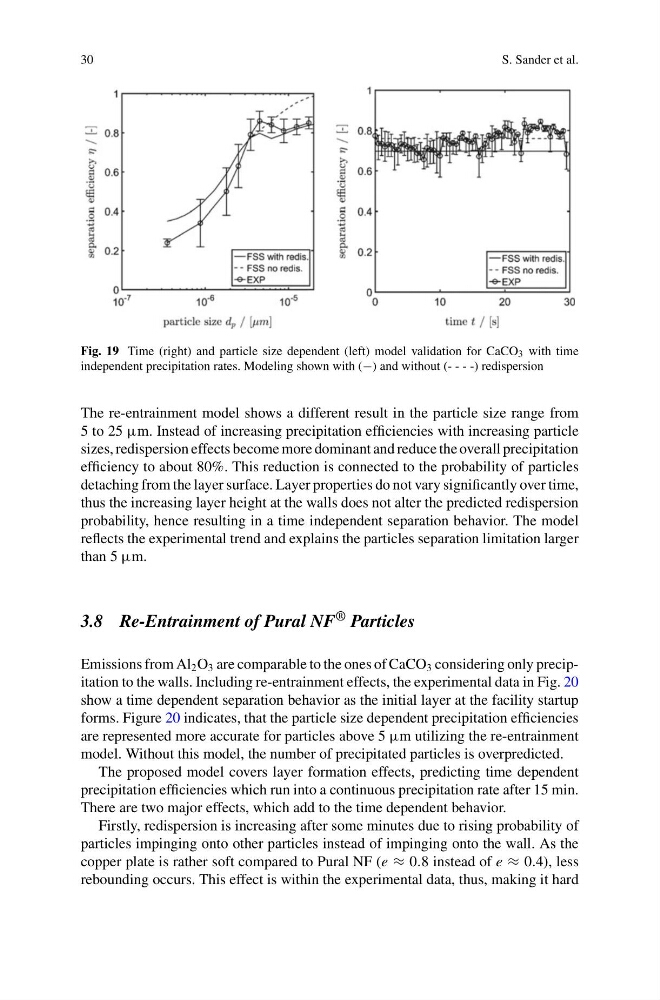
Fig. 19 Time (right) and particle size dependent (left) model validation for CaCO 3 with time
independent precipitation rates. Modeling shown with (−) and without (- - - -) redispersion
The re-entrainment model shows a different result in the particle size range from
5 to 25 μm. Instead of increasing precipitation efficiencies with increasing particle
sizes, redispersion effects become more dominant and reduce the overall precipitation
efficiency to about 80%. This reduction is connected to the probability of particles
detaching from the layer surface. Layer properties do not vary significantly over time,
thus the increasing layer height at the walls does not alter the predicted redispersion
probability, hence resulting in a time independent separation behavior. The model
reflects the experimental trend and explains the particles separation limitation larger
than 5 μm.
3.8 Re-Entrainment of Pural NF ® Particles
Emissions from Al 2 O 3 are comparable to the ones of CaCO 3 considering only precipitation to the walls. Including re-entrainment effects, the experimental data in Fig. 20
show a time dependent separation behavior as the initial layer at the facility startup
forms. Figure 20 indicates, that the particle size dependent precipitation efficiencies
are represented more accurate for particles above 5 μm utilizing the re-entrainment
model. Without this model, the number of precipitated particles is overpredicted.
The proposed model covers layer formation effects, predicting time dependent
precipitation efficiencies which run into a continuous precipitation rate after 15 min.
There are two major effects, which add to the time dependent behavior.
Firstly, redispersion is increasing after some minutes due to rising probability of
particles impinging onto other particles instead of impinging onto the wall. As the
copper plate is rather soft compared to Pural NF (e ≈ 0.8 instead of e ≈ 0.4), less
rebounding occurs. This effect is within the experimental data, thus, making it hard
S. Sander et al.
Fig. 19 Time (right) and particle size dependent (left) model validation for CaCO 3 with time
independent precipitation rates. Modeling shown with (−) and without (- - - -) redispersion
The re-entrainment model shows a different result in the particle size range from
5 to 25 μm. Instead of increasing precipitation efficiencies with increasing particle
sizes, redispersion effects become more dominant and reduce the overall precipitation
efficiency to about 80%. This reduction is connected to the probability of particles
detaching from the layer surface. Layer properties do not vary significantly over time,
thus the increasing layer height at the walls does not alter the predicted redispersion
probability, hence resulting in a time independent separation behavior. The model
reflects the experimental trend and explains the particles separation limitation larger
than 5 μm.
3.8 Re-Entrainment of Pural NF ® Particles
Emissions from Al 2 O 3 are comparable to the ones of CaCO 3 considering only precipitation to the walls. Including re-entrainment effects, the experimental data in Fig. 20
show a time dependent separation behavior as the initial layer at the facility startup
forms. Figure 20 indicates, that the particle size dependent precipitation efficiencies
are represented more accurate for particles above 5 μm utilizing the re-entrainment
model. Without this model, the number of precipitated particles is overpredicted.
The proposed model covers layer formation effects, predicting time dependent
precipitation efficiencies which run into a continuous precipitation rate after 15 min.
There are two major effects, which add to the time dependent behavior.
Firstly, redispersion is increasing after some minutes due to rising probability of
particles impinging onto other particles instead of impinging onto the wall. As the
copper plate is rather soft compared to Pural NF (e ≈ 0.8 instead of e ≈ 0.4), less
rebounding occurs. This effect is within the experimental data, thus, making it hard