

244
M. Gleiss and H. Nirschl
sediment is centrifuged to the equilibrium for the next speed. Each measuring point
represents a solids volume fraction and a solids pressure.
At this point, it should be mentioned that the filling level of the cuvette and the
maximum speed are limiting factors measuring the compression behavior of the sediment in the LUMiSizer. However, solid bowl centrifuges achieve significantly higher
solids pressures of up to p s = 10
6 Pa. Experimental investigation for higher rotational
speeds is therefore necessary. Hermle cooling centrifuge type ZK630 achieves larger
centrifugal accelerations of up to C = 6000 and therefore serve to investigate of higher
solids pressures. Special bucket systems allow the analysis of the cake formation
based on investigations of the equilibrium state by gravimetric measurements.
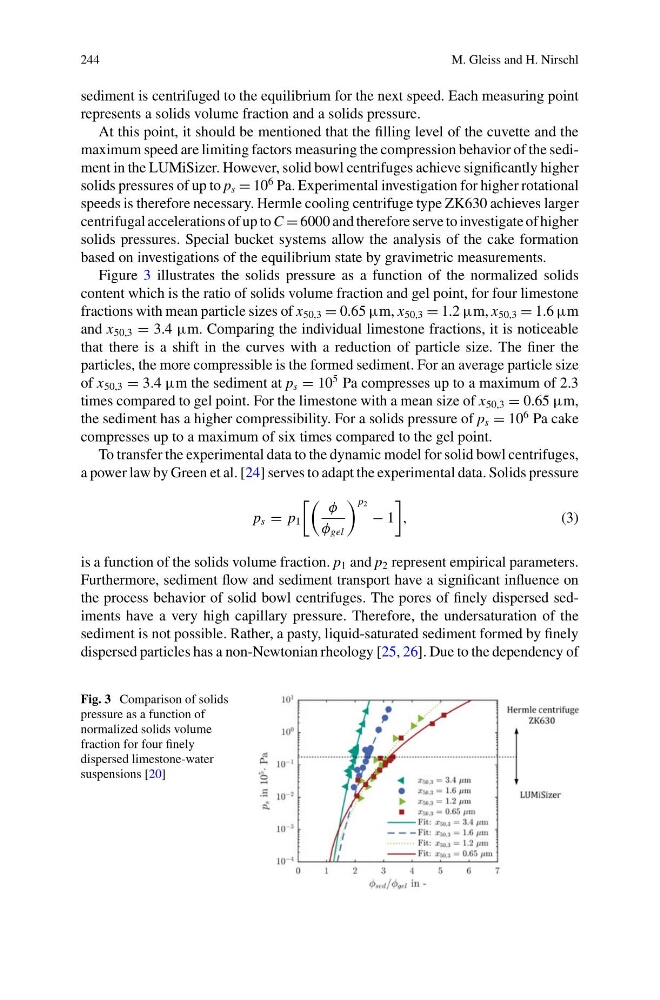
Figure 3 illustrates the solids pressure as a function of the normalized solids
content which is the ratio of solids volume fraction and gel point, for four limestone
fractions with mean particle sizes of x 50,3 = 0.65 µm, x 50,3 = 1.2 µm, x 50,3 = 1.6 µm
and x 50,3 = 3.4 µm. Comparing the individual limestone fractions, it is noticeable
that there is a shift in the curves with a reduction of particle size. The finer the
particles, the more compressible is the formed sediment. For an average particle size
of x 50,3 = 3.4 µm the sediment at p s = 10
5 Pa compresses up to a maximum of 2.3
times compared to gel point. For the limestone with a mean size of x 50,3 = 0.65 µm,
the sediment has a higher compressibility. For a solids pressure of p s = 10
6 Pa cake
compresses up to a maximum of six times compared to the gel point.
To transfer the experimental data to the dynamic model for solid bowl centrifuges,
a power law by Green et al. [24] serves to adapt the experimental data. Solids pressure
p s = p 1
φ
φ gel
p 2
− 1
,
(3)
is a function of the solids volume fraction. p 1 and p 2 represent empirical parameters.
Furthermore, sediment flow and sediment transport have a significant influence on
the process behavior of solid bowl centrifuges. The pores of finely dispersed sediments have a very high capillary pressure. Therefore, the undersaturation of the
sediment is not possible. Rather, a pasty, liquid-saturated sediment formed by finely
dispersed particles has a non-Newtonian rheology [25, 26]. Due to the dependency of
Fig. 3 Comparison of solids
pressure as a function of
normalized solids volume
fraction for four finely
dispersed limestone-water
suspensions [20]
M. Gleiss and H. Nirschl
sediment is centrifuged to the equilibrium for the next speed. Each measuring point
represents a solids volume fraction and a solids pressure.
At this point, it should be mentioned that the filling level of the cuvette and the
maximum speed are limiting factors measuring the compression behavior of the sediment in the LUMiSizer. However, solid bowl centrifuges achieve significantly higher
solids pressures of up to p s = 10
6 Pa. Experimental investigation for higher rotational
speeds is therefore necessary. Hermle cooling centrifuge type ZK630 achieves larger
centrifugal accelerations of up to C = 6000 and therefore serve to investigate of higher
solids pressures. Special bucket systems allow the analysis of the cake formation
based on investigations of the equilibrium state by gravimetric measurements.
Figure 3 illustrates the solids pressure as a function of the normalized solids
content which is the ratio of solids volume fraction and gel point, for four limestone
fractions with mean particle sizes of x 50,3 = 0.65 µm, x 50,3 = 1.2 µm, x 50,3 = 1.6 µm
and x 50,3 = 3.4 µm. Comparing the individual limestone fractions, it is noticeable
that there is a shift in the curves with a reduction of particle size. The finer the
particles, the more compressible is the formed sediment. For an average particle size
of x 50,3 = 3.4 µm the sediment at p s = 10
5 Pa compresses up to a maximum of 2.3
times compared to gel point. For the limestone with a mean size of x 50,3 = 0.65 µm,
the sediment has a higher compressibility. For a solids pressure of p s = 10
6 Pa cake
compresses up to a maximum of six times compared to the gel point.
To transfer the experimental data to the dynamic model for solid bowl centrifuges,
a power law by Green et al. [24] serves to adapt the experimental data. Solids pressure
p s = p 1
φ
φ gel
p 2
− 1
,
(3)
is a function of the solids volume fraction. p 1 and p 2 represent empirical parameters.
Furthermore, sediment flow and sediment transport have a significant influence on
the process behavior of solid bowl centrifuges. The pores of finely dispersed sediments have a very high capillary pressure. Therefore, the undersaturation of the
sediment is not possible. Rather, a pasty, liquid-saturated sediment formed by finely
dispersed particles has a non-Newtonian rheology [25, 26]. Due to the dependency of
Fig. 3 Comparison of solids
pressure as a function of
normalized solids volume
fraction for four finely
dispersed limestone-water
suspensions [20]