

228
G. Fragnière et al.
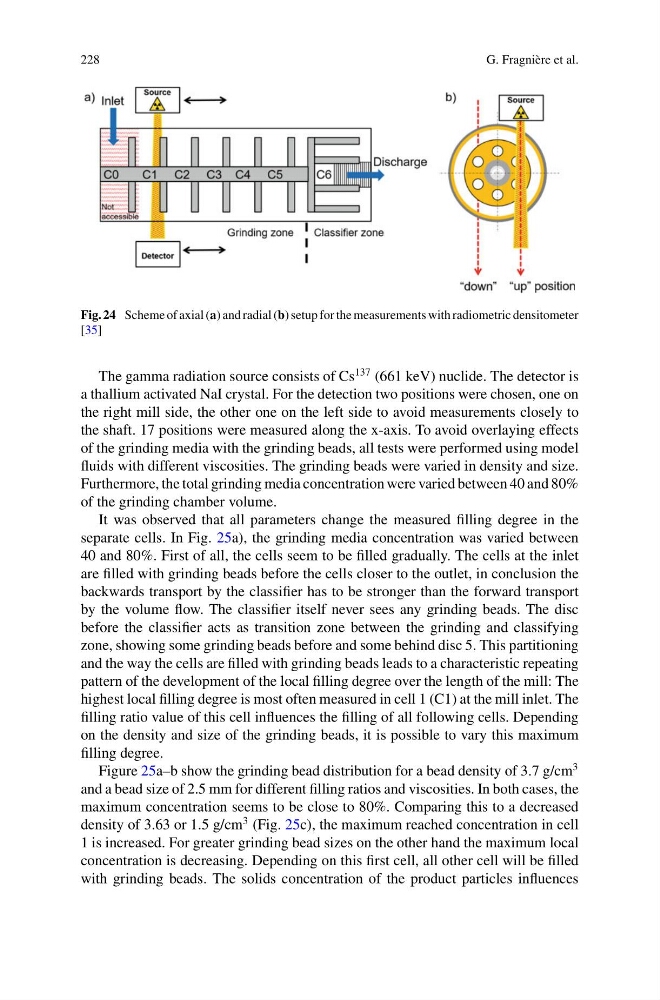
Fig. 24 Scheme of axial (a) and radial (b) setup for the measurements with radiometric densitometer
[35]
The gamma radiation source consists of Cs
137 (661 keV) nuclide. The detector is
a thallium activated NaI crystal. For the detection two positions were chosen, one on
the right mill side, the other one on the left side to avoid measurements closely to
the shaft. 17 positions were measured along the x-axis. To avoid overlaying effects
of the grinding media with the grinding beads, all tests were performed using model
fluids with different viscosities. The grinding beads were varied in density and size.
Furthermore, the total grinding media concentration were varied between 40 and 80%
of the grinding chamber volume.
It was observed that all parameters change the measured filling degree in the
separate cells. In Fig. 25a), the grinding media concentration was varied between
40 and 80%. First of all, the cells seem to be filled gradually. The cells at the inlet
are filled with grinding beads before the cells closer to the outlet, in conclusion the
backwards transport by the classifier has to be stronger than the forward transport
by the volume flow. The classifier itself never sees any grinding beads. The disc
before the classifier acts as transition zone between the grinding and classifying
zone, showing some grinding beads before and some behind disc 5. This partitioning
and the way the cells are filled with grinding beads leads to a characteristic repeating
pattern of the development of the local filling degree over the length of the mill: The
highest local filling degree is most often measured in cell 1 (C1) at the mill inlet. The
filling ratio value of this cell influences the filling of all following cells. Depending
on the density and size of the grinding beads, it is possible to vary this maximum
filling degree.
Figure 25a–b show the grinding bead distribution for a bead density of 3.7 g/cm
3
and a bead size of 2.5 mm for different filling ratios and viscosities. In both cases, the
maximum concentration seems to be close to 80%. Comparing this to a decreased
density of 3.63 or 1.5 g/cm
3 (Fig. 25c), the maximum reached concentration in cell
1 is increased. For greater grinding bead sizes on the other hand the maximum local
concentration is decreasing. Depending on this first cell, all other cell will be filled
with grinding beads. The solids concentration of the product particles influences
G. Fragnière et al.
Fig. 24 Scheme of axial (a) and radial (b) setup for the measurements with radiometric densitometer
[35]
The gamma radiation source consists of Cs
137 (661 keV) nuclide. The detector is
a thallium activated NaI crystal. For the detection two positions were chosen, one on
the right mill side, the other one on the left side to avoid measurements closely to
the shaft. 17 positions were measured along the x-axis. To avoid overlaying effects
of the grinding media with the grinding beads, all tests were performed using model
fluids with different viscosities. The grinding beads were varied in density and size.
Furthermore, the total grinding media concentration were varied between 40 and 80%
of the grinding chamber volume.
It was observed that all parameters change the measured filling degree in the
separate cells. In Fig. 25a), the grinding media concentration was varied between
40 and 80%. First of all, the cells seem to be filled gradually. The cells at the inlet
are filled with grinding beads before the cells closer to the outlet, in conclusion the
backwards transport by the classifier has to be stronger than the forward transport
by the volume flow. The classifier itself never sees any grinding beads. The disc
before the classifier acts as transition zone between the grinding and classifying
zone, showing some grinding beads before and some behind disc 5. This partitioning
and the way the cells are filled with grinding beads leads to a characteristic repeating
pattern of the development of the local filling degree over the length of the mill: The
highest local filling degree is most often measured in cell 1 (C1) at the mill inlet. The
filling ratio value of this cell influences the filling of all following cells. Depending
on the density and size of the grinding beads, it is possible to vary this maximum
filling degree.
Figure 25a–b show the grinding bead distribution for a bead density of 3.7 g/cm
3
and a bead size of 2.5 mm for different filling ratios and viscosities. In both cases, the
maximum concentration seems to be close to 80%. Comparing this to a decreased
density of 3.63 or 1.5 g/cm
3 (Fig. 25c), the maximum reached concentration in cell
1 is increased. For greater grinding bead sizes on the other hand the maximum local
concentration is decreasing. Depending on this first cell, all other cell will be filled
with grinding beads. The solids concentration of the product particles influences