

204
G. Fragnière et al.
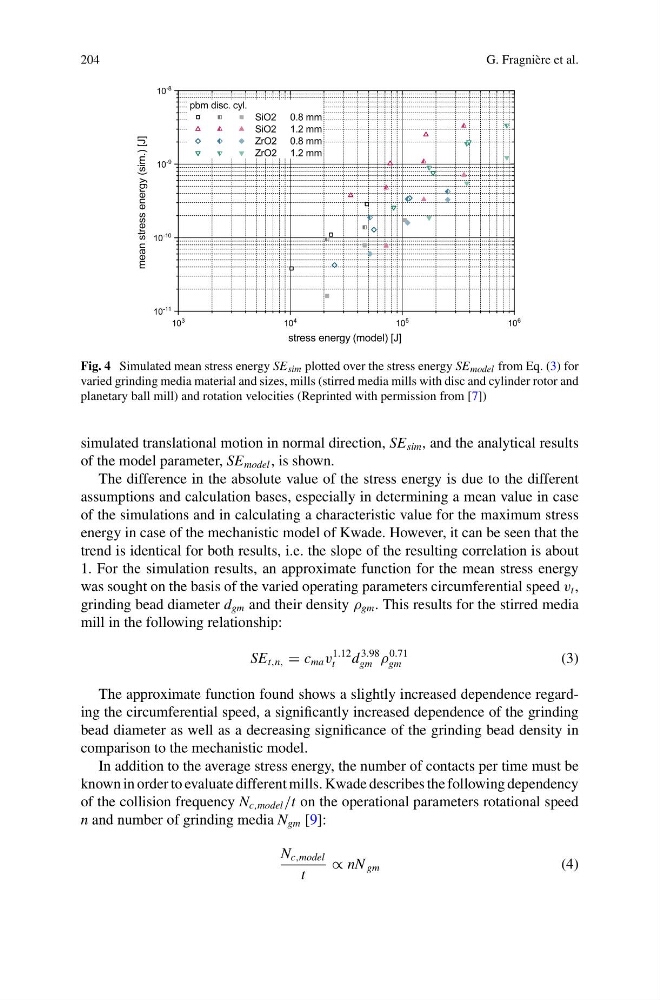
Fig. 4 Simulated mean stress energy SE sim plotted over the stress energy SE model from Eq. (3) for
varied grinding media material and sizes, mills (stirred media mills with disc and cylinder rotor and
planetary ball mill) and rotation velocities (Reprinted with permission from [7])
simulated translational motion in normal direction, SE sim , and the analytical results
of the model parameter, SE model , is shown.
The difference in the absolute value of the stress energy is due to the different
assumptions and calculation bases, especially in determining a mean value in case
of the simulations and in calculating a characteristic value for the maximum stress
energy in case of the mechanistic model of Kwade. However, it can be seen that the
trend is identical for both results, i.e. the slope of the resulting correlation is about
1. For the simulation results, an approximate function for the mean stress energy
was sought on the basis of the varied operating parameters circumferential speed v t ,
grinding bead diameter d gm and their density ρ gm . This results for the stirred media
mill in the following relationship:
SE t,n, = c ma v
1.12
t
d
3.98
gm ρ
0.71
gm
(3)
The approximate function found shows a slightly increased dependence regarding the circumferential speed, a significantly increased dependence of the grinding
bead diameter as well as a decreasing significance of the grinding bead density in
comparison to the mechanistic model.
In addition to the average stress energy, the number of contacts per time must be
known in order to evaluate different mills. Kwade describes the following dependency
of the collision frequency N c,model /t on the operational parameters rotational speed
n and number of grinding media N gm [9]:
N c,model
t
∝ nN gm
(4)
G. Fragnière et al.
Fig. 4 Simulated mean stress energy SE sim plotted over the stress energy SE model from Eq. (3) for
varied grinding media material and sizes, mills (stirred media mills with disc and cylinder rotor and
planetary ball mill) and rotation velocities (Reprinted with permission from [7])
simulated translational motion in normal direction, SE sim , and the analytical results
of the model parameter, SE model , is shown.
The difference in the absolute value of the stress energy is due to the different
assumptions and calculation bases, especially in determining a mean value in case
of the simulations and in calculating a characteristic value for the maximum stress
energy in case of the mechanistic model of Kwade. However, it can be seen that the
trend is identical for both results, i.e. the slope of the resulting correlation is about
1. For the simulation results, an approximate function for the mean stress energy
was sought on the basis of the varied operating parameters circumferential speed v t ,
grinding bead diameter d gm and their density ρ gm . This results for the stirred media
mill in the following relationship:
SE t,n, = c ma v
1.12
t
d
3.98
gm ρ
0.71
gm
(3)
The approximate function found shows a slightly increased dependence regarding the circumferential speed, a significantly increased dependence of the grinding
bead diameter as well as a decreasing significance of the grinding bead density in
comparison to the mechanistic model.
In addition to the average stress energy, the number of contacts per time must be
known in order to evaluate different mills. Kwade describes the following dependency
of the collision frequency N c,model /t on the operational parameters rotational speed
n and number of grinding media N gm [9]:
N c,model
t
∝ nN gm
(4)