

6 Dynamic Process Models for Fine Grinding and Dispersing
205
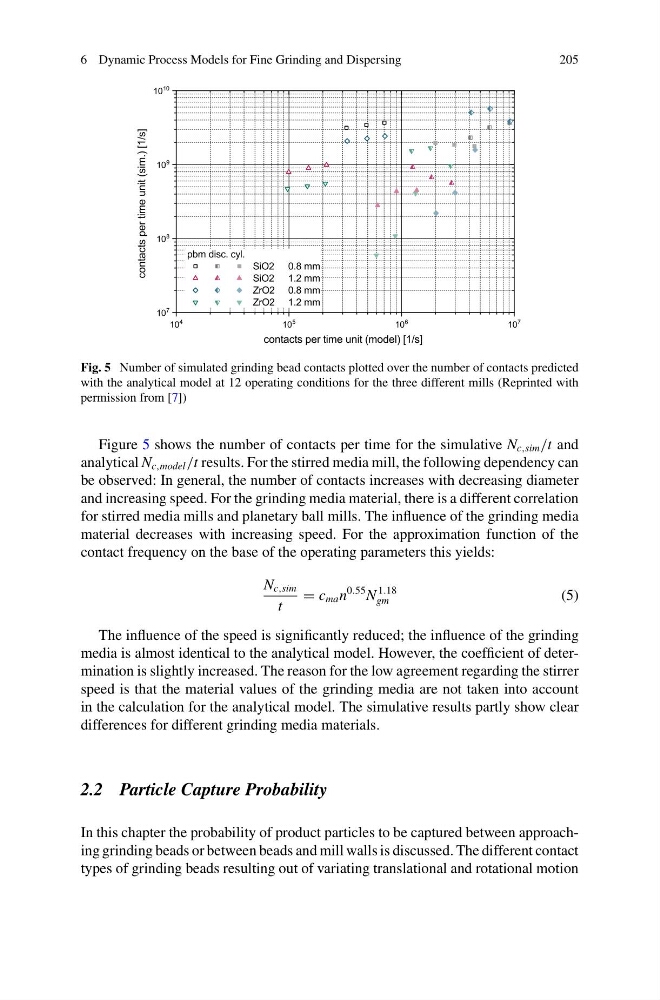
Fig. 5 Number of simulated grinding bead contacts plotted over the number of contacts predicted
with the analytical model at 12 operating conditions for the three different mills (Reprinted with
permission from [7])
Figure 5 shows the number of contacts per time for the simulative N c,sim /t and
analytical N c,model /t results. For the stirred media mill, the following dependency can
be observed: In general, the number of contacts increases with decreasing diameter
and increasing speed. For the grinding media material, there is a different correlation
for stirred media mills and planetary ball mills. The influence of the grinding media
material decreases with increasing speed. For the approximation function of the
contact frequency on the base of the operating parameters this yields:
N c,sim
t
= c ma n
0.55 N
1.18
gm
(5)
The influence of the speed is significantly reduced; the influence of the grinding
media is almost identical to the analytical model. However, the coefficient of determination is slightly increased. The reason for the low agreement regarding the stirrer
speed is that the material values of the grinding media are not taken into account
in the calculation for the analytical model. The simulative results partly show clear
differences for different grinding media materials.
2.2 Particle Capture Probability
In this chapter the probability of product particles to be captured between approaching grinding beads or between beads and mill walls is discussed. The different contact
types of grinding beads resulting out of variating translational and rotational motion
205
Fig. 5 Number of simulated grinding bead contacts plotted over the number of contacts predicted
with the analytical model at 12 operating conditions for the three different mills (Reprinted with
permission from [7])
Figure 5 shows the number of contacts per time for the simulative N c,sim /t and
analytical N c,model /t results. For the stirred media mill, the following dependency can
be observed: In general, the number of contacts increases with decreasing diameter
and increasing speed. For the grinding media material, there is a different correlation
for stirred media mills and planetary ball mills. The influence of the grinding media
material decreases with increasing speed. For the approximation function of the
contact frequency on the base of the operating parameters this yields:
N c,sim
t
= c ma n
0.55 N
1.18
gm
(5)
The influence of the speed is significantly reduced; the influence of the grinding
media is almost identical to the analytical model. However, the coefficient of determination is slightly increased. The reason for the low agreement regarding the stirrer
speed is that the material values of the grinding media are not taken into account
in the calculation for the analytical model. The simulative results partly show clear
differences for different grinding media materials.
2.2 Particle Capture Probability
In this chapter the probability of product particles to be captured between approaching grinding beads or between beads and mill walls is discussed. The different contact
types of grinding beads resulting out of variating translational and rotational motion