

positions and orientations were randomly generated, were used as initial structures.
The target atoms were H and Co of HCo(CO) 3 , C of CO, two H of H 2 , and two C of
C 2 H 4 , and γ was set to 300 kJ/mol. The AFIR path obtained in the search was refined
by the LUP method. The contraction at T ¼ 300, 400, 500 K and t MAX ¼ 10
À3 s by
the RCMC method was performed on the reaction path network consisting of
approximate paths by the LUP method, and TS and IRC were calculated for the
paths that acted as a bottleneck in the transition between the obtained superstates.
Therefore, this reaction path network is a hybrid network consisting of the approximate paths obtained by the LUP method and the IRC paths. Kinetic analysis using
this network gives approximate solutions for events that proceed in a shorter
timescale than 10
À3 s. As for events of a longer timescale than 10
À3 s, on the
other hand, it has been shown that the error of using the approximate paths is small
enough to be negligible numerically [85]. Electronic structure calculations were
performed by Gaussian16, with ωB97X-D functional, SDD basis function and
effective core potential for Co, and D95v(d) basis function for other atoms. In
Gibbs energy calculations, the normal mode frequencies below 50 cm
À1 were set
to 50 cm
À1 [86].
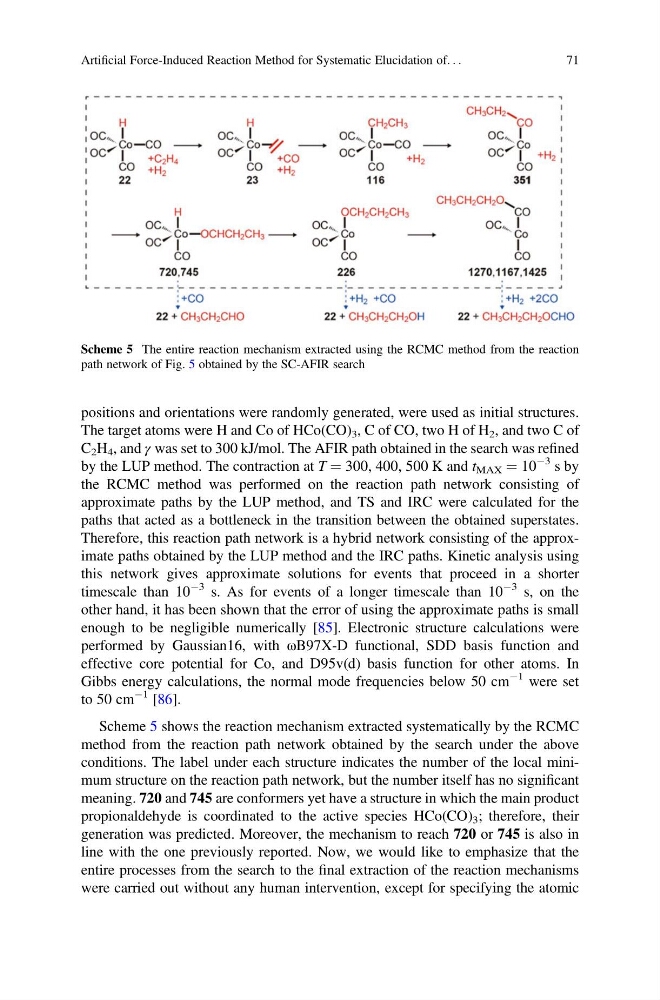
Scheme 5 shows the reaction mechanism extracted systematically by the RCMC
method from the reaction path network obtained by the search under the above
conditions. The label under each structure indicates the number of the local minimum structure on the reaction path network, but the number itself has no significant
meaning. 720 and 745 are conformers yet have a structure in which the main product
propionaldehyde is coordinated to the active species HCo(CO) 3 ; therefore, their
generation was predicted. Moreover, the mechanism to reach 720 or 745 is also in
line with the one previously reported. Now, we would like to emphasize that the
entire processes from the search to the final extraction of the reaction mechanisms
were carried out without any human intervention, except for specifying the atomic
Scheme 5 The entire reaction mechanism extracted using the RCMC method from the reaction
path network of Fig. 5 obtained by the SC-AFIR search
Artificial Force-Induced Reaction Method for Systematic Elucidation of. . .
71
The target atoms were H and Co of HCo(CO) 3 , C of CO, two H of H 2 , and two C of
C 2 H 4 , and γ was set to 300 kJ/mol. The AFIR path obtained in the search was refined
by the LUP method. The contraction at T ¼ 300, 400, 500 K and t MAX ¼ 10
À3 s by
the RCMC method was performed on the reaction path network consisting of
approximate paths by the LUP method, and TS and IRC were calculated for the
paths that acted as a bottleneck in the transition between the obtained superstates.
Therefore, this reaction path network is a hybrid network consisting of the approximate paths obtained by the LUP method and the IRC paths. Kinetic analysis using
this network gives approximate solutions for events that proceed in a shorter
timescale than 10
À3 s. As for events of a longer timescale than 10
À3 s, on the
other hand, it has been shown that the error of using the approximate paths is small
enough to be negligible numerically [85]. Electronic structure calculations were
performed by Gaussian16, with ωB97X-D functional, SDD basis function and
effective core potential for Co, and D95v(d) basis function for other atoms. In
Gibbs energy calculations, the normal mode frequencies below 50 cm
À1 were set
to 50 cm
À1 [86].
Scheme 5 shows the reaction mechanism extracted systematically by the RCMC
method from the reaction path network obtained by the search under the above
conditions. The label under each structure indicates the number of the local minimum structure on the reaction path network, but the number itself has no significant
meaning. 720 and 745 are conformers yet have a structure in which the main product
propionaldehyde is coordinated to the active species HCo(CO) 3 ; therefore, their
generation was predicted. Moreover, the mechanism to reach 720 or 745 is also in
line with the one previously reported. Now, we would like to emphasize that the
entire processes from the search to the final extraction of the reaction mechanisms
were carried out without any human intervention, except for specifying the atomic
Scheme 5 The entire reaction mechanism extracted using the RCMC method from the reaction
path network of Fig. 5 obtained by the SC-AFIR search
Artificial Force-Induced Reaction Method for Systematic Elucidation of. . .
71