

the quantum mechanical description of the system. A careful analysis of the influence of the number of solvent molecules should be carried out. This point is
illustrated with three examples: the transmetallation step in Suzuki-Miyaura couplings [108], the reductive elimination from Au(III) complexes [109], and the
copper-catalyzed hydration of alkenes [110].
The Gibbs energy profiles for three different processes depicted in Fig. 18
evidence how sensitive are the relative energies of the species involved in the
reaction, and particularly the reaction barriers, to the number of water molecules
incorporated into the cluster-continuum solvation model.
For the bromide-by-hydroxide replacement in the palladium-hydroxo mechanism
for the Suzuki-Miyaura transmetallation step, similar barriers of 24.2 and
22.9 kcal mol
À1 were obtained for the entering OH
À solvated by 3 and 4 water
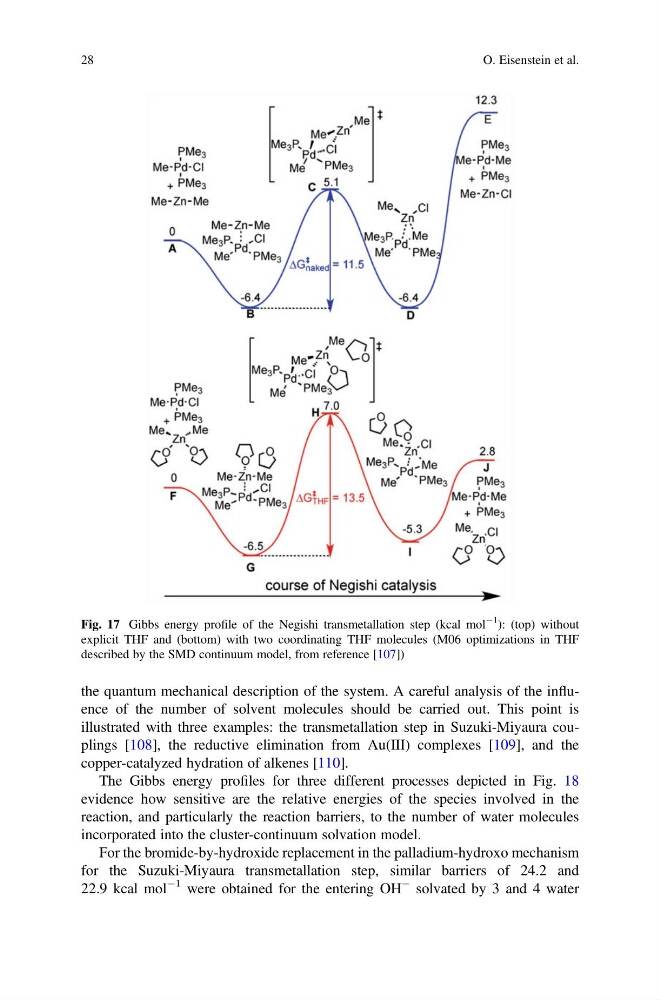
Fig. 17 Gibbs energy profile of the Negishi transmetallation step (kcal mol
À1
): (top) without
explicit THF and (bottom) with two coordinating THF molecules (M06 optimizations in THF
described by the SMD continuum model, from reference [107])
28
O. Eisenstein et al.
illustrated with three examples: the transmetallation step in Suzuki-Miyaura couplings [108], the reductive elimination from Au(III) complexes [109], and the
copper-catalyzed hydration of alkenes [110].
The Gibbs energy profiles for three different processes depicted in Fig. 18
evidence how sensitive are the relative energies of the species involved in the
reaction, and particularly the reaction barriers, to the number of water molecules
incorporated into the cluster-continuum solvation model.
For the bromide-by-hydroxide replacement in the palladium-hydroxo mechanism
for the Suzuki-Miyaura transmetallation step, similar barriers of 24.2 and
22.9 kcal mol
À1 were obtained for the entering OH
À solvated by 3 and 4 water
Fig. 17 Gibbs energy profile of the Negishi transmetallation step (kcal mol
À1
): (top) without
explicit THF and (bottom) with two coordinating THF molecules (M06 optimizations in THF
described by the SMD continuum model, from reference [107])
28
O. Eisenstein et al.