

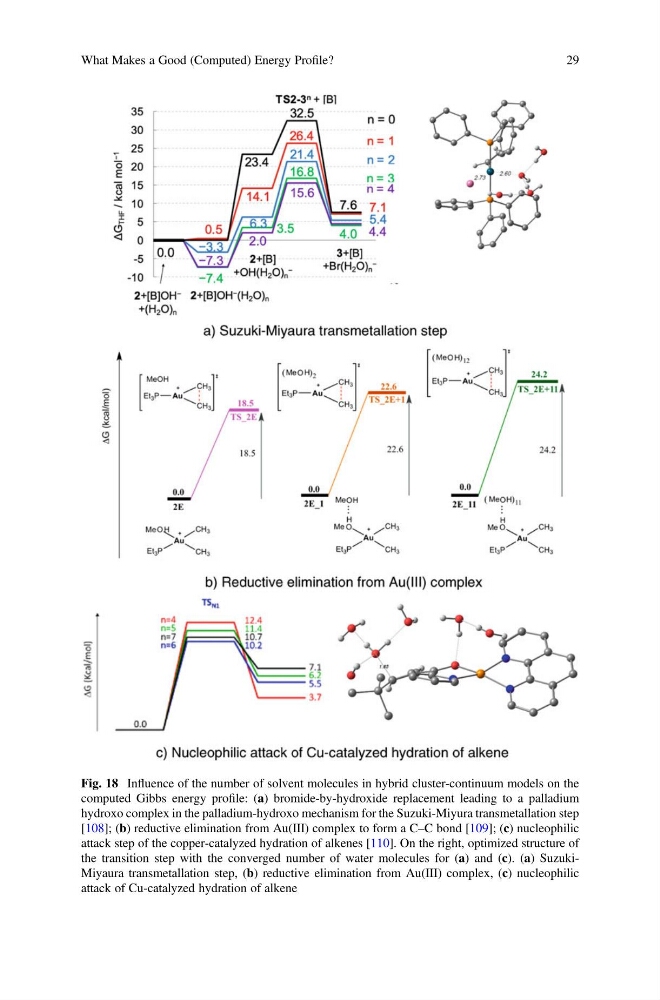
Fig. 18 Influence of the number of solvent molecules in hybrid cluster-continuum models on the
computed Gibbs energy profile: (a) bromide-by-hydroxide replacement leading to a palladium
hydroxo complex in the palladium-hydroxo mechanism for the Suzuki-Miyura transmetallation step
[108]; (b) reductive elimination from Au(III) complex to form a C–C bond [109]; (c) nucleophilic
attack step of the copper-catalyzed hydration of alkenes [110]. On the right, optimized structure of
the transition step with the converged number of water molecules for (a) and (c). (a) SuzukiMiyaura transmetallation step, (b) reductive elimination from Au(III) complex, (c) nucleophilic
attack of Cu-catalyzed hydration of alkene
What Makes a Good (Computed) Energy Profile?
29
computed Gibbs energy profile: (a) bromide-by-hydroxide replacement leading to a palladium
hydroxo complex in the palladium-hydroxo mechanism for the Suzuki-Miyura transmetallation step
[108]; (b) reductive elimination from Au(III) complex to form a C–C bond [109]; (c) nucleophilic
attack step of the copper-catalyzed hydration of alkenes [110]. On the right, optimized structure of
the transition step with the converged number of water molecules for (a) and (c). (a) SuzukiMiyaura transmetallation step, (b) reductive elimination from Au(III) complex, (c) nucleophilic
attack of Cu-catalyzed hydration of alkene
What Makes a Good (Computed) Energy Profile?
29