

be strongly revised to capture the true electronic coupling between ML and CO bond
strengths. Of course one has to say in Tolman’s defense that he chose the A 1
symmetrical CO stretching frequency for practical reasons, because it could be
easily measured in the 1960s and 1970s in nearly all cases, while at that time there
was no access to the low-frequency ML vibrations.
5 The Metal–Ligand Electronic Parameter (MLEP)
In view of the recent advances in terahertz spectroscopy [277–280] or depolarized
Raman scattering [281, 282], far-infrared absorptions down to 40 cm
À1 can be
measured nowadays. Therefore, there is no longer a problem to measure ML
stretching frequencies. For example, the NiL stretching frequencies of the set of
181 [NiCO 3 L] complexes range from 100 cm
À1 for L ¼ N(C 6 F 5 ) 3 to 1,600 cm
À1 for
L ¼ H [274]. Also the calculation of reliable vibrational frequencies even for larger
systems has become feasible and more or less routine with today’s computer
O
C
Ni
L
O
NI
N
NS
P
PS
As
AsS
Sb
SbS
Bi
BiS
B
C
CA
CR
O
S
X
BQ
CQ
CW
NQ
NW
OQ
SiQ
SiW
PQ
SQ
k
a
(CO) [mdyn/Å]
16
18
20
k
a (NiL) [mdyn/Å]
0
1
2
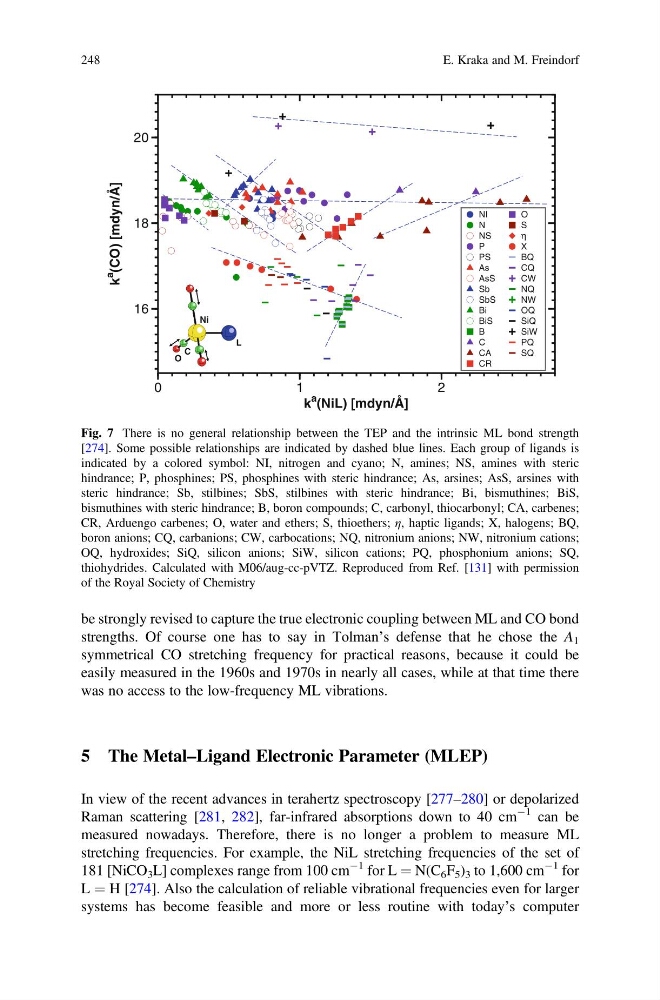
Fig. 7 There is no general relationship between the TEP and the intrinsic ML bond strength
[274]. Some possible relationships are indicated by dashed blue lines. Each group of ligands is
indicated by a colored symbol: NI, nitrogen and cyano; N, amines; NS, amines with steric
hindrance; P, phosphines; PS, phosphines with steric hindrance; As, arsines; AsS, arsines with
steric hindrance; Sb, stilbines; SbS, stilbines with steric hindrance; Bi, bismuthines; BiS,
bismuthines with steric hindrance; B, boron compounds; C, carbonyl, thiocarbonyl; CA, carbenes;
CR, Arduengo carbenes; O, water and ethers; S, thioethers; η, haptic ligands; X, halogens; BQ,
boron anions; CQ, carbanions; CW, carbocations; NQ, nitronium anions; NW, nitronium cations;
OQ, hydroxides; SiQ, silicon anions; SiW, silicon cations; PQ, phosphonium anions; SQ,
thiohydrides. Calculated with M06/aug-cc-pVTZ. Reproduced from Ref. [131] with permission
of the Royal Society of Chemistry
248
E. Kraka and M. Freindorf
strengths. Of course one has to say in Tolman’s defense that he chose the A 1
symmetrical CO stretching frequency for practical reasons, because it could be
easily measured in the 1960s and 1970s in nearly all cases, while at that time there
was no access to the low-frequency ML vibrations.
5 The Metal–Ligand Electronic Parameter (MLEP)
In view of the recent advances in terahertz spectroscopy [277–280] or depolarized
Raman scattering [281, 282], far-infrared absorptions down to 40 cm
À1 can be
measured nowadays. Therefore, there is no longer a problem to measure ML
stretching frequencies. For example, the NiL stretching frequencies of the set of
181 [NiCO 3 L] complexes range from 100 cm
À1 for L ¼ N(C 6 F 5 ) 3 to 1,600 cm
À1 for
L ¼ H [274]. Also the calculation of reliable vibrational frequencies even for larger
systems has become feasible and more or less routine with today’s computer
O
C
Ni
L
O
NI
N
NS
P
PS
As
AsS
Sb
SbS
Bi
BiS
B
C
CA
CR
O
S
X
BQ
CQ
CW
NQ
NW
OQ
SiQ
SiW
PQ
SQ
k
a
(CO) [mdyn/Å]
16
18
20
k
a (NiL) [mdyn/Å]
0
1
2
Fig. 7 There is no general relationship between the TEP and the intrinsic ML bond strength
[274]. Some possible relationships are indicated by dashed blue lines. Each group of ligands is
indicated by a colored symbol: NI, nitrogen and cyano; N, amines; NS, amines with steric
hindrance; P, phosphines; PS, phosphines with steric hindrance; As, arsines; AsS, arsines with
steric hindrance; Sb, stilbines; SbS, stilbines with steric hindrance; Bi, bismuthines; BiS,
bismuthines with steric hindrance; B, boron compounds; C, carbonyl, thiocarbonyl; CA, carbenes;
CR, Arduengo carbenes; O, water and ethers; S, thioethers; η, haptic ligands; X, halogens; BQ,
boron anions; CQ, carbanions; CW, carbocations; NQ, nitronium anions; NW, nitronium cations;
OQ, hydroxides; SiQ, silicon anions; SiW, silicon cations; PQ, phosphonium anions; SQ,
thiohydrides. Calculated with M06/aug-cc-pVTZ. Reproduced from Ref. [131] with permission
of the Royal Society of Chemistry
248
E. Kraka and M. Freindorf