

prospect of systematically optimizing these methods (especially with the aid of
computation) is relatively low.
In contrast, a more efficient approach is asymmetric catalysis. This enables the
selective synthesis of enantioenriched materials using only a catalytic
(i.e. sub-stoichiometric) amount of a chiral species. In theory, one chiral molecule
has the potential to catalyse the formation of a large quantity of an optically active
substance. Compared to the other approaches, asymmetric synthesis is desirable
because there is no need to rely on the availability of the natural enantiomer (chiral
pool) or wasting materials (50% of mass in kinetic resolutions is unwanted, and use
of chiral auxiliaries requires additional steps to introduce the auxiliary and liberate
the desired molecule). In addition, the development of a catalytic system uses
sub-stoichiometric chiral species to accelerate the reaction. These considerations
add to the overall efficiency and atom economy of an asymmetric reaction [8].
The ability of homogeneous transition metal complexes to catalyse a wide variety
of chemical transformations has inspired chemists to design and prepare chiral
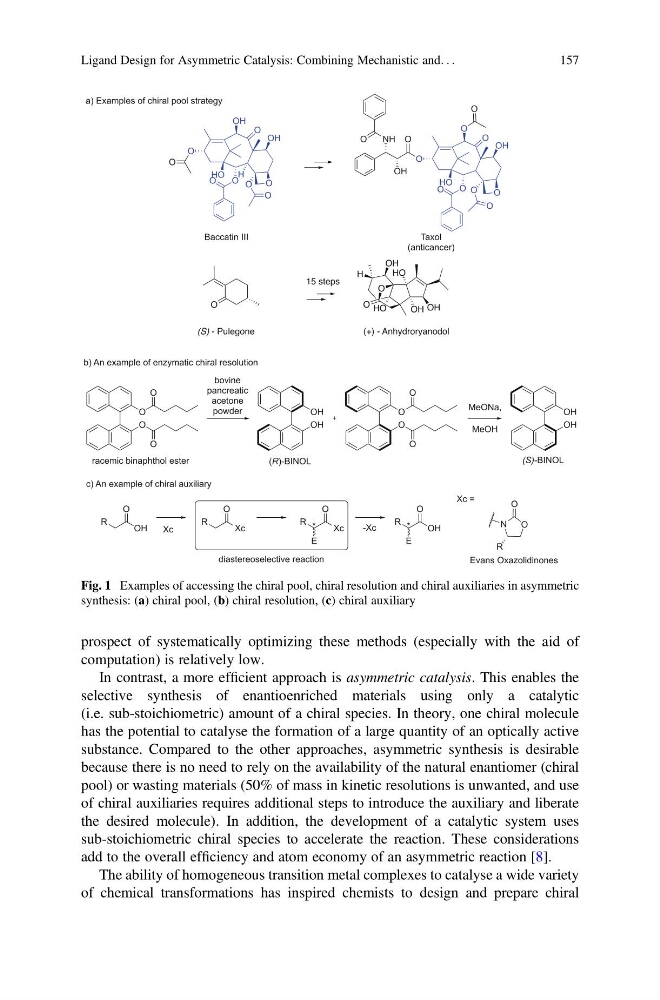
Fig. 1 Examples of accessing the chiral pool, chiral resolution and chiral auxiliaries in asymmetric
synthesis: (a) chiral pool, (b) chiral resolution, (c) chiral auxiliary
Ligand Design for Asymmetric Catalysis: Combining Mechanistic and. . .
157
computation) is relatively low.
In contrast, a more efficient approach is asymmetric catalysis. This enables the
selective synthesis of enantioenriched materials using only a catalytic
(i.e. sub-stoichiometric) amount of a chiral species. In theory, one chiral molecule
has the potential to catalyse the formation of a large quantity of an optically active
substance. Compared to the other approaches, asymmetric synthesis is desirable
because there is no need to rely on the availability of the natural enantiomer (chiral
pool) or wasting materials (50% of mass in kinetic resolutions is unwanted, and use
of chiral auxiliaries requires additional steps to introduce the auxiliary and liberate
the desired molecule). In addition, the development of a catalytic system uses
sub-stoichiometric chiral species to accelerate the reaction. These considerations
add to the overall efficiency and atom economy of an asymmetric reaction [8].
The ability of homogeneous transition metal complexes to catalyse a wide variety
of chemical transformations has inspired chemists to design and prepare chiral
Fig. 1 Examples of accessing the chiral pool, chiral resolution and chiral auxiliaries in asymmetric
synthesis: (a) chiral pool, (b) chiral resolution, (c) chiral auxiliary
Ligand Design for Asymmetric Catalysis: Combining Mechanistic and. . .
157