

3 The Challenges
As commented in the previous sections, accurate modeling of an organometallic
reaction relies on both a realistic description of the chemical system and a careful use
of theoretical methodology. Of course, both issues are constrained by what is
possible to be computed at this time. In this way the so-called “state-of-the-art” is
defined as the best possible calculation at any given time.
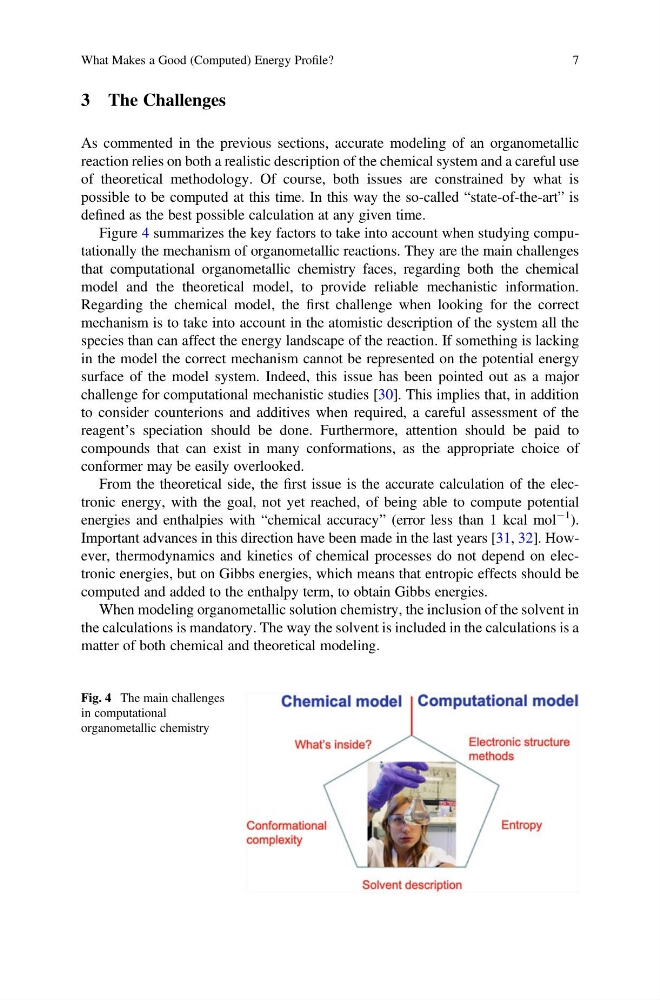
Figure 4 summarizes the key factors to take into account when studying computationally the mechanism of organometallic reactions. They are the main challenges
that computational organometallic chemistry faces, regarding both the chemical
model and the theoretical model, to provide reliable mechanistic information.
Regarding the chemical model, the first challenge when looking for the correct
mechanism is to take into account in the atomistic description of the system all the
species than can affect the energy landscape of the reaction. If something is lacking
in the model the correct mechanism cannot be represented on the potential energy
surface of the model system. Indeed, this issue has been pointed out as a major
challenge for computational mechanistic studies [30]. This implies that, in addition
to consider counterions and additives when required, a careful assessment of the
reagent’s speciation should be done. Furthermore, attention should be paid to
compounds that can exist in many conformations, as the appropriate choice of
conformer may be easily overlooked.
From the theoretical side, the first issue is the accurate calculation of the electronic energy, with the goal, not yet reached, of being able to compute potential
energies and enthalpies with “chemical accuracy” (error less than 1 kcal mol
À1 ).
Important advances in this direction have been made in the last years [31, 32]. However, thermodynamics and kinetics of chemical processes do not depend on electronic energies, but on Gibbs energies, which means that entropic effects should be
computed and added to the enthalpy term, to obtain Gibbs energies.
When modeling organometallic solution chemistry, the inclusion of the solvent in
the calculations is mandatory. The way the solvent is included in the calculations is a
matter of both chemical and theoretical modeling.
Fig. 4 The main challenges
in computational
organometallic chemistry
What Makes a Good (Computed) Energy Profile?
7
As commented in the previous sections, accurate modeling of an organometallic
reaction relies on both a realistic description of the chemical system and a careful use
of theoretical methodology. Of course, both issues are constrained by what is
possible to be computed at this time. In this way the so-called “state-of-the-art” is
defined as the best possible calculation at any given time.
Figure 4 summarizes the key factors to take into account when studying computationally the mechanism of organometallic reactions. They are the main challenges
that computational organometallic chemistry faces, regarding both the chemical
model and the theoretical model, to provide reliable mechanistic information.
Regarding the chemical model, the first challenge when looking for the correct
mechanism is to take into account in the atomistic description of the system all the
species than can affect the energy landscape of the reaction. If something is lacking
in the model the correct mechanism cannot be represented on the potential energy
surface of the model system. Indeed, this issue has been pointed out as a major
challenge for computational mechanistic studies [30]. This implies that, in addition
to consider counterions and additives when required, a careful assessment of the
reagent’s speciation should be done. Furthermore, attention should be paid to
compounds that can exist in many conformations, as the appropriate choice of
conformer may be easily overlooked.
From the theoretical side, the first issue is the accurate calculation of the electronic energy, with the goal, not yet reached, of being able to compute potential
energies and enthalpies with “chemical accuracy” (error less than 1 kcal mol
À1 ).
Important advances in this direction have been made in the last years [31, 32]. However, thermodynamics and kinetics of chemical processes do not depend on electronic energies, but on Gibbs energies, which means that entropic effects should be
computed and added to the enthalpy term, to obtain Gibbs energies.
When modeling organometallic solution chemistry, the inclusion of the solvent in
the calculations is mandatory. The way the solvent is included in the calculations is a
matter of both chemical and theoretical modeling.
Fig. 4 The main challenges
in computational
organometallic chemistry
What Makes a Good (Computed) Energy Profile?
7