

10 A Novel High-Efficiency Keyhole Tungsten Inert Gas …
325
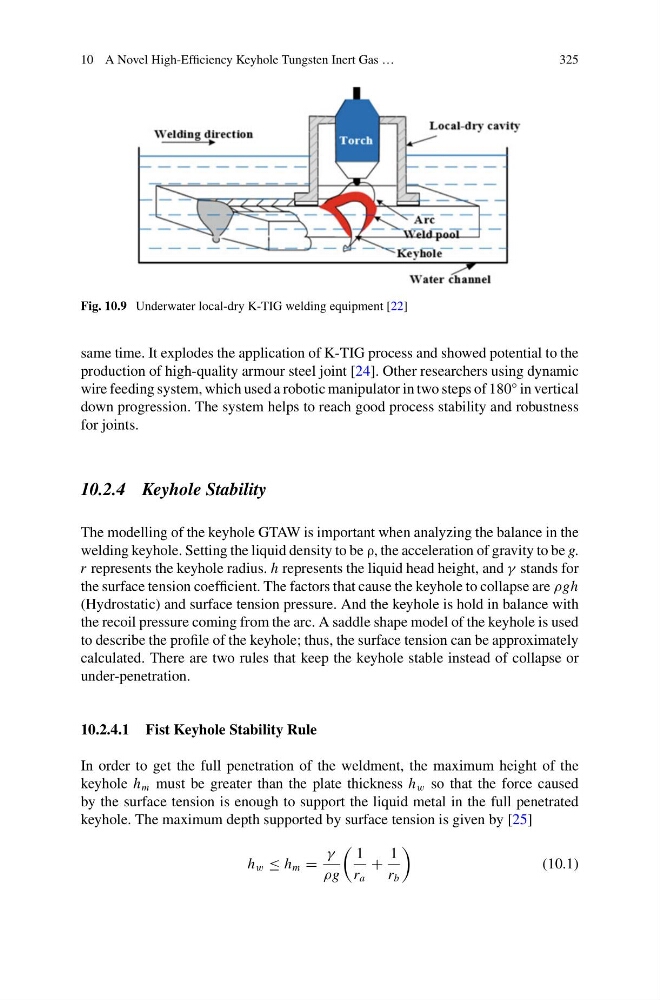
Fig. 10.9 Underwater local-dry K-TIG welding equipment [22]
same time. It explodes the application of K-TIG process and showed potential to the
production of high-quality armour steel joint [24]. Other researchers using dynamic
wire feeding system, which used a robotic manipulator in two steps of 180° in vertical
down progression. The system helps to reach good process stability and robustness
for joints.
10.2.4 Keyhole Stability
The modelling of the keyhole GTAW is important when analyzing the balance in the
welding keyhole. Setting the liquid density to be ρ, the acceleration of gravity to be g.
r represents the keyhole radius. h represents the liquid head height, and γ stands for
the surface tension coefficient. The factors that cause the keyhole to collapse are ρgh
(Hydrostatic) and surface tension pressure. And the keyhole is hold in balance with
the recoil pressure coming from the arc. A saddle shape model of the keyhole is used
to describe the profile of the keyhole; thus, the surface tension can be approximately
calculated. There are two rules that keep the keyhole stable instead of collapse or
under-penetration.
10.2.4.1 Fist Keyhole Stability Rule
In order to get the full penetration of the weldment, the maximum height of the
keyhole h m must be greater than the plate thickness h w so that the force caused
by the surface tension is enough to support the liquid metal in the full penetrated
keyhole. The maximum depth supported by surface tension is given by [25]
h w ≤ h m =
γ
ρg
1
r a
+
1
r b
(10.1)
325
Fig. 10.9 Underwater local-dry K-TIG welding equipment [22]
same time. It explodes the application of K-TIG process and showed potential to the
production of high-quality armour steel joint [24]. Other researchers using dynamic
wire feeding system, which used a robotic manipulator in two steps of 180° in vertical
down progression. The system helps to reach good process stability and robustness
for joints.
10.2.4 Keyhole Stability
The modelling of the keyhole GTAW is important when analyzing the balance in the
welding keyhole. Setting the liquid density to be ρ, the acceleration of gravity to be g.
r represents the keyhole radius. h represents the liquid head height, and γ stands for
the surface tension coefficient. The factors that cause the keyhole to collapse are ρgh
(Hydrostatic) and surface tension pressure. And the keyhole is hold in balance with
the recoil pressure coming from the arc. A saddle shape model of the keyhole is used
to describe the profile of the keyhole; thus, the surface tension can be approximately
calculated. There are two rules that keep the keyhole stable instead of collapse or
under-penetration.
10.2.4.1 Fist Keyhole Stability Rule
In order to get the full penetration of the weldment, the maximum height of the
keyhole h m must be greater than the plate thickness h w so that the force caused
by the surface tension is enough to support the liquid metal in the full penetrated
keyhole. The maximum depth supported by surface tension is given by [25]
h w ≤ h m =
γ
ρg
1
r a
+
1
r b
(10.1)