

8 Industry 4.0 in Welding
261
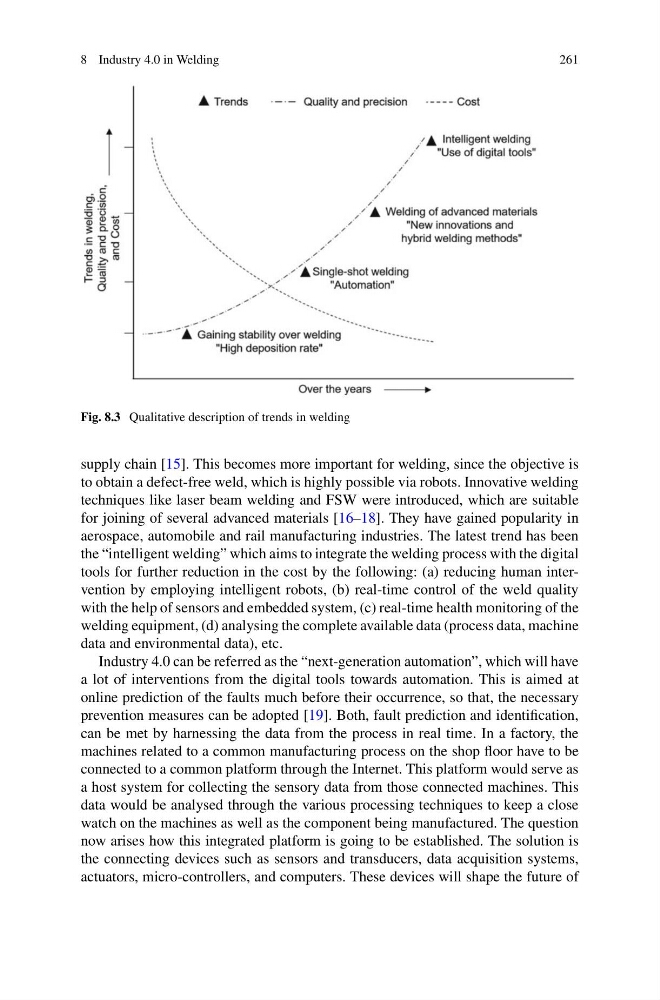
Fig. 8.3 Qualitative description of trends in welding
supply chain [15]. This becomes more important for welding, since the objective is
to obtain a defect-free weld, which is highly possible via robots. Innovative welding
techniques like laser beam welding and FSW were introduced, which are suitable
for joining of several advanced materials [16–18]. They have gained popularity in
aerospace, automobile and rail manufacturing industries. The latest trend has been
the “intelligent welding” which aims to integrate the welding process with the digital
tools for further reduction in the cost by the following: (a) reducing human intervention by employing intelligent robots, (b) real-time control of the weld quality
with the help of sensors and embedded system, (c) real-time health monitoring of the
welding equipment, (d) analysing the complete available data (process data, machine
data and environmental data), etc.
Industry 4.0 can be referred as the “next-generation automation”, which will have
a lot of interventions from the digital tools towards automation. This is aimed at
online prediction of the faults much before their occurrence, so that, the necessary
prevention measures can be adopted [19]. Both, fault prediction and identification,
can be met by harnessing the data from the process in real time. In a factory, the
machines related to a common manufacturing process on the shop floor have to be
connected to a common platform through the Internet. This platform would serve as
a host system for collecting the sensory data from those connected machines. This
data would be analysed through the various processing techniques to keep a close
watch on the machines as well as the component being manufactured. The question
now arises how this integrated platform is going to be established. The solution is
the connecting devices such as sensors and transducers, data acquisition systems,
actuators, micro-controllers, and computers. These devices will shape the future of
261
Fig. 8.3 Qualitative description of trends in welding
supply chain [15]. This becomes more important for welding, since the objective is
to obtain a defect-free weld, which is highly possible via robots. Innovative welding
techniques like laser beam welding and FSW were introduced, which are suitable
for joining of several advanced materials [16–18]. They have gained popularity in
aerospace, automobile and rail manufacturing industries. The latest trend has been
the “intelligent welding” which aims to integrate the welding process with the digital
tools for further reduction in the cost by the following: (a) reducing human intervention by employing intelligent robots, (b) real-time control of the weld quality
with the help of sensors and embedded system, (c) real-time health monitoring of the
welding equipment, (d) analysing the complete available data (process data, machine
data and environmental data), etc.
Industry 4.0 can be referred as the “next-generation automation”, which will have
a lot of interventions from the digital tools towards automation. This is aimed at
online prediction of the faults much before their occurrence, so that, the necessary
prevention measures can be adopted [19]. Both, fault prediction and identification,
can be met by harnessing the data from the process in real time. In a factory, the
machines related to a common manufacturing process on the shop floor have to be
connected to a common platform through the Internet. This platform would serve as
a host system for collecting the sensory data from those connected machines. This
data would be analysed through the various processing techniques to keep a close
watch on the machines as well as the component being manufactured. The question
now arises how this integrated platform is going to be established. The solution is
the connecting devices such as sensors and transducers, data acquisition systems,
actuators, micro-controllers, and computers. These devices will shape the future of