

1 Friction Stir Welding
15
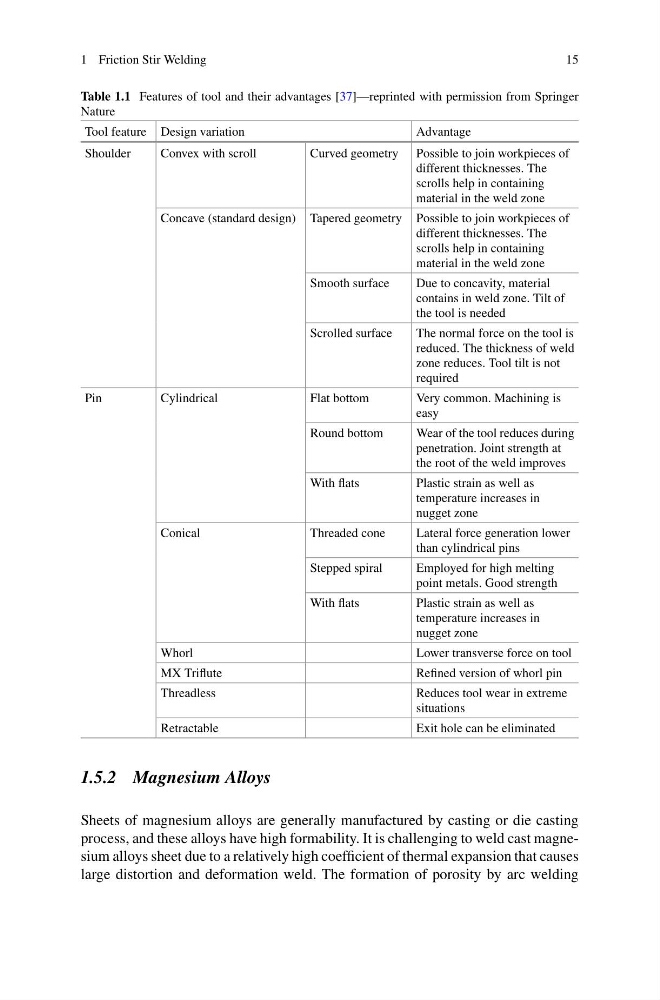
Table 1.1 Features of tool and their advantages [37]—reprinted with permission from Springer
Nature
Tool feature Design variation
Advantage
Shoulder
Convex with scroll
Curved geometry Possible to join workpieces of
different thicknesses. The
scrolls help in containing
material in the weld zone
Concave (standard design) Tapered geometry Possible to join workpieces of
different thicknesses. The
scrolls help in containing
material in the weld zone
Smooth surface
Due to concavity, material
contains in weld zone. Tilt of
the tool is needed
Scrolled surface
The normal force on the tool is
reduced. The thickness of weld
zone reduces. Tool tilt is not
required
Pin
Cylindrical
Flat bottom
Very common. Machining is
easy
Round bottom
Wear of the tool reduces during
penetration. Joint strength at
the root of the weld improves
With flats
Plastic strain as well as
temperature increases in
nugget zone
Conical
Threaded cone
Lateral force generation lower
than cylindrical pins
Stepped spiral
Employed for high melting
point metals. Good strength
With flats
Plastic strain as well as
temperature increases in
nugget zone
Whorl
Lower transverse force on tool
MX Triflute
Refined version of whorl pin
Threadless
Reduces tool wear in extreme
situations
Retractable
Exit hole can be eliminated
1.5.2 Magnesium Alloys
Sheets of magnesium alloys are generally manufactured by casting or die casting
process, and these alloys have high formability. It is challenging to weld cast magnesium alloys sheet due to a relatively high coefficient of thermal expansion that causes
large distortion and deformation weld. The formation of porosity by arc welding
15
Table 1.1 Features of tool and their advantages [37]—reprinted with permission from Springer
Nature
Tool feature Design variation
Advantage
Shoulder
Convex with scroll
Curved geometry Possible to join workpieces of
different thicknesses. The
scrolls help in containing
material in the weld zone
Concave (standard design) Tapered geometry Possible to join workpieces of
different thicknesses. The
scrolls help in containing
material in the weld zone
Smooth surface
Due to concavity, material
contains in weld zone. Tilt of
the tool is needed
Scrolled surface
The normal force on the tool is
reduced. The thickness of weld
zone reduces. Tool tilt is not
required
Pin
Cylindrical
Flat bottom
Very common. Machining is
easy
Round bottom
Wear of the tool reduces during
penetration. Joint strength at
the root of the weld improves
With flats
Plastic strain as well as
temperature increases in
nugget zone
Conical
Threaded cone
Lateral force generation lower
than cylindrical pins
Stepped spiral
Employed for high melting
point metals. Good strength
With flats
Plastic strain as well as
temperature increases in
nugget zone
Whorl
Lower transverse force on tool
MX Triflute
Refined version of whorl pin
Threadless
Reduces tool wear in extreme
situations
Retractable
Exit hole can be eliminated
1.5.2 Magnesium Alloys
Sheets of magnesium alloys are generally manufactured by casting or die casting
process, and these alloys have high formability. It is challenging to weld cast magnesium alloys sheet due to a relatively high coefficient of thermal expansion that causes
large distortion and deformation weld. The formation of porosity by arc welding