

13.3 Observing the Sun
189
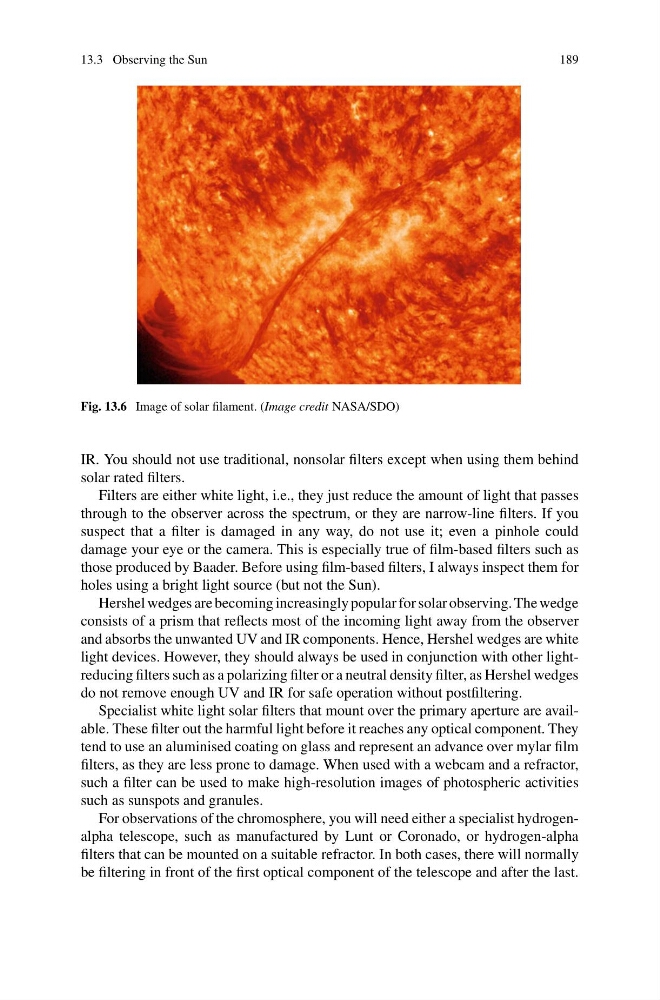
Fig. 13.6 Image of solar filament. (Image credit NASA/SDO)
IR. You should not use traditional, nonsolar filters except when using them behind
solar rated filters.
Filters are either white light, i.e., they just reduce the amount of light that passes
through to the observer across the spectrum, or they are narrow-line filters. If you
suspect that a filter is damaged in any way, do not use it; even a pinhole could
damage your eye or the camera. This is especially true of film-based filters such as
those produced by Baader. Before using film-based filters, I always inspect them for
holes using a bright light source (but not the Sun).
Hershel wedges are becoming increasingly popular for solar observing. The wedge
consists of a prism that reflects most of the incoming light away from the observer
and absorbs the unwanted UV and IR components. Hence, Hershel wedges are white
light devices. However, they should always be used in conjunction with other lightreducing filters such as a polarizing filter or a neutral density filter, as Hershel wedges
do not remove enough UV and IR for safe operation without postfiltering.
Specialist white light solar filters that mount over the primary aperture are available. These filter out the harmful light before it reaches any optical component. They
tend to use an aluminised coating on glass and represent an advance over mylar film
filters, as they are less prone to damage. When used with a webcam and a refractor,
such a filter can be used to make high-resolution images of photospheric activities
such as sunspots and granules.
For observations of the chromosphere, you will need either a specialist hydrogenalpha telescope, such as manufactured by Lunt or Coronado, or hydrogen-alpha
filters that can be mounted on a suitable refractor. In both cases, there will normally
be filtering in front of the first optical component of the telescope and after the last.
189
Fig. 13.6 Image of solar filament. (Image credit NASA/SDO)
IR. You should not use traditional, nonsolar filters except when using them behind
solar rated filters.
Filters are either white light, i.e., they just reduce the amount of light that passes
through to the observer across the spectrum, or they are narrow-line filters. If you
suspect that a filter is damaged in any way, do not use it; even a pinhole could
damage your eye or the camera. This is especially true of film-based filters such as
those produced by Baader. Before using film-based filters, I always inspect them for
holes using a bright light source (but not the Sun).
Hershel wedges are becoming increasingly popular for solar observing. The wedge
consists of a prism that reflects most of the incoming light away from the observer
and absorbs the unwanted UV and IR components. Hence, Hershel wedges are white
light devices. However, they should always be used in conjunction with other lightreducing filters such as a polarizing filter or a neutral density filter, as Hershel wedges
do not remove enough UV and IR for safe operation without postfiltering.
Specialist white light solar filters that mount over the primary aperture are available. These filter out the harmful light before it reaches any optical component. They
tend to use an aluminised coating on glass and represent an advance over mylar film
filters, as they are less prone to damage. When used with a webcam and a refractor,
such a filter can be used to make high-resolution images of photospheric activities
such as sunspots and granules.
For observations of the chromosphere, you will need either a specialist hydrogenalpha telescope, such as manufactured by Lunt or Coronado, or hydrogen-alpha
filters that can be mounted on a suitable refractor. In both cases, there will normally
be filtering in front of the first optical component of the telescope and after the last.