

62
3 Heterogeneous and Homogeneous Catalytic Partial Oxidations …
Pt
III
Cl
Cl
Cl
Cl
2Pt
II
Cl
Cl
Cl
Cl
CH 3
2Pt
IV
Cl
Cl
Cl
CH 3
Cl
Cl
2CH 3 OH + H + + Cl -
CH 4
H +
H 2 O
[Pt IV Cl 6 ] 2Pt II Cl 2 + 3Cl -
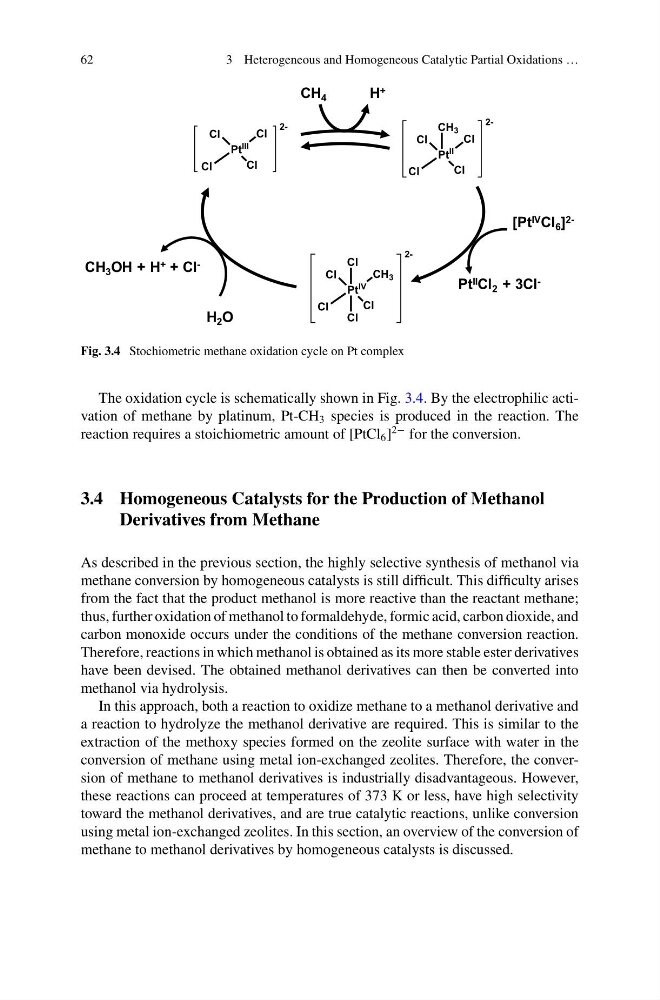
Fig. 3.4 Stochiometric methane oxidation cycle on Pt complex
The oxidation cycle is schematically shown in Fig. 3.4. By the electrophilic activation of methane by platinum, Pt-CH 3 species is produced in the reaction. The
reaction requires a stoichiometric amount of [PtCl 6 ]
2− for the conversion.
3.4 Homogeneous Catalysts for the Production of Methanol
Derivatives from Methane
As described in the previous section, the highly selective synthesis of methanol via
methane conversion by homogeneous catalysts is still difficult. This difficulty arises
from the fact that the product methanol is more reactive than the reactant methane;
thus, further oxidation of methanol to formaldehyde, formic acid, carbon dioxide, and
carbon monoxide occurs under the conditions of the methane conversion reaction.
Therefore, reactions in which methanol is obtained as its more stable ester derivatives
have been devised. The obtained methanol derivatives can then be converted into
methanol via hydrolysis.
In this approach, both a reaction to oxidize methane to a methanol derivative and
a reaction to hydrolyze the methanol derivative are required. This is similar to the
extraction of the methoxy species formed on the zeolite surface with water in the
conversion of methane using metal ion-exchanged zeolites. Therefore, the conversion of methane to methanol derivatives is industrially disadvantageous. However,
these reactions can proceed at temperatures of 373 K or less, have high selectivity
toward the methanol derivatives, and are true catalytic reactions, unlike conversion
using metal ion-exchanged zeolites. In this section, an overview of the conversion of
methane to methanol derivatives by homogeneous catalysts is discussed.
3 Heterogeneous and Homogeneous Catalytic Partial Oxidations …
Pt
III
Cl
Cl
Cl
Cl
2Pt
II
Cl
Cl
Cl
Cl
CH 3
2Pt
IV
Cl
Cl
Cl
CH 3
Cl
Cl
2CH 3 OH + H + + Cl -
CH 4
H +
H 2 O
[Pt IV Cl 6 ] 2Pt II Cl 2 + 3Cl -
Fig. 3.4 Stochiometric methane oxidation cycle on Pt complex
The oxidation cycle is schematically shown in Fig. 3.4. By the electrophilic activation of methane by platinum, Pt-CH 3 species is produced in the reaction. The
reaction requires a stoichiometric amount of [PtCl 6 ]
2− for the conversion.
3.4 Homogeneous Catalysts for the Production of Methanol
Derivatives from Methane
As described in the previous section, the highly selective synthesis of methanol via
methane conversion by homogeneous catalysts is still difficult. This difficulty arises
from the fact that the product methanol is more reactive than the reactant methane;
thus, further oxidation of methanol to formaldehyde, formic acid, carbon dioxide, and
carbon monoxide occurs under the conditions of the methane conversion reaction.
Therefore, reactions in which methanol is obtained as its more stable ester derivatives
have been devised. The obtained methanol derivatives can then be converted into
methanol via hydrolysis.
In this approach, both a reaction to oxidize methane to a methanol derivative and
a reaction to hydrolyze the methanol derivative are required. This is similar to the
extraction of the methoxy species formed on the zeolite surface with water in the
conversion of methane using metal ion-exchanged zeolites. Therefore, the conversion of methane to methanol derivatives is industrially disadvantageous. However,
these reactions can proceed at temperatures of 373 K or less, have high selectivity
toward the methanol derivatives, and are true catalytic reactions, unlike conversion
using metal ion-exchanged zeolites. In this section, an overview of the conversion of
methane to methanol derivatives by homogeneous catalysts is discussed.