

178
7 C–C Bond Formation via Carbocations in the Methane …
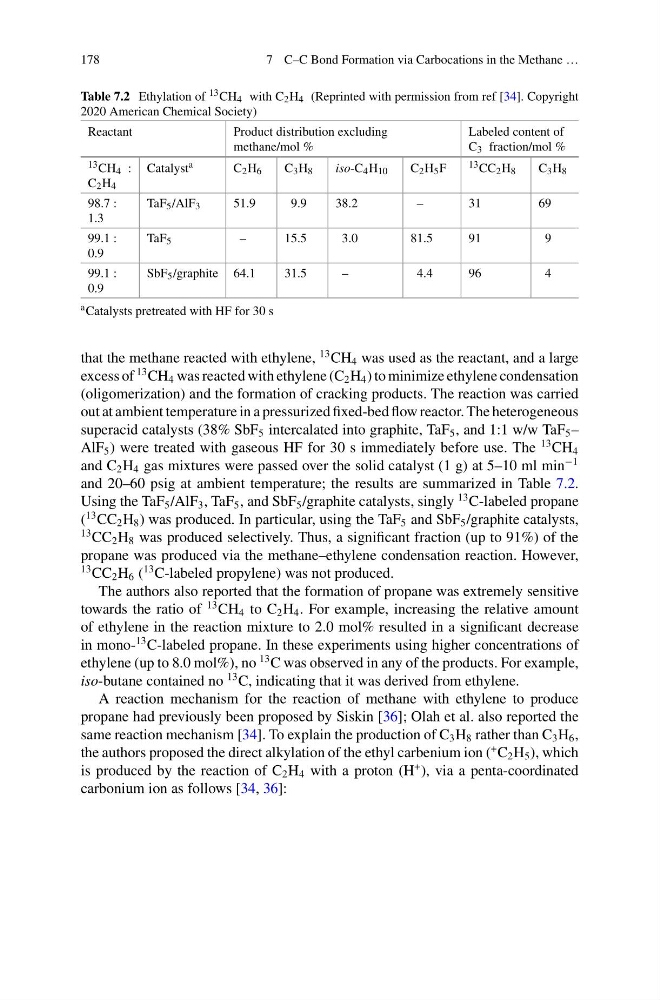
Table 7.2 Ethylation of 13 CH 4 with C 2 H 4 (Reprinted with permission from ref [34]. Copyright
2020 American Chemical Society)
Reactant
Product distribution excluding
methane/mol %
Labeled content of
C 3 fraction/mol %
13 CH 4 :
C 2 H 4
Catalyst a
C 2 H 6
C 3 H 8
iso-C 4 H 10
C 2 H 5 F
13 CC 2 H 8
C 3 H 8
98.7 :
1.3
TaF 5 /AlF 3
51.9
9.9
38.2
–
31
69
99.1 :
0.9
TaF 5
–
15.5
3.0
81.5
91
9
99.1 :
0.9
SbF 5 /graphite 64.1
31.5
–
4.4
96
4
a Catalysts pretreated with HF for 30 s
that the methane reacted with ethylene,
13 CH 4 was used as the reactant, and a large
excess of
13 CH 4 was reacted with ethylene (C 2 H 4 ) to minimize ethylene condensation
(oligomerization) and the formation of cracking products. The reaction was carried
out at ambient temperature in a pressurized fixed-bed flow reactor. The heterogeneous
superacid catalysts (38% SbF 5 intercalated into graphite, TaF 5 , and 1:1 w/w TaF 5 –
AlF 5 ) were treated with gaseous HF for 30 s immediately before use. The
13 CH 4
and C 2 H 4 gas mixtures were passed over the solid catalyst (1 g) at 5–10 ml min
−1
and 20–60 psig at ambient temperature; the results are summarized in Table 7.2.
Using the TaF 5 /AlF 3 , TaF 5 , and SbF 5 /graphite catalysts, singly
13 C-labeled propane
(
13 CC 2 H 8 ) was produced. In particular, using the TaF 5 and SbF 5 /graphite catalysts,
13 CC 2 H 8 was produced selectively. Thus, a significant fraction (up to 91%) of the
propane was produced via the methane–ethylene condensation reaction. However,
13 CC 2 H 6 (
13 C-labeled propylene) was not produced.
The authors also reported that the formation of propane was extremely sensitive
towards the ratio of
13 CH 4 to C 2 H 4 . For example, increasing the relative amount
of ethylene in the reaction mixture to 2.0 mol% resulted in a significant decrease
in mono13 C-labeled propane. In these experiments using higher concentrations of
ethylene (up to 8.0 mol%), no
13 C was observed in any of the products. For example,
iso-butane contained no
13 C, indicating that it was derived from ethylene.
A reaction mechanism for the reaction of methane with ethylene to produce
propane had previously been proposed by Siskin [36]; Olah et al. also reported the
same reaction mechanism [34]. To explain the production of C 3 H 8 rather than C 3 H 6 ,
the authors proposed the direct alkylation of the ethyl carbenium ion (
+ C 2 H 5 ), which
is produced by the reaction of C 2 H 4 with a proton (H
+ ), via a penta-coordinated
carbonium ion as follows [34, 36]:
7 C–C Bond Formation via Carbocations in the Methane …
Table 7.2 Ethylation of 13 CH 4 with C 2 H 4 (Reprinted with permission from ref [34]. Copyright
2020 American Chemical Society)
Reactant
Product distribution excluding
methane/mol %
Labeled content of
C 3 fraction/mol %
13 CH 4 :
C 2 H 4
Catalyst a
C 2 H 6
C 3 H 8
iso-C 4 H 10
C 2 H 5 F
13 CC 2 H 8
C 3 H 8
98.7 :
1.3
TaF 5 /AlF 3
51.9
9.9
38.2
–
31
69
99.1 :
0.9
TaF 5
–
15.5
3.0
81.5
91
9
99.1 :
0.9
SbF 5 /graphite 64.1
31.5
–
4.4
96
4
a Catalysts pretreated with HF for 30 s
that the methane reacted with ethylene,
13 CH 4 was used as the reactant, and a large
excess of
13 CH 4 was reacted with ethylene (C 2 H 4 ) to minimize ethylene condensation
(oligomerization) and the formation of cracking products. The reaction was carried
out at ambient temperature in a pressurized fixed-bed flow reactor. The heterogeneous
superacid catalysts (38% SbF 5 intercalated into graphite, TaF 5 , and 1:1 w/w TaF 5 –
AlF 5 ) were treated with gaseous HF for 30 s immediately before use. The
13 CH 4
and C 2 H 4 gas mixtures were passed over the solid catalyst (1 g) at 5–10 ml min
−1
and 20–60 psig at ambient temperature; the results are summarized in Table 7.2.
Using the TaF 5 /AlF 3 , TaF 5 , and SbF 5 /graphite catalysts, singly
13 C-labeled propane
(
13 CC 2 H 8 ) was produced. In particular, using the TaF 5 and SbF 5 /graphite catalysts,
13 CC 2 H 8 was produced selectively. Thus, a significant fraction (up to 91%) of the
propane was produced via the methane–ethylene condensation reaction. However,
13 CC 2 H 6 (
13 C-labeled propylene) was not produced.
The authors also reported that the formation of propane was extremely sensitive
towards the ratio of
13 CH 4 to C 2 H 4 . For example, increasing the relative amount
of ethylene in the reaction mixture to 2.0 mol% resulted in a significant decrease
in mono13 C-labeled propane. In these experiments using higher concentrations of
ethylene (up to 8.0 mol%), no
13 C was observed in any of the products. For example,
iso-butane contained no
13 C, indicating that it was derived from ethylene.
A reaction mechanism for the reaction of methane with ethylene to produce
propane had previously been proposed by Siskin [36]; Olah et al. also reported the
same reaction mechanism [34]. To explain the production of C 3 H 8 rather than C 3 H 6 ,
the authors proposed the direct alkylation of the ethyl carbenium ion (
+ C 2 H 5 ), which
is produced by the reaction of C 2 H 4 with a proton (H
+ ), via a penta-coordinated
carbonium ion as follows [34, 36]: