

3.2 Special Purpose Wind Tunnels
69
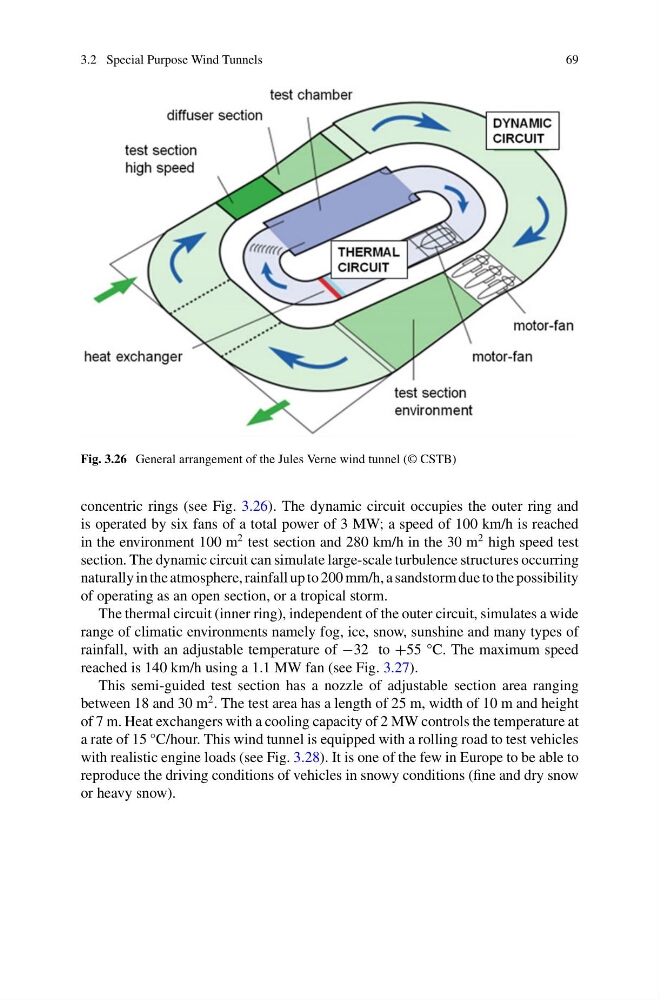
Fig. 3.26 General arrangement of the Jules Verne wind tunnel (© CSTB)
concentric rings (see Fig. 3.26). The dynamic circuit occupies the outer ring and
is operated by six fans of a total power of 3 MW; a speed of 100 km/h is reached
in the environment 100 m
2 test section and 280 km/h in the 30 m
2 high speed test
section. The dynamic circuit can simulate large-scale turbulence structures occurring
naturally in the atmosphere, rainfall up to 200 mm/h, a sandstorm due to the possibility
of operating as an open section, or a tropical storm.
The thermal circuit (inner ring), independent of the outer circuit, simulates a wide
range of climatic environments namely fog, ice, snow, sunshine and many types of
rainfall, with an adjustable temperature of −32 to +55 °C. The maximum speed
reached is 140 km/h using a 1.1 MW fan (see Fig. 3.27).
This semi-guided test section has a nozzle of adjustable section area ranging
between 18 and 30 m
2 . The test area has a length of 25 m, width of 10 m and height
of 7 m. Heat exchangers with a cooling capacity of 2 MW controls the temperature at
a rate of 15 °C/hour. This wind tunnel is equipped with a rolling road to test vehicles
with realistic engine loads (see Fig. 3.28). It is one of the few in Europe to be able to
reproduce the driving conditions of vehicles in snowy conditions (fine and dry snow
or heavy snow).
69
Fig. 3.26 General arrangement of the Jules Verne wind tunnel (© CSTB)
concentric rings (see Fig. 3.26). The dynamic circuit occupies the outer ring and
is operated by six fans of a total power of 3 MW; a speed of 100 km/h is reached
in the environment 100 m
2 test section and 280 km/h in the 30 m
2 high speed test
section. The dynamic circuit can simulate large-scale turbulence structures occurring
naturally in the atmosphere, rainfall up to 200 mm/h, a sandstorm due to the possibility
of operating as an open section, or a tropical storm.
The thermal circuit (inner ring), independent of the outer circuit, simulates a wide
range of climatic environments namely fog, ice, snow, sunshine and many types of
rainfall, with an adjustable temperature of −32 to +55 °C. The maximum speed
reached is 140 km/h using a 1.1 MW fan (see Fig. 3.27).
This semi-guided test section has a nozzle of adjustable section area ranging
between 18 and 30 m
2 . The test area has a length of 25 m, width of 10 m and height
of 7 m. Heat exchangers with a cooling capacity of 2 MW controls the temperature at
a rate of 15 °C/hour. This wind tunnel is equipped with a rolling road to test vehicles
with realistic engine loads (see Fig. 3.28). It is one of the few in Europe to be able to
reproduce the driving conditions of vehicles in snowy conditions (fine and dry snow
or heavy snow).