

56
3 Subsonic Wind Tunnels
(a) Circuit diagram
(b) Test section
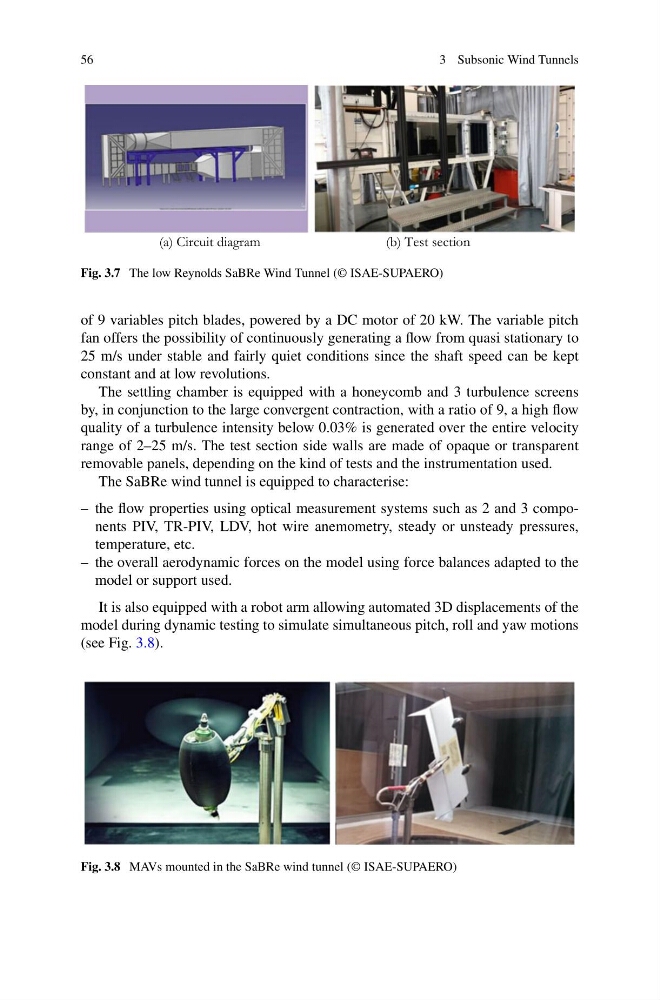
Fig. 3.7 The low Reynolds SaBRe Wind Tunnel (© ISAE-SUPAERO)
of 9 variables pitch blades, powered by a DC motor of 20 kW. The variable pitch
fan offers the possibility of continuously generating a flow from quasi stationary to
25 m/s under stable and fairly quiet conditions since the shaft speed can be kept
constant and at low revolutions.
The settling chamber is equipped with a honeycomb and 3 turbulence screens
by, in conjunction to the large convergent contraction, with a ratio of 9, a high flow
quality of a turbulence intensity below 0.03% is generated over the entire velocity
range of 2–25 m/s. The test section side walls are made of opaque or transparent
removable panels, depending on the kind of tests and the instrumentation used.
The SaBRe wind tunnel is equipped to characterise:
– the flow properties using optical measurement systems such as 2 and 3 components PIV, TR-PIV, LDV, hot wire anemometry, steady or unsteady pressures,
temperature, etc.
– the overall aerodynamic forces on the model using force balances adapted to the
model or support used.
It is also equipped with a robot arm allowing automated 3D displacements of the
model during dynamic testing to simulate simultaneous pitch, roll and yaw motions
(see Fig. 3.8).
Fig. 3.8 MAVs mounted in the SaBRe wind tunnel (© ISAE-SUPAERO)
3 Subsonic Wind Tunnels
(a) Circuit diagram
(b) Test section
Fig. 3.7 The low Reynolds SaBRe Wind Tunnel (© ISAE-SUPAERO)
of 9 variables pitch blades, powered by a DC motor of 20 kW. The variable pitch
fan offers the possibility of continuously generating a flow from quasi stationary to
25 m/s under stable and fairly quiet conditions since the shaft speed can be kept
constant and at low revolutions.
The settling chamber is equipped with a honeycomb and 3 turbulence screens
by, in conjunction to the large convergent contraction, with a ratio of 9, a high flow
quality of a turbulence intensity below 0.03% is generated over the entire velocity
range of 2–25 m/s. The test section side walls are made of opaque or transparent
removable panels, depending on the kind of tests and the instrumentation used.
The SaBRe wind tunnel is equipped to characterise:
– the flow properties using optical measurement systems such as 2 and 3 components PIV, TR-PIV, LDV, hot wire anemometry, steady or unsteady pressures,
temperature, etc.
– the overall aerodynamic forces on the model using force balances adapted to the
model or support used.
It is also equipped with a robot arm allowing automated 3D displacements of the
model during dynamic testing to simulate simultaneous pitch, roll and yaw motions
(see Fig. 3.8).
Fig. 3.8 MAVs mounted in the SaBRe wind tunnel (© ISAE-SUPAERO)