

18
1 The Experimental Approach in Aerodynamic Design
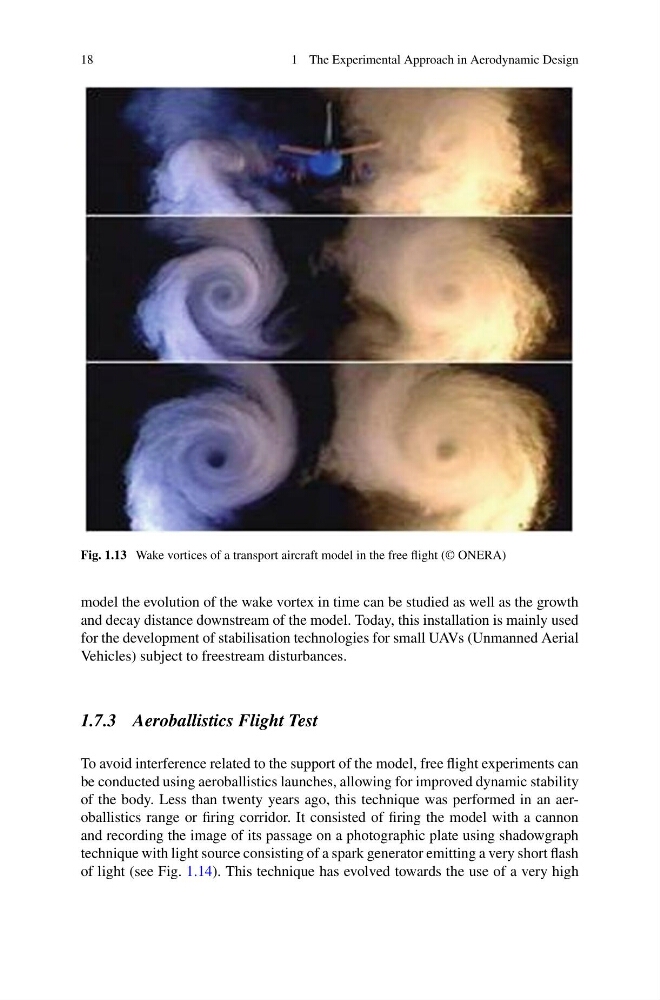
Fig. 1.13 Wake vortices of a transport aircraft model in the free flight (© ONERA)
model the evolution of the wake vortex in time can be studied as well as the growth
and decay distance downstream of the model. Today, this installation is mainly used
for the development of stabilisation technologies for small UAVs (Unmanned Aerial
Vehicles) subject to freestream disturbances.
1.7.3 Aeroballistics Flight Test
To avoid interference related to the support of the model, free flight experiments can
be conducted using aeroballistics launches, allowing for improved dynamic stability
of the body. Less than twenty years ago, this technique was performed in an aeroballistics range or firing corridor. It consisted of firing the model with a cannon
and recording the image of its passage on a photographic plate using shadowgraph
technique with light source consisting of a spark generator emitting a very short flash
of light (see Fig. 1.14). This technique has evolved towards the use of a very high
1 The Experimental Approach in Aerodynamic Design
Fig. 1.13 Wake vortices of a transport aircraft model in the free flight (© ONERA)
model the evolution of the wake vortex in time can be studied as well as the growth
and decay distance downstream of the model. Today, this installation is mainly used
for the development of stabilisation technologies for small UAVs (Unmanned Aerial
Vehicles) subject to freestream disturbances.
1.7.3 Aeroballistics Flight Test
To avoid interference related to the support of the model, free flight experiments can
be conducted using aeroballistics launches, allowing for improved dynamic stability
of the body. Less than twenty years ago, this technique was performed in an aeroballistics range or firing corridor. It consisted of firing the model with a cannon
and recording the image of its passage on a photographic plate using shadowgraph
technique with light source consisting of a spark generator emitting a very short flash
of light (see Fig. 1.14). This technique has evolved towards the use of a very high