

14.4 Search for Novel Aircraft Architectures
291
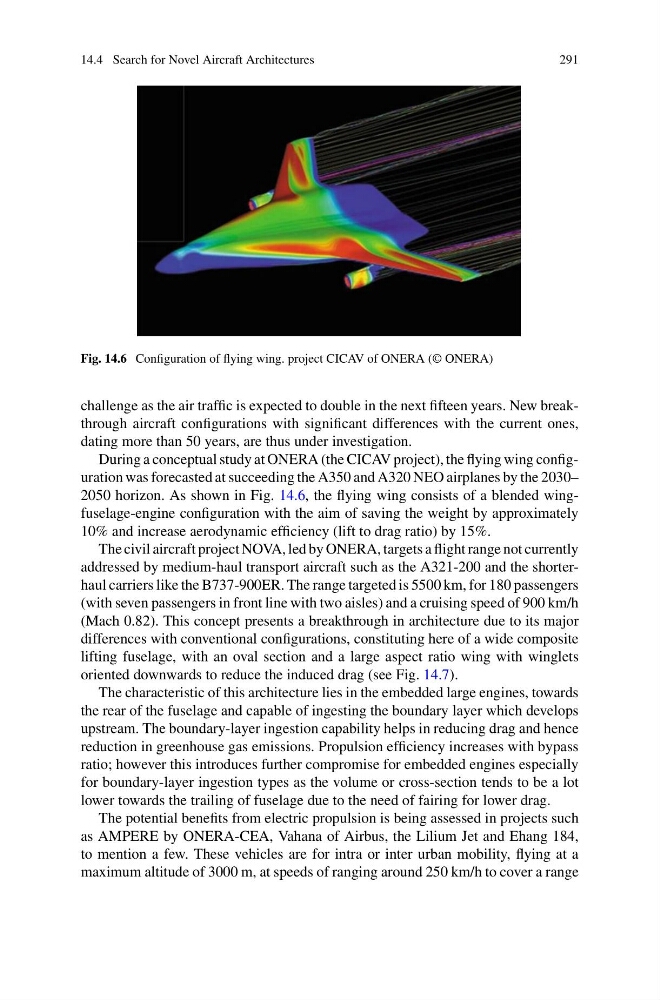
Fig. 14.6 Configuration of flying wing. project CICAV of ONERA (© ONERA)
challenge as the air traffic is expected to double in the next fifteen years. New breakthrough aircraft configurations with significant differences with the current ones,
dating more than 50 years, are thus under investigation.
During a conceptual study at ONERA (the CICAV project), the flying wing configuration was forecasted at succeeding the A350 and A320 NEO airplanes by the 2030–
2050 horizon. As shown in Fig. 14.6, the flying wing consists of a blended wingfuselage-engine configuration with the aim of saving the weight by approximately
10% and increase aerodynamic efficiency (lift to drag ratio) by 15%.
The civil aircraft project NOVA, led by ONERA, targets a flight range not currently
addressed by medium-haul transport aircraft such as the A321-200 and the shorterhaul carriers like the B737-900ER. The range targeted is 5500 km, for 180 passengers
(with seven passengers in front line with two aisles) and a cruising speed of 900 km/h
(Mach 0.82). This concept presents a breakthrough in architecture due to its major
differences with conventional configurations, constituting here of a wide composite
lifting fuselage, with an oval section and a large aspect ratio wing with winglets
oriented downwards to reduce the induced drag (see Fig. 14.7).
The characteristic of this architecture lies in the embedded large engines, towards
the rear of the fuselage and capable of ingesting the boundary layer which develops
upstream. The boundary-layer ingestion capability helps in reducing drag and hence
reduction in greenhouse gas emissions. Propulsion efficiency increases with bypass
ratio; however this introduces further compromise for embedded engines especially
for boundary-layer ingestion types as the volume or cross-section tends to be a lot
lower towards the trailing of fuselage due to the need of fairing for lower drag.
The potential benefits from electric propulsion is being assessed in projects such
as AMPERE by ONERA-CEA, Vahana of Airbus, the Lilium Jet and Ehang 184,
to mention a few. These vehicles are for intra or inter urban mobility, flying at a
maximum altitude of 3000 m, at speeds of ranging around 250 km/h to cover a range
291
Fig. 14.6 Configuration of flying wing. project CICAV of ONERA (© ONERA)
challenge as the air traffic is expected to double in the next fifteen years. New breakthrough aircraft configurations with significant differences with the current ones,
dating more than 50 years, are thus under investigation.
During a conceptual study at ONERA (the CICAV project), the flying wing configuration was forecasted at succeeding the A350 and A320 NEO airplanes by the 2030–
2050 horizon. As shown in Fig. 14.6, the flying wing consists of a blended wingfuselage-engine configuration with the aim of saving the weight by approximately
10% and increase aerodynamic efficiency (lift to drag ratio) by 15%.
The civil aircraft project NOVA, led by ONERA, targets a flight range not currently
addressed by medium-haul transport aircraft such as the A321-200 and the shorterhaul carriers like the B737-900ER. The range targeted is 5500 km, for 180 passengers
(with seven passengers in front line with two aisles) and a cruising speed of 900 km/h
(Mach 0.82). This concept presents a breakthrough in architecture due to its major
differences with conventional configurations, constituting here of a wide composite
lifting fuselage, with an oval section and a large aspect ratio wing with winglets
oriented downwards to reduce the induced drag (see Fig. 14.7).
The characteristic of this architecture lies in the embedded large engines, towards
the rear of the fuselage and capable of ingesting the boundary layer which develops
upstream. The boundary-layer ingestion capability helps in reducing drag and hence
reduction in greenhouse gas emissions. Propulsion efficiency increases with bypass
ratio; however this introduces further compromise for embedded engines especially
for boundary-layer ingestion types as the volume or cross-section tends to be a lot
lower towards the trailing of fuselage due to the need of fairing for lower drag.
The potential benefits from electric propulsion is being assessed in projects such
as AMPERE by ONERA-CEA, Vahana of Airbus, the Lilium Jet and Ehang 184,
to mention a few. These vehicles are for intra or inter urban mobility, flying at a
maximum altitude of 3000 m, at speeds of ranging around 250 km/h to cover a range