

290
14 Prospects and Challenges for Aerodynamics
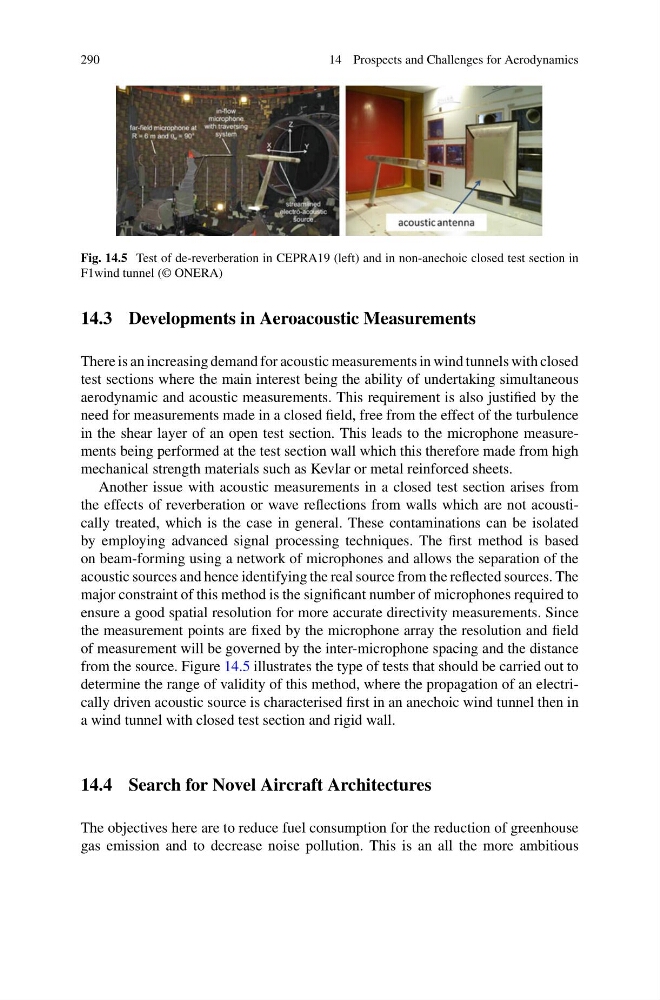
Fig. 14.5 Test of de-reverberation in CEPRA19 (left) and in non-anechoic closed test section in
F1wind tunnel (© ONERA)
14.3 Developments in Aeroacoustic Measurements
There is an increasing demand for acoustic measurements in wind tunnels with closed
test sections where the main interest being the ability of undertaking simultaneous
aerodynamic and acoustic measurements. This requirement is also justified by the
need for measurements made in a closed field, free from the effect of the turbulence
in the shear layer of an open test section. This leads to the microphone measurements being performed at the test section wall which this therefore made from high
mechanical strength materials such as Kevlar or metal reinforced sheets.
Another issue with acoustic measurements in a closed test section arises from
the effects of reverberation or wave reflections from walls which are not acoustically treated, which is the case in general. These contaminations can be isolated
by employing advanced signal processing techniques. The first method is based
on beam-forming using a network of microphones and allows the separation of the
acoustic sources and hence identifying the real source from the reflected sources. The
major constraint of this method is the significant number of microphones required to
ensure a good spatial resolution for more accurate directivity measurements. Since
the measurement points are fixed by the microphone array the resolution and field
of measurement will be governed by the inter-microphone spacing and the distance
from the source. Figure 14.5 illustrates the type of tests that should be carried out to
determine the range of validity of this method, where the propagation of an electrically driven acoustic source is characterised first in an anechoic wind tunnel then in
a wind tunnel with closed test section and rigid wall.
14.4 Search for Novel Aircraft Architectures
The objectives here are to reduce fuel consumption for the reduction of greenhouse
gas emission and to decrease noise pollution. This is an all the more ambitious
14 Prospects and Challenges for Aerodynamics
Fig. 14.5 Test of de-reverberation in CEPRA19 (left) and in non-anechoic closed test section in
F1wind tunnel (© ONERA)
14.3 Developments in Aeroacoustic Measurements
There is an increasing demand for acoustic measurements in wind tunnels with closed
test sections where the main interest being the ability of undertaking simultaneous
aerodynamic and acoustic measurements. This requirement is also justified by the
need for measurements made in a closed field, free from the effect of the turbulence
in the shear layer of an open test section. This leads to the microphone measurements being performed at the test section wall which this therefore made from high
mechanical strength materials such as Kevlar or metal reinforced sheets.
Another issue with acoustic measurements in a closed test section arises from
the effects of reverberation or wave reflections from walls which are not acoustically treated, which is the case in general. These contaminations can be isolated
by employing advanced signal processing techniques. The first method is based
on beam-forming using a network of microphones and allows the separation of the
acoustic sources and hence identifying the real source from the reflected sources. The
major constraint of this method is the significant number of microphones required to
ensure a good spatial resolution for more accurate directivity measurements. Since
the measurement points are fixed by the microphone array the resolution and field
of measurement will be governed by the inter-microphone spacing and the distance
from the source. Figure 14.5 illustrates the type of tests that should be carried out to
determine the range of validity of this method, where the propagation of an electrically driven acoustic source is characterised first in an anechoic wind tunnel then in
a wind tunnel with closed test section and rigid wall.
14.4 Search for Novel Aircraft Architectures
The objectives here are to reduce fuel consumption for the reduction of greenhouse
gas emission and to decrease noise pollution. This is an all the more ambitious