

13.1 Experimental Versus Numerical Analysis
275
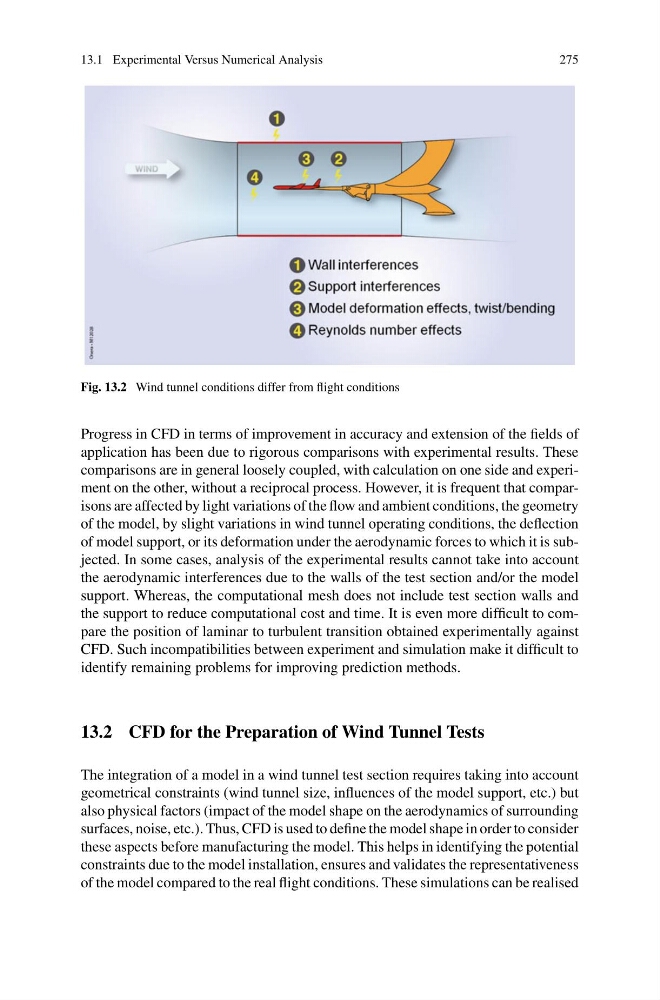
Fig. 13.2 Wind tunnel conditions differ from flight conditions
Progress in CFD in terms of improvement in accuracy and extension of the fields of
application has been due to rigorous comparisons with experimental results. These
comparisons are in general loosely coupled, with calculation on one side and experiment on the other, without a reciprocal process. However, it is frequent that comparisons are affected by light variations of the flow and ambient conditions, the geometry
of the model, by slight variations in wind tunnel operating conditions, the deflection
of model support, or its deformation under the aerodynamic forces to which it is subjected. In some cases, analysis of the experimental results cannot take into account
the aerodynamic interferences due to the walls of the test section and/or the model
support. Whereas, the computational mesh does not include test section walls and
the support to reduce computational cost and time. It is even more difficult to compare the position of laminar to turbulent transition obtained experimentally against
CFD. Such incompatibilities between experiment and simulation make it difficult to
identify remaining problems for improving prediction methods.
13.2 CFD for the Preparation of Wind Tunnel Tests
The integration of a model in a wind tunnel test section requires taking into account
geometrical constraints (wind tunnel size, influences of the model support, etc.) but
also physical factors (impact of the model shape on the aerodynamics of surrounding
surfaces, noise, etc.). Thus, CFD is used to define the model shape in order to consider
these aspects before manufacturing the model. This helps in identifying the potential
constraints due to the model installation, ensures and validates the representativeness
of the model compared to the real flight conditions. These simulations can be realised
275
Fig. 13.2 Wind tunnel conditions differ from flight conditions
Progress in CFD in terms of improvement in accuracy and extension of the fields of
application has been due to rigorous comparisons with experimental results. These
comparisons are in general loosely coupled, with calculation on one side and experiment on the other, without a reciprocal process. However, it is frequent that comparisons are affected by light variations of the flow and ambient conditions, the geometry
of the model, by slight variations in wind tunnel operating conditions, the deflection
of model support, or its deformation under the aerodynamic forces to which it is subjected. In some cases, analysis of the experimental results cannot take into account
the aerodynamic interferences due to the walls of the test section and/or the model
support. Whereas, the computational mesh does not include test section walls and
the support to reduce computational cost and time. It is even more difficult to compare the position of laminar to turbulent transition obtained experimentally against
CFD. Such incompatibilities between experiment and simulation make it difficult to
identify remaining problems for improving prediction methods.
13.2 CFD for the Preparation of Wind Tunnel Tests
The integration of a model in a wind tunnel test section requires taking into account
geometrical constraints (wind tunnel size, influences of the model support, etc.) but
also physical factors (impact of the model shape on the aerodynamics of surrounding
surfaces, noise, etc.). Thus, CFD is used to define the model shape in order to consider
these aspects before manufacturing the model. This helps in identifying the potential
constraints due to the model installation, ensures and validates the representativeness
of the model compared to the real flight conditions. These simulations can be realised