

274
13 Computer-Aided Wind Tunnel Test and Analysis
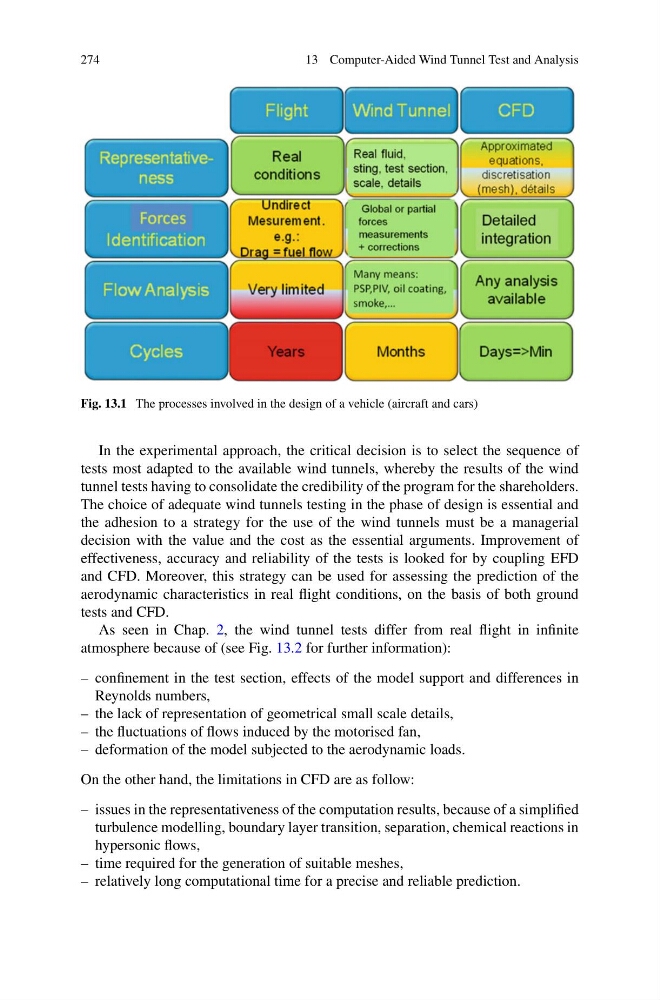
Fig. 13.1 The processes involved in the design of a vehicle (aircraft and cars)
In the experimental approach, the critical decision is to select the sequence of
tests most adapted to the available wind tunnels, whereby the results of the wind
tunnel tests having to consolidate the credibility of the program for the shareholders.
The choice of adequate wind tunnels testing in the phase of design is essential and
the adhesion to a strategy for the use of the wind tunnels must be a managerial
decision with the value and the cost as the essential arguments. Improvement of
effectiveness, accuracy and reliability of the tests is looked for by coupling EFD
and CFD. Moreover, this strategy can be used for assessing the prediction of the
aerodynamic characteristics in real flight conditions, on the basis of both ground
tests and CFD.
As seen in Chap. 2, the wind tunnel tests differ from real flight in infinite
atmosphere because of (see Fig. 13.2 for further information):
– confinement in the test section, effects of the model support and differences in
Reynolds numbers,
– the lack of representation of geometrical small scale details,
– the fluctuations of flows induced by the motorised fan,
– deformation of the model subjected to the aerodynamic loads.
On the other hand, the limitations in CFD are as follow:
– issues in the representativeness of the computation results, because of a simplified
turbulence modelling, boundary layer transition, separation, chemical reactions in
hypersonic flows,
– time required for the generation of suitable meshes,
– relatively long computational time for a precise and reliable prediction.
13 Computer-Aided Wind Tunnel Test and Analysis
Fig. 13.1 The processes involved in the design of a vehicle (aircraft and cars)
In the experimental approach, the critical decision is to select the sequence of
tests most adapted to the available wind tunnels, whereby the results of the wind
tunnel tests having to consolidate the credibility of the program for the shareholders.
The choice of adequate wind tunnels testing in the phase of design is essential and
the adhesion to a strategy for the use of the wind tunnels must be a managerial
decision with the value and the cost as the essential arguments. Improvement of
effectiveness, accuracy and reliability of the tests is looked for by coupling EFD
and CFD. Moreover, this strategy can be used for assessing the prediction of the
aerodynamic characteristics in real flight conditions, on the basis of both ground
tests and CFD.
As seen in Chap. 2, the wind tunnel tests differ from real flight in infinite
atmosphere because of (see Fig. 13.2 for further information):
– confinement in the test section, effects of the model support and differences in
Reynolds numbers,
– the lack of representation of geometrical small scale details,
– the fluctuations of flows induced by the motorised fan,
– deformation of the model subjected to the aerodynamic loads.
On the other hand, the limitations in CFD are as follow:
– issues in the representativeness of the computation results, because of a simplified
turbulence modelling, boundary layer transition, separation, chemical reactions in
hypersonic flows,
– time required for the generation of suitable meshes,
– relatively long computational time for a precise and reliable prediction.