

12.1 Basic Principles
263
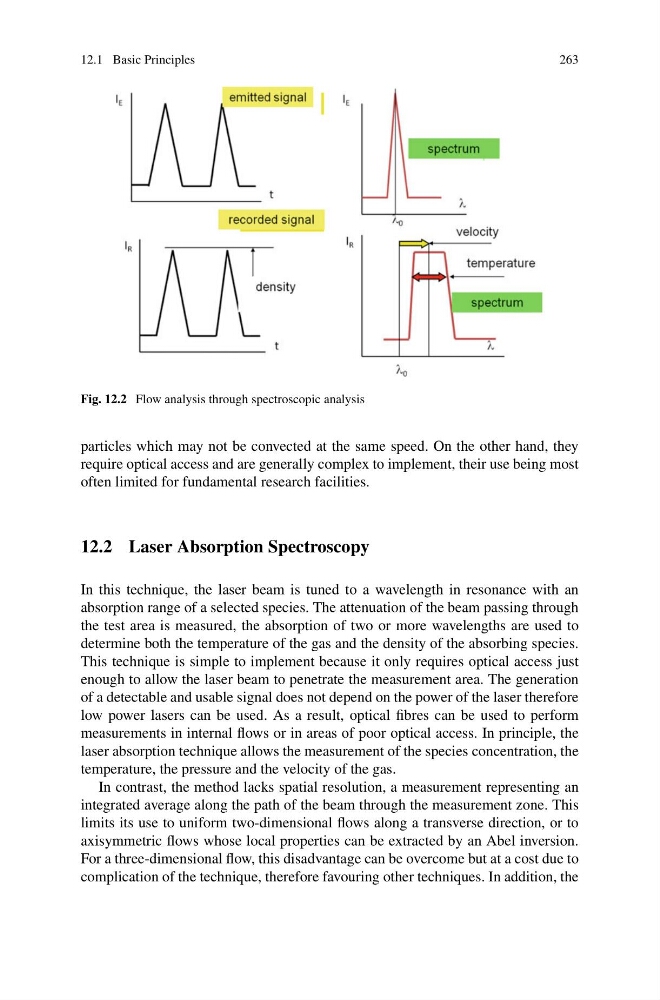
Fig. 12.2 Flow analysis through spectroscopic analysis
particles which may not be convected at the same speed. On the other hand, they
require optical access and are generally complex to implement, their use being most
often limited for fundamental research facilities.
12.2 Laser Absorption Spectroscopy
In this technique, the laser beam is tuned to a wavelength in resonance with an
absorption range of a selected species. The attenuation of the beam passing through
the test area is measured, the absorption of two or more wavelengths are used to
determine both the temperature of the gas and the density of the absorbing species.
This technique is simple to implement because it only requires optical access just
enough to allow the laser beam to penetrate the measurement area. The generation
of a detectable and usable signal does not depend on the power of the laser therefore
low power lasers can be used. As a result, optical fibres can be used to perform
measurements in internal flows or in areas of poor optical access. In principle, the
laser absorption technique allows the measurement of the species concentration, the
temperature, the pressure and the velocity of the gas.
In contrast, the method lacks spatial resolution, a measurement representing an
integrated average along the path of the beam through the measurement zone. This
limits its use to uniform two-dimensional flows along a transverse direction, or to
axisymmetric flows whose local properties can be extracted by an Abel inversion.
For a three-dimensional flow, this disadvantage can be overcome but at a cost due to
complication of the technique, therefore favouring other techniques. In addition, the
263
Fig. 12.2 Flow analysis through spectroscopic analysis
particles which may not be convected at the same speed. On the other hand, they
require optical access and are generally complex to implement, their use being most
often limited for fundamental research facilities.
12.2 Laser Absorption Spectroscopy
In this technique, the laser beam is tuned to a wavelength in resonance with an
absorption range of a selected species. The attenuation of the beam passing through
the test area is measured, the absorption of two or more wavelengths are used to
determine both the temperature of the gas and the density of the absorbing species.
This technique is simple to implement because it only requires optical access just
enough to allow the laser beam to penetrate the measurement area. The generation
of a detectable and usable signal does not depend on the power of the laser therefore
low power lasers can be used. As a result, optical fibres can be used to perform
measurements in internal flows or in areas of poor optical access. In principle, the
laser absorption technique allows the measurement of the species concentration, the
temperature, the pressure and the velocity of the gas.
In contrast, the method lacks spatial resolution, a measurement representing an
integrated average along the path of the beam through the measurement zone. This
limits its use to uniform two-dimensional flows along a transverse direction, or to
axisymmetric flows whose local properties can be extracted by an Abel inversion.
For a three-dimensional flow, this disadvantage can be overcome but at a cost due to
complication of the technique, therefore favouring other techniques. In addition, the