

232
10 Intrusive Measurement Techniques
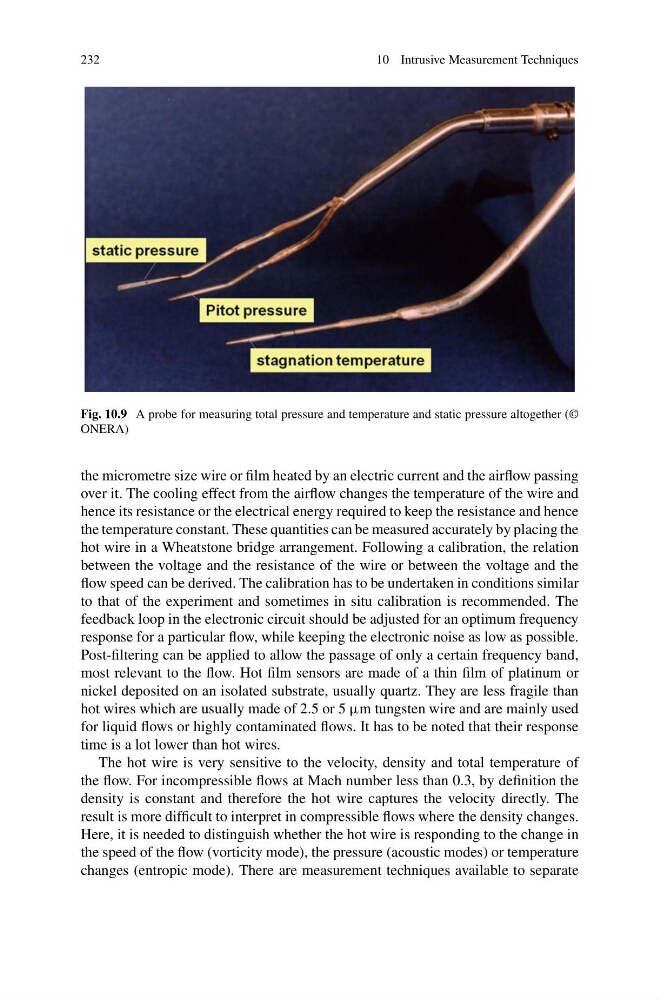
Fig. 10.9 A probe for measuring total pressure and temperature and static pressure altogether (©
ONERA)
the micrometre size wire or film heated by an electric current and the airflow passing
over it. The cooling effect from the airflow changes the temperature of the wire and
hence its resistance or the electrical energy required to keep the resistance and hence
the temperature constant. These quantities can be measured accurately by placing the
hot wire in a Wheatstone bridge arrangement. Following a calibration, the relation
between the voltage and the resistance of the wire or between the voltage and the
flow speed can be derived. The calibration has to be undertaken in conditions similar
to that of the experiment and sometimes in situ calibration is recommended. The
feedback loop in the electronic circuit should be adjusted for an optimum frequency
response for a particular flow, while keeping the electronic noise as low as possible.
Post-filtering can be applied to allow the passage of only a certain frequency band,
most relevant to the flow. Hot film sensors are made of a thin film of platinum or
nickel deposited on an isolated substrate, usually quartz. They are less fragile than
hot wires which are usually made of 2.5 or 5 µm tungsten wire and are mainly used
for liquid flows or highly contaminated flows. It has to be noted that their response
time is a lot lower than hot wires.
The hot wire is very sensitive to the velocity, density and total temperature of
the flow. For incompressible flows at Mach number less than 0.3, by definition the
density is constant and therefore the hot wire captures the velocity directly. The
result is more difficult to interpret in compressible flows where the density changes.
Here, it is needed to distinguish whether the hot wire is responding to the change in
the speed of the flow (vorticity mode), the pressure (acoustic modes) or temperature
changes (entropic mode). There are measurement techniques available to separate
10 Intrusive Measurement Techniques
Fig. 10.9 A probe for measuring total pressure and temperature and static pressure altogether (©
ONERA)
the micrometre size wire or film heated by an electric current and the airflow passing
over it. The cooling effect from the airflow changes the temperature of the wire and
hence its resistance or the electrical energy required to keep the resistance and hence
the temperature constant. These quantities can be measured accurately by placing the
hot wire in a Wheatstone bridge arrangement. Following a calibration, the relation
between the voltage and the resistance of the wire or between the voltage and the
flow speed can be derived. The calibration has to be undertaken in conditions similar
to that of the experiment and sometimes in situ calibration is recommended. The
feedback loop in the electronic circuit should be adjusted for an optimum frequency
response for a particular flow, while keeping the electronic noise as low as possible.
Post-filtering can be applied to allow the passage of only a certain frequency band,
most relevant to the flow. Hot film sensors are made of a thin film of platinum or
nickel deposited on an isolated substrate, usually quartz. They are less fragile than
hot wires which are usually made of 2.5 or 5 µm tungsten wire and are mainly used
for liquid flows or highly contaminated flows. It has to be noted that their response
time is a lot lower than hot wires.
The hot wire is very sensitive to the velocity, density and total temperature of
the flow. For incompressible flows at Mach number less than 0.3, by definition the
density is constant and therefore the hot wire captures the velocity directly. The
result is more difficult to interpret in compressible flows where the density changes.
Here, it is needed to distinguish whether the hot wire is responding to the change in
the speed of the flow (vorticity mode), the pressure (acoustic modes) or temperature
changes (entropic mode). There are measurement techniques available to separate