

142
6 Hypersonic Wind Tunnels
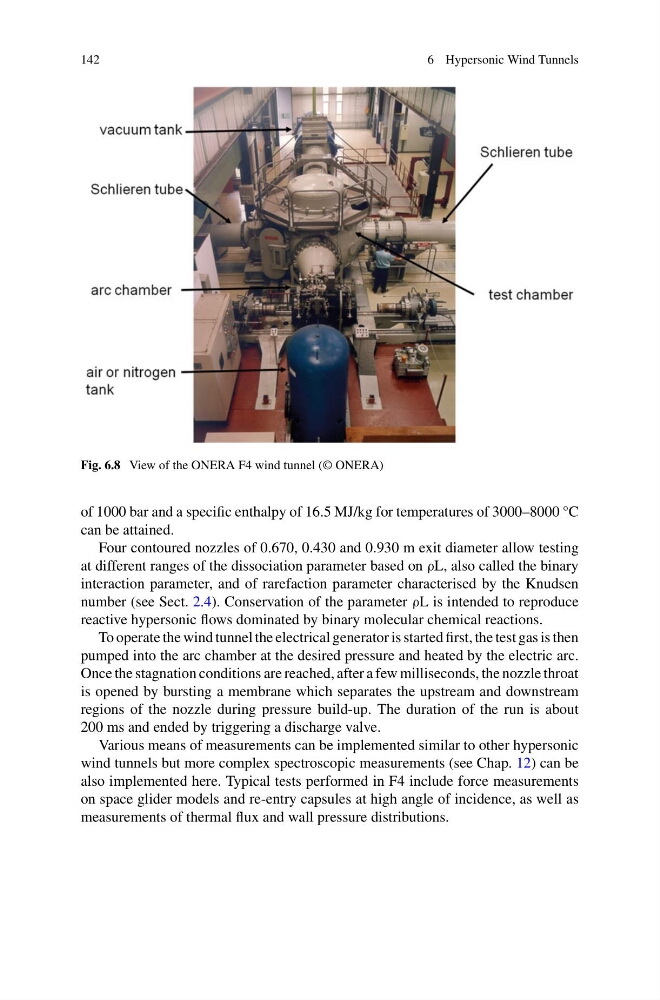
Fig. 6.8 View of the ONERA F4 wind tunnel (© ONERA)
of 1000 bar and a specific enthalpy of 16.5 MJ/kg for temperatures of 3000–8000 °C
can be attained.
Four contoured nozzles of 0.670, 0.430 and 0.930 m exit diameter allow testing
at different ranges of the dissociation parameter based on ρL, also called the binary
interaction parameter, and of rarefaction parameter characterised by the Knudsen
number (see Sect. 2.4). Conservation of the parameter ρL is intended to reproduce
reactive hypersonic flows dominated by binary molecular chemical reactions.
To operate the wind tunnel the electrical generator is started first, the test gas is then
pumped into the arc chamber at the desired pressure and heated by the electric arc.
Once the stagnation conditions are reached, after a few milliseconds, the nozzle throat
is opened by bursting a membrane which separates the upstream and downstream
regions of the nozzle during pressure build-up. The duration of the run is about
200 ms and ended by triggering a discharge valve.
Various means of measurements can be implemented similar to other hypersonic
wind tunnels but more complex spectroscopic measurements (see Chap. 12) can be
also implemented here. Typical tests performed in F4 include force measurements
on space glider models and re-entry capsules at high angle of incidence, as well as
measurements of thermal flux and wall pressure distributions.
6 Hypersonic Wind Tunnels
Fig. 6.8 View of the ONERA F4 wind tunnel (© ONERA)
of 1000 bar and a specific enthalpy of 16.5 MJ/kg for temperatures of 3000–8000 °C
can be attained.
Four contoured nozzles of 0.670, 0.430 and 0.930 m exit diameter allow testing
at different ranges of the dissociation parameter based on ρL, also called the binary
interaction parameter, and of rarefaction parameter characterised by the Knudsen
number (see Sect. 2.4). Conservation of the parameter ρL is intended to reproduce
reactive hypersonic flows dominated by binary molecular chemical reactions.
To operate the wind tunnel the electrical generator is started first, the test gas is then
pumped into the arc chamber at the desired pressure and heated by the electric arc.
Once the stagnation conditions are reached, after a few milliseconds, the nozzle throat
is opened by bursting a membrane which separates the upstream and downstream
regions of the nozzle during pressure build-up. The duration of the run is about
200 ms and ended by triggering a discharge valve.
Various means of measurements can be implemented similar to other hypersonic
wind tunnels but more complex spectroscopic measurements (see Chap. 12) can be
also implemented here. Typical tests performed in F4 include force measurements
on space glider models and re-entry capsules at high angle of incidence, as well as
measurements of thermal flux and wall pressure distributions.