

7 Technologies for Conversion Bio-Lubricant …
189
H 2 C
CH
H 2 C
OH
OH
OH
NaOH, H 2 O 25
o C
RCOONa
NaOH
O
COONa
5
7
O
COONa
5
7
OH
5
NaOOC
COONa
8
NaOH
NaOH
H 2 SO 4
pH = 6-7
Na OOC
COOH
8
HOOC
COOH
8
pH = 2-3
saponification
dehydrogenation
isomerization
acidification
pyrolysis
Neutralization
H 2 C
CH
H 2 C
OOCR
OOCR
OOCR
R = CH 3 (CH 2 ) 5 CH(OH)CH 2 CH=CH(CH 2 ) 7
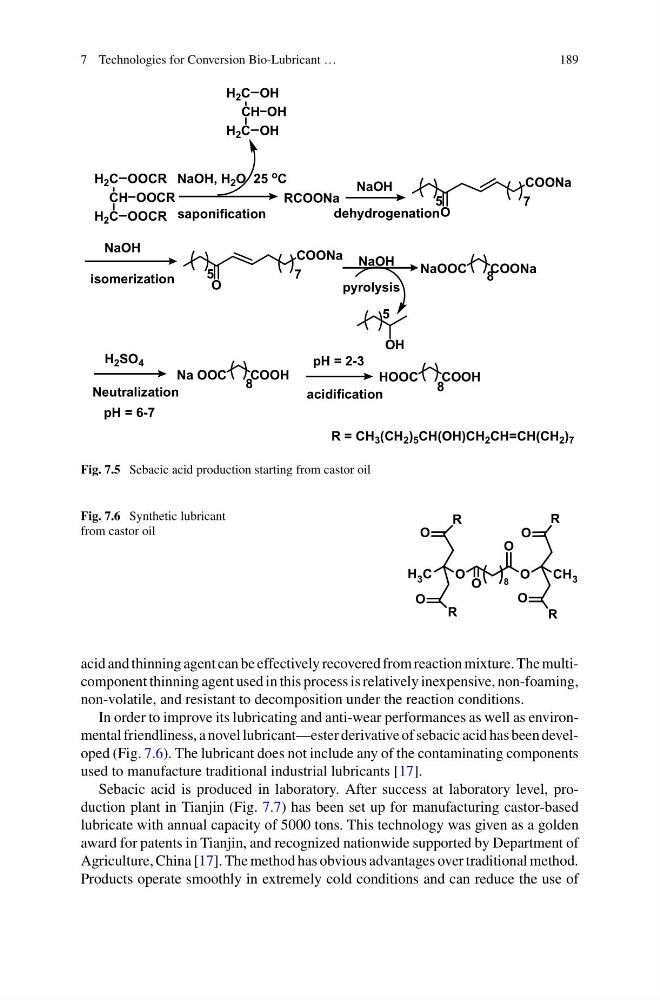
Fig. 7.5 Sebacic acid production starting from castor oil
Fig. 7.6 Synthetic lubricant
from castor oil
H 3 C
O
O
CH 3
O
O
R
O
R
O
R
O
R
O
8
acid and thinning agent can be effectively recovered from reaction mixture. The multicomponent thinning agent used in this process is relatively inexpensive, non-foaming,
non-volatile, and resistant to decomposition under the reaction conditions.
In order to improve its lubricating and anti-wear performances as well as environmental friendliness, a novel lubricant—ester derivative of sebacic acid has been developed (Fig. 7.6). The lubricant does not include any of the contaminating components
used to manufacture traditional industrial lubricants [17].
Sebacic acid is produced in laboratory. After success at laboratory level, production plant in Tianjin (Fig. 7.7) has been set up for manufacturing castor-based
lubricate with annual capacity of 5000 tons. This technology was given as a golden
award for patents in Tianjin, and recognized nationwide supported by Department of
Agriculture, China [17]. The method has obvious advantages over traditional method.
Products operate smoothly in extremely cold conditions and can reduce the use of
189
H 2 C
CH
H 2 C
OH
OH
OH
NaOH, H 2 O 25
o C
RCOONa
NaOH
O
COONa
5
7
O
COONa
5
7
OH
5
NaOOC
COONa
8
NaOH
NaOH
H 2 SO 4
pH = 6-7
Na OOC
COOH
8
HOOC
COOH
8
pH = 2-3
saponification
dehydrogenation
isomerization
acidification
pyrolysis
Neutralization
H 2 C
CH
H 2 C
OOCR
OOCR
OOCR
R = CH 3 (CH 2 ) 5 CH(OH)CH 2 CH=CH(CH 2 ) 7
Fig. 7.5 Sebacic acid production starting from castor oil
Fig. 7.6 Synthetic lubricant
from castor oil
H 3 C
O
O
CH 3
O
O
R
O
R
O
R
O
R
O
8
acid and thinning agent can be effectively recovered from reaction mixture. The multicomponent thinning agent used in this process is relatively inexpensive, non-foaming,
non-volatile, and resistant to decomposition under the reaction conditions.
In order to improve its lubricating and anti-wear performances as well as environmental friendliness, a novel lubricant—ester derivative of sebacic acid has been developed (Fig. 7.6). The lubricant does not include any of the contaminating components
used to manufacture traditional industrial lubricants [17].
Sebacic acid is produced in laboratory. After success at laboratory level, production plant in Tianjin (Fig. 7.7) has been set up for manufacturing castor-based
lubricate with annual capacity of 5000 tons. This technology was given as a golden
award for patents in Tianjin, and recognized nationwide supported by Department of
Agriculture, China [17]. The method has obvious advantages over traditional method.
Products operate smoothly in extremely cold conditions and can reduce the use of