

190
Y. Cao et al.
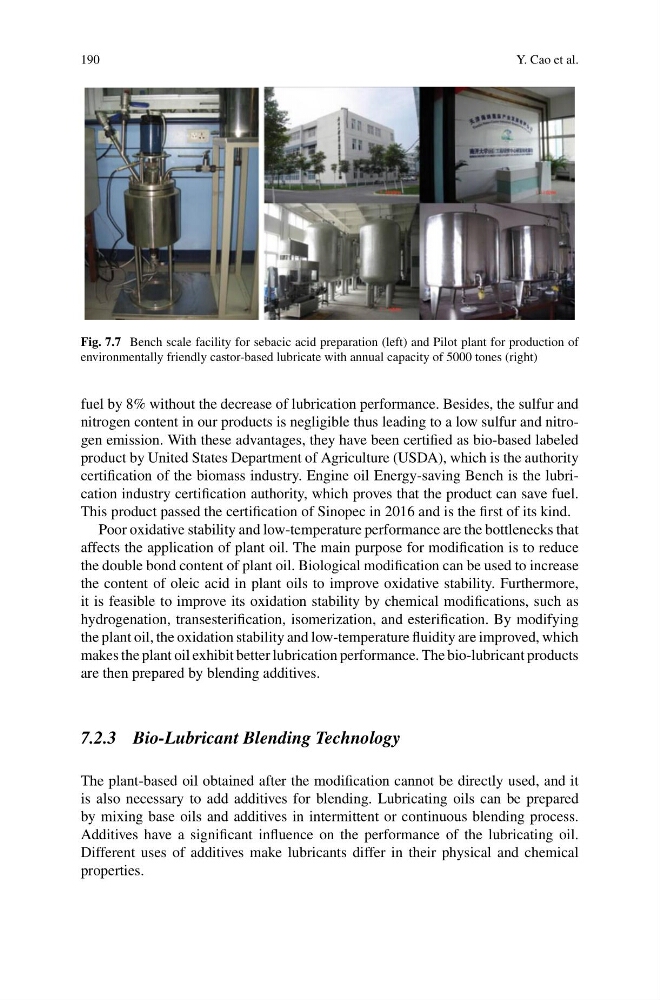
Fig. 7.7 Bench scale facility for sebacic acid preparation (left) and Pilot plant for production of
environmentally friendly castor-based lubricate with annual capacity of 5000 tones (right)
fuel by 8% without the decrease of lubrication performance. Besides, the sulfur and
nitrogen content in our products is negligible thus leading to a low sulfur and nitrogen emission. With these advantages, they have been certified as bio-based labeled
product by United States Department of Agriculture (USDA), which is the authority
certification of the biomass industry. Engine oil Energy-saving Bench is the lubrication industry certification authority, which proves that the product can save fuel.
This product passed the certification of Sinopec in 2016 and is the first of its kind.
Poor oxidative stability and low-temperature performance are the bottlenecks that
affects the application of plant oil. The main purpose for modification is to reduce
the double bond content of plant oil. Biological modification can be used to increase
the content of oleic acid in plant oils to improve oxidative stability. Furthermore,
it is feasible to improve its oxidation stability by chemical modifications, such as
hydrogenation, transesterification, isomerization, and esterification. By modifying
the plant oil, the oxidation stability and low-temperature fluidity are improved, which
makes the plant oil exhibit better lubrication performance. The bio-lubricant products
are then prepared by blending additives.
7.2.3 Bio-Lubricant Blending Technology
The plant-based oil obtained after the modification cannot be directly used, and it
is also necessary to add additives for blending. Lubricating oils can be prepared
by mixing base oils and additives in intermittent or continuous blending process.
Additives have a significant influence on the performance of the lubricating oil.
Different uses of additives make lubricants differ in their physical and chemical
properties.
Y. Cao et al.
Fig. 7.7 Bench scale facility for sebacic acid preparation (left) and Pilot plant for production of
environmentally friendly castor-based lubricate with annual capacity of 5000 tones (right)
fuel by 8% without the decrease of lubrication performance. Besides, the sulfur and
nitrogen content in our products is negligible thus leading to a low sulfur and nitrogen emission. With these advantages, they have been certified as bio-based labeled
product by United States Department of Agriculture (USDA), which is the authority
certification of the biomass industry. Engine oil Energy-saving Bench is the lubrication industry certification authority, which proves that the product can save fuel.
This product passed the certification of Sinopec in 2016 and is the first of its kind.
Poor oxidative stability and low-temperature performance are the bottlenecks that
affects the application of plant oil. The main purpose for modification is to reduce
the double bond content of plant oil. Biological modification can be used to increase
the content of oleic acid in plant oils to improve oxidative stability. Furthermore,
it is feasible to improve its oxidation stability by chemical modifications, such as
hydrogenation, transesterification, isomerization, and esterification. By modifying
the plant oil, the oxidation stability and low-temperature fluidity are improved, which
makes the plant oil exhibit better lubrication performance. The bio-lubricant products
are then prepared by blending additives.
7.2.3 Bio-Lubricant Blending Technology
The plant-based oil obtained after the modification cannot be directly used, and it
is also necessary to add additives for blending. Lubricating oils can be prepared
by mixing base oils and additives in intermittent or continuous blending process.
Additives have a significant influence on the performance of the lubricating oil.
Different uses of additives make lubricants differ in their physical and chemical
properties.