

5 Principle and Processing of Biodiesel Production
153
0
20
40
60
80
100
1:0.8 1:1 1:1.1 1:1.2 1:1.3 1:1.4 1:1.5 1:2.0 1:2.5
Converision rate (%)
Molar ratio (acid/methanol)
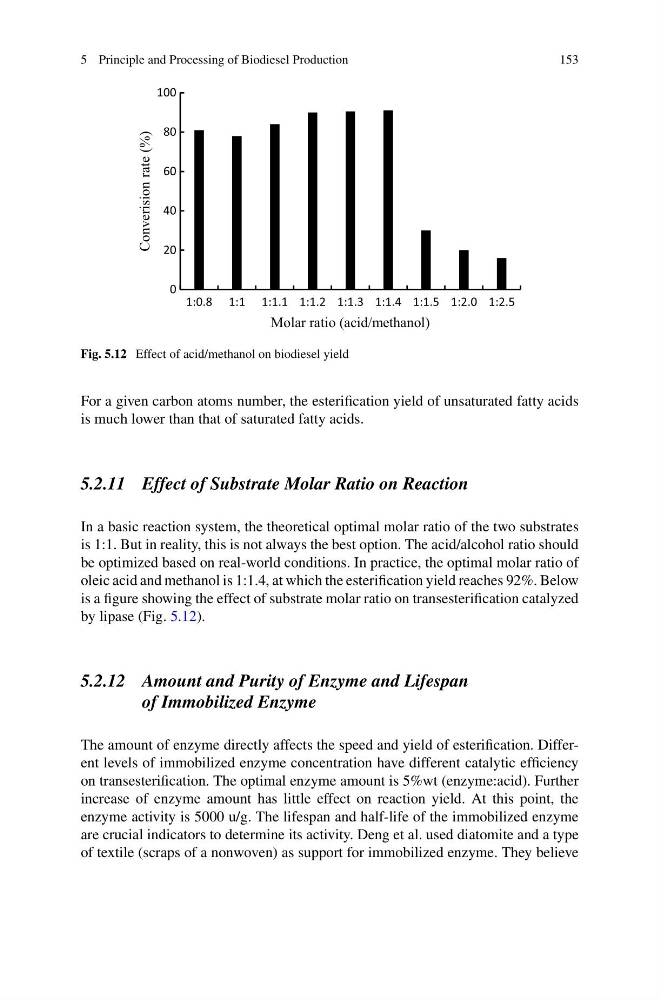
Fig. 5.12 Effect of acid/methanol on biodiesel yield
For a given carbon atoms number, the esterification yield of unsaturated fatty acids
is much lower than that of saturated fatty acids.
5.2.11 Effect of Substrate Molar Ratio on Reaction
In a basic reaction system, the theoretical optimal molar ratio of the two substrates
is 1:1. But in reality, this is not always the best option. The acid/alcohol ratio should
be optimized based on real-world conditions. In practice, the optimal molar ratio of
oleic acid and methanol is 1:1.4, at which the esterification yield reaches 92%. Below
is a figure showing the effect of substrate molar ratio on transesterification catalyzed
by lipase (Fig. 5.12).
5.2.12 Amount and Purity of Enzyme and Lifespan
of Immobilized Enzyme
The amount of enzyme directly affects the speed and yield of esterification. Different levels of immobilized enzyme concentration have different catalytic efficiency
on transesterification. The optimal enzyme amount is 5%wt (enzyme:acid). Further
increase of enzyme amount has little effect on reaction yield. At this point, the
enzyme activity is 5000 u/g. The lifespan and half-life of the immobilized enzyme
are crucial indicators to determine its activity. Deng et al. used diatomite and a type
of textile (scraps of a nonwoven) as support for immobilized enzyme. They believe
153
0
20
40
60
80
100
1:0.8 1:1 1:1.1 1:1.2 1:1.3 1:1.4 1:1.5 1:2.0 1:2.5
Converision rate (%)
Molar ratio (acid/methanol)
Fig. 5.12 Effect of acid/methanol on biodiesel yield
For a given carbon atoms number, the esterification yield of unsaturated fatty acids
is much lower than that of saturated fatty acids.
5.2.11 Effect of Substrate Molar Ratio on Reaction
In a basic reaction system, the theoretical optimal molar ratio of the two substrates
is 1:1. But in reality, this is not always the best option. The acid/alcohol ratio should
be optimized based on real-world conditions. In practice, the optimal molar ratio of
oleic acid and methanol is 1:1.4, at which the esterification yield reaches 92%. Below
is a figure showing the effect of substrate molar ratio on transesterification catalyzed
by lipase (Fig. 5.12).
5.2.12 Amount and Purity of Enzyme and Lifespan
of Immobilized Enzyme
The amount of enzyme directly affects the speed and yield of esterification. Different levels of immobilized enzyme concentration have different catalytic efficiency
on transesterification. The optimal enzyme amount is 5%wt (enzyme:acid). Further
increase of enzyme amount has little effect on reaction yield. At this point, the
enzyme activity is 5000 u/g. The lifespan and half-life of the immobilized enzyme
are crucial indicators to determine its activity. Deng et al. used diatomite and a type
of textile (scraps of a nonwoven) as support for immobilized enzyme. They believe