

6.7 Methods of Counteracting Microcircuit Re-engineering Processes
603
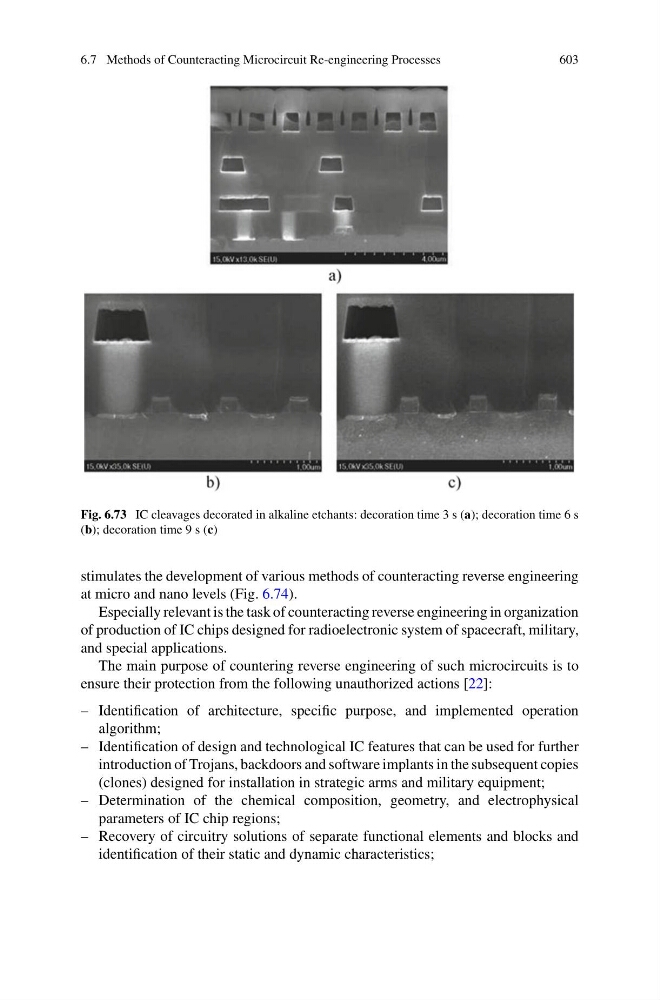
Fig. 6.73 IC cleavages decorated in alkaline etchants: decoration time 3 s (a); decoration time 6 s
(b); decoration time 9 s (c)
stimulates the development of various methods of counteracting reverse engineering
at micro and nano levels (Fig. 6.74).
Especially relevant is the task of counteracting reverse engineering in organization
of production of IC chips designed for radioelectronic system of spacecraft, military,
and special applications.
The main purpose of countering reverse engineering of such microcircuits is to
ensure their protection from the following unauthorized actions [22]:
– Identification of architecture, specific purpose, and implemented operation
algorithm;
– Identification of design and technological IC features that can be used for further
introduction of Trojans, backdoors and software implants in the subsequent copies
(clones) designed for installation in strategic arms and military equipment;
– Determination of the chemical composition, geometry, and electrophysical
parameters of IC chip regions;
– Recovery of circuitry solutions of separate functional elements and blocks and
identification of their static and dynamic characteristics;
603
Fig. 6.73 IC cleavages decorated in alkaline etchants: decoration time 3 s (a); decoration time 6 s
(b); decoration time 9 s (c)
stimulates the development of various methods of counteracting reverse engineering
at micro and nano levels (Fig. 6.74).
Especially relevant is the task of counteracting reverse engineering in organization
of production of IC chips designed for radioelectronic system of spacecraft, military,
and special applications.
The main purpose of countering reverse engineering of such microcircuits is to
ensure their protection from the following unauthorized actions [22]:
– Identification of architecture, specific purpose, and implemented operation
algorithm;
– Identification of design and technological IC features that can be used for further
introduction of Trojans, backdoors and software implants in the subsequent copies
(clones) designed for installation in strategic arms and military equipment;
– Determination of the chemical composition, geometry, and electrophysical
parameters of IC chip regions;
– Recovery of circuitry solutions of separate functional elements and blocks and
identification of their static and dynamic characteristics;