

116
2 Computer Viruses, Malicious Logic, and Spyware
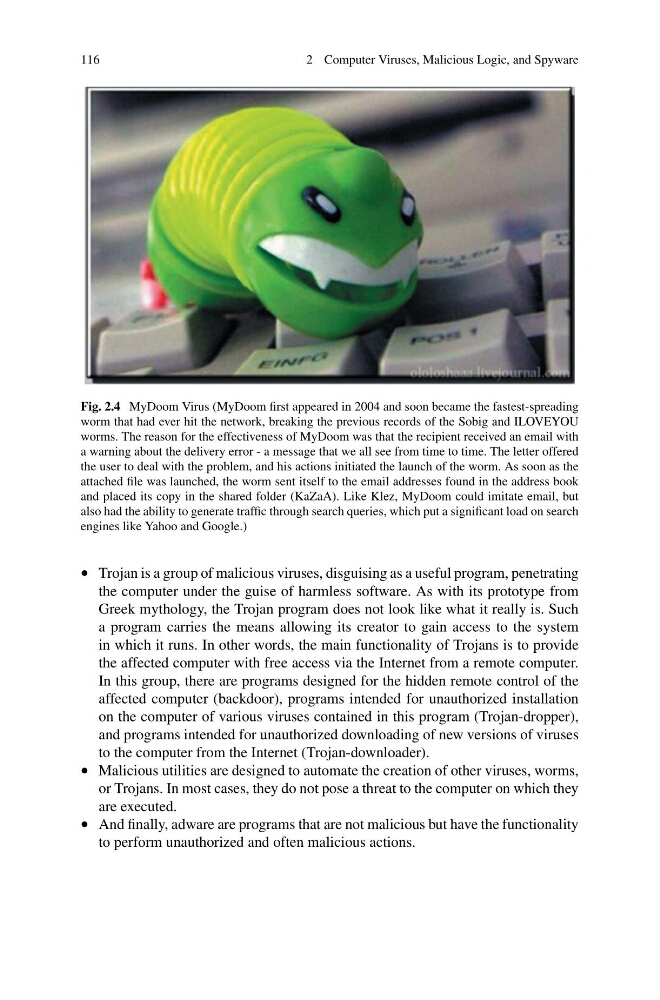
Fig. 2.4 MyDoom Virus (MyDoom first appeared in 2004 and soon became the fastest-spreading
worm that had ever hit the network, breaking the previous records of the Sobig and ILOVEYOU
worms. The reason for the effectiveness of MyDoom was that the recipient received an email with
a warning about the delivery error - a message that we all see from time to time. The letter offered
the user to deal with the problem, and his actions initiated the launch of the worm. As soon as the
attached file was launched, the worm sent itself to the email addresses found in the address book
and placed its copy in the shared folder (KaZaA). Like Klez, MyDoom could imitate email, but
also had the ability to generate traffic through search queries, which put a significant load on search
engines like Yahoo and Google.)
• Trojan is a group of malicious viruses, disguising as a useful program, penetrating
the computer under the guise of harmless software. As with its prototype from
Greek mythology, the Trojan program does not look like what it really is. Such
a program carries the means allowing its creator to gain access to the system
in which it runs. In other words, the main functionality of Trojans is to provide
the affected computer with free access via the Internet from a remote computer.
In this group, there are programs designed for the hidden remote control of the
affected computer (backdoor), programs intended for unauthorized installation
on the computer of various viruses contained in this program (Trojan-dropper),
and programs intended for unauthorized downloading of new versions of viruses
to the computer from the Internet (Trojan-downloader).
• Malicious utilities are designed to automate the creation of other viruses, worms,
or Trojans. In most cases, they do not pose a threat to the computer on which they
are executed.
• And finally, adware are programs that are not malicious but have the functionality
to perform unauthorized and often malicious actions.
2 Computer Viruses, Malicious Logic, and Spyware
Fig. 2.4 MyDoom Virus (MyDoom first appeared in 2004 and soon became the fastest-spreading
worm that had ever hit the network, breaking the previous records of the Sobig and ILOVEYOU
worms. The reason for the effectiveness of MyDoom was that the recipient received an email with
a warning about the delivery error - a message that we all see from time to time. The letter offered
the user to deal with the problem, and his actions initiated the launch of the worm. As soon as the
attached file was launched, the worm sent itself to the email addresses found in the address book
and placed its copy in the shared folder (KaZaA). Like Klez, MyDoom could imitate email, but
also had the ability to generate traffic through search queries, which put a significant load on search
engines like Yahoo and Google.)
• Trojan is a group of malicious viruses, disguising as a useful program, penetrating
the computer under the guise of harmless software. As with its prototype from
Greek mythology, the Trojan program does not look like what it really is. Such
a program carries the means allowing its creator to gain access to the system
in which it runs. In other words, the main functionality of Trojans is to provide
the affected computer with free access via the Internet from a remote computer.
In this group, there are programs designed for the hidden remote control of the
affected computer (backdoor), programs intended for unauthorized installation
on the computer of various viruses contained in this program (Trojan-dropper),
and programs intended for unauthorized downloading of new versions of viruses
to the computer from the Internet (Trojan-downloader).
• Malicious utilities are designed to automate the creation of other viruses, worms,
or Trojans. In most cases, they do not pose a threat to the computer on which they
are executed.
• And finally, adware are programs that are not malicious but have the functionality
to perform unauthorized and often malicious actions.