

2.1 Computer Viruses
115
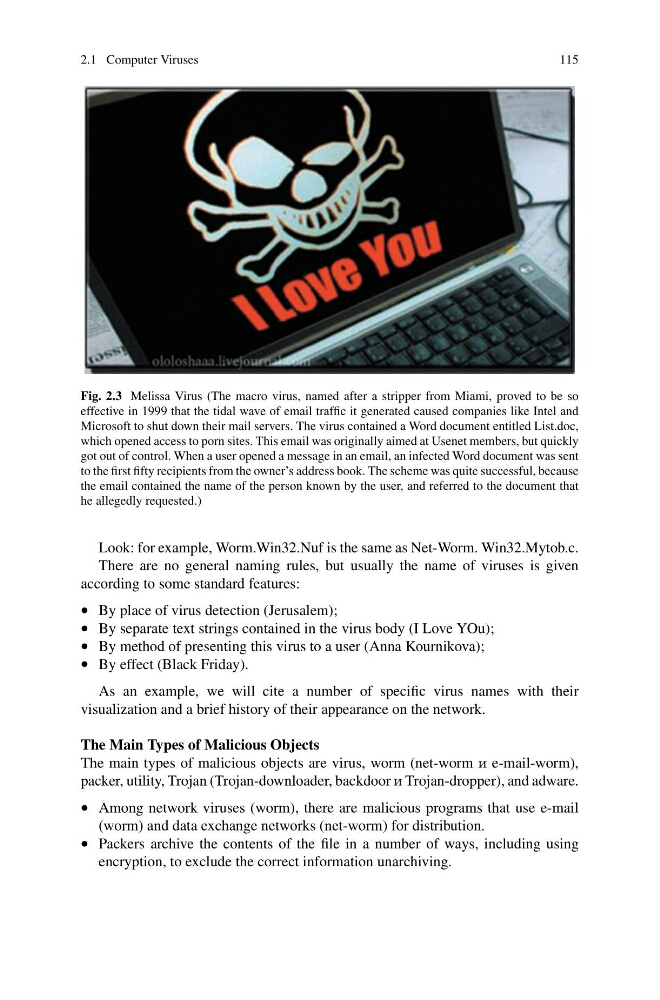
Fig. 2.3 Melissa Virus (The macro virus, named after a stripper from Miami, proved to be so
effective in 1999 that the tidal wave of email traffic it generated caused companies like Intel and
Microsoft to shut down their mail servers. The virus contained a Word document entitled List.doc,
which opened access to porn sites. This email was originally aimed at Usenet members, but quickly
got out of control. When a user opened a message in an email, an infected Word document was sent
to the first fifty recipients from the owner’s address book. The scheme was quite successful, because
the email contained the name of the person known by the user, and referred to the document that
he allegedly requested.)
Look: for example, Worm.Win32.Nuf is the same as Net-Worm. Win32.Mytob.c.
There are no general naming rules, but usually the name of viruses is given
according to some standard features:
• By place of virus detection (Jerusalem);
• By separate text strings contained in the virus body (I Love YOu);
• By method of presenting this virus to a user (Anna Kournikova);
• By effect (Black Friday).
As an example, we will cite a number of specific virus names with their
visualization and a brief history of their appearance on the network.
The Main Types of Malicious Objects
The main types of malicious objects are virus, worm (net-worm i e-mail-worm),
packer, utility, Trojan (Trojan-downloader, backdoor i Trojan-dropper), and adware.
• Among network viruses (worm), there are malicious programs that use e-mail
(worm) and data exchange networks (net-worm) for distribution.
• Packers archive the contents of the file in a number of ways, including using
encryption, to exclude the correct information unarchiving.
115
Fig. 2.3 Melissa Virus (The macro virus, named after a stripper from Miami, proved to be so
effective in 1999 that the tidal wave of email traffic it generated caused companies like Intel and
Microsoft to shut down their mail servers. The virus contained a Word document entitled List.doc,
which opened access to porn sites. This email was originally aimed at Usenet members, but quickly
got out of control. When a user opened a message in an email, an infected Word document was sent
to the first fifty recipients from the owner’s address book. The scheme was quite successful, because
the email contained the name of the person known by the user, and referred to the document that
he allegedly requested.)
Look: for example, Worm.Win32.Nuf is the same as Net-Worm. Win32.Mytob.c.
There are no general naming rules, but usually the name of viruses is given
according to some standard features:
• By place of virus detection (Jerusalem);
• By separate text strings contained in the virus body (I Love YOu);
• By method of presenting this virus to a user (Anna Kournikova);
• By effect (Black Friday).
As an example, we will cite a number of specific virus names with their
visualization and a brief history of their appearance on the network.
The Main Types of Malicious Objects
The main types of malicious objects are virus, worm (net-worm i e-mail-worm),
packer, utility, Trojan (Trojan-downloader, backdoor i Trojan-dropper), and adware.
• Among network viruses (worm), there are malicious programs that use e-mail
(worm) and data exchange networks (net-worm) for distribution.
• Packers archive the contents of the file in a number of ways, including using
encryption, to exclude the correct information unarchiving.