

46
G. K. Ananthasuresh
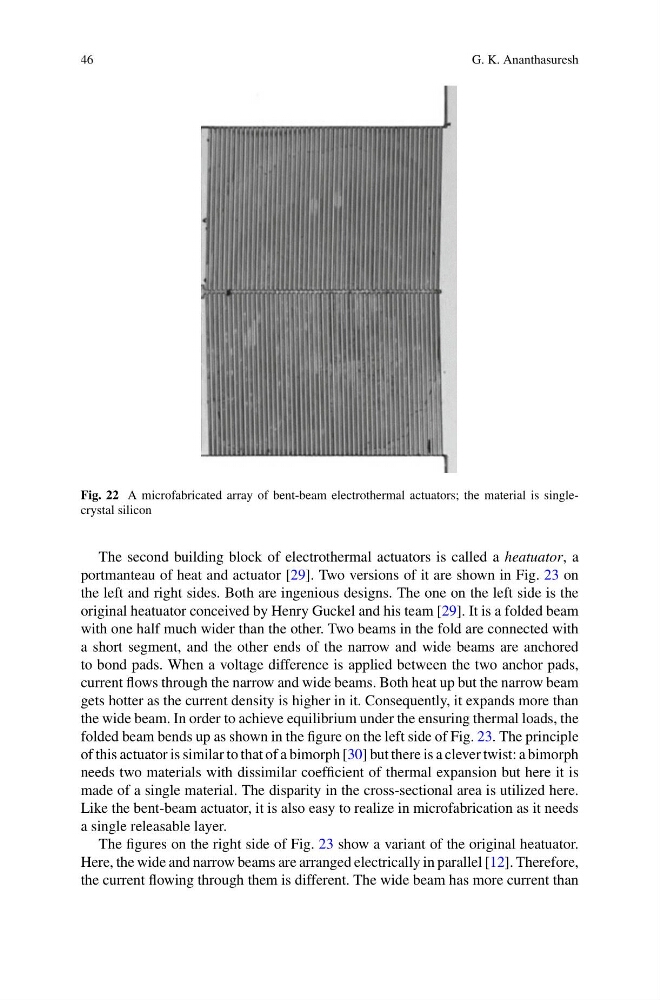
Fig. 22 A microfabricated array of bent-beam electrothermal actuators; the material is singlecrystal silicon
The second building block of electrothermal actuators is called a heatuator, a
portmanteau of heat and actuator [29]. Two versions of it are shown in Fig. 23 on
the left and right sides. Both are ingenious designs. The one on the left side is the
original heatuator conceived by Henry Guckel and his team [29]. It is a folded beam
with one half much wider than the other. Two beams in the fold are connected with
a short segment, and the other ends of the narrow and wide beams are anchored
to bond pads. When a voltage difference is applied between the two anchor pads,
current flows through the narrow and wide beams. Both heat up but the narrow beam
gets hotter as the current density is higher in it. Consequently, it expands more than
the wide beam. In order to achieve equilibrium under the ensuring thermal loads, the
folded beam bends up as shown in the figure on the left side of Fig. 23. The principle
of this actuator is similar to that of a bimorph [30] but there is a clever twist: a bimorph
needs two materials with dissimilar coefficient of thermal expansion but here it is
made of a single material. The disparity in the cross-sectional area is utilized here.
Like the bent-beam actuator, it is also easy to realize in microfabrication as it needs
a single releasable layer.
The figures on the right side of Fig. 23 show a variant of the original heatuator.
Here, the wide and narrow beams are arranged electrically in parallel [12]. Therefore,
the current flowing through them is different. The wide beam has more current than
G. K. Ananthasuresh
Fig. 22 A microfabricated array of bent-beam electrothermal actuators; the material is singlecrystal silicon
The second building block of electrothermal actuators is called a heatuator, a
portmanteau of heat and actuator [29]. Two versions of it are shown in Fig. 23 on
the left and right sides. Both are ingenious designs. The one on the left side is the
original heatuator conceived by Henry Guckel and his team [29]. It is a folded beam
with one half much wider than the other. Two beams in the fold are connected with
a short segment, and the other ends of the narrow and wide beams are anchored
to bond pads. When a voltage difference is applied between the two anchor pads,
current flows through the narrow and wide beams. Both heat up but the narrow beam
gets hotter as the current density is higher in it. Consequently, it expands more than
the wide beam. In order to achieve equilibrium under the ensuring thermal loads, the
folded beam bends up as shown in the figure on the left side of Fig. 23. The principle
of this actuator is similar to that of a bimorph [30] but there is a clever twist: a bimorph
needs two materials with dissimilar coefficient of thermal expansion but here it is
made of a single material. The disparity in the cross-sectional area is utilized here.
Like the bent-beam actuator, it is also easy to realize in microfabrication as it needs
a single releasable layer.
The figures on the right side of Fig. 23 show a variant of the original heatuator.
Here, the wide and narrow beams are arranged electrically in parallel [12]. Therefore,
the current flowing through them is different. The wide beam has more current than