

220
D. George and M. J. Madou
Superhydrophobic
surface
Superhydrophilic
surface
Spherical cap system
Elastocapillary
bending
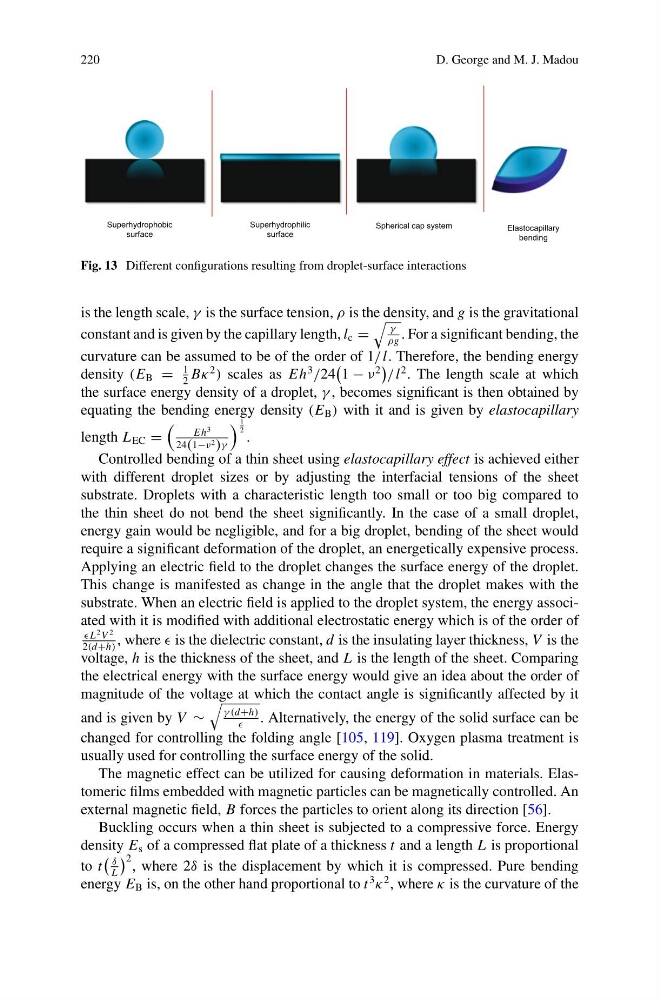
Fig. 13 Different configurations resulting from droplet-surface interactions
is the length scale, γ is the surface tension, ρ is the density, and g is the gravitational
constant and is given by the capillary length, l c =
γ
ρg
. For a significant bending, the
curvature can be assumed to be of the order of 1/l. Therefore, the bending energy
density (E B =
1
2
Bκ
2
) scales as Eh
3
/24
1 − ν
2
/l
2 . The length scale at which
the surface energy density of a droplet, γ , becomes significant is then obtained by
equating the bending energy density (E B ) with it and is given by elastocapillary
length L EC =
Eh
3
24(1−ν 2 )γ
1
2 .
Controlled bending of a thin sheet using elastocapillary effect is achieved either
with different droplet sizes or by adjusting the interfacial tensions of the sheet
substrate. Droplets with a characteristic length too small or too big compared to
the thin sheet do not bend the sheet significantly. In the case of a small droplet,
energy gain would be negligible, and for a big droplet, bending of the sheet would
require a significant deformation of the droplet, an energetically expensive process.
Applying an electric field to the droplet changes the surface energy of the droplet.
This change is manifested as change in the angle that the droplet makes with the
substrate. When an electric field is applied to the droplet system, the energy associated with it is modified with additional electrostatic energy which is of the order of
L
2 V
2
2(d+h)
, where is the dielectric constant, d is the insulating layer thickness, V is the
voltage, h is the thickness of the sheet, and L is the length of the sheet. Comparing
the electrical energy with the surface energy would give an idea about the order of
magnitude of the voltage at which the contact angle is significantly affected by it
and is given by V ∼
γ (d+h)
. Alternatively, the energy of the solid surface can be
changed for controlling the folding angle [105, 119]. Oxygen plasma treatment is
usually used for controlling the surface energy of the solid.
The magnetic effect can be utilized for causing deformation in materials. Elastomeric films embedded with magnetic particles can be magnetically controlled. An
external magnetic field, B forces the particles to orient along its direction [56].
Buckling occurs when a thin sheet is subjected to a compressive force. Energy
density E s of a compressed flat plate of a thickness t and a length L is proportional
to t
δ
L
2 , where 2δ is the displacement by which it is compressed. Pure bending
energy E B is, on the other hand proportional to t
3
κ
2 , where κ is the curvature of the
D. George and M. J. Madou
Superhydrophobic
surface
Superhydrophilic
surface
Spherical cap system
Elastocapillary
bending
Fig. 13 Different configurations resulting from droplet-surface interactions
is the length scale, γ is the surface tension, ρ is the density, and g is the gravitational
constant and is given by the capillary length, l c =
γ
ρg
. For a significant bending, the
curvature can be assumed to be of the order of 1/l. Therefore, the bending energy
density (E B =
1
2
Bκ
2
) scales as Eh
3
/24
1 − ν
2
/l
2 . The length scale at which
the surface energy density of a droplet, γ , becomes significant is then obtained by
equating the bending energy density (E B ) with it and is given by elastocapillary
length L EC =
Eh
3
24(1−ν 2 )γ
1
2 .
Controlled bending of a thin sheet using elastocapillary effect is achieved either
with different droplet sizes or by adjusting the interfacial tensions of the sheet
substrate. Droplets with a characteristic length too small or too big compared to
the thin sheet do not bend the sheet significantly. In the case of a small droplet,
energy gain would be negligible, and for a big droplet, bending of the sheet would
require a significant deformation of the droplet, an energetically expensive process.
Applying an electric field to the droplet changes the surface energy of the droplet.
This change is manifested as change in the angle that the droplet makes with the
substrate. When an electric field is applied to the droplet system, the energy associated with it is modified with additional electrostatic energy which is of the order of
L
2 V
2
2(d+h)
, where is the dielectric constant, d is the insulating layer thickness, V is the
voltage, h is the thickness of the sheet, and L is the length of the sheet. Comparing
the electrical energy with the surface energy would give an idea about the order of
magnitude of the voltage at which the contact angle is significantly affected by it
and is given by V ∼
γ (d+h)
. Alternatively, the energy of the solid surface can be
changed for controlling the folding angle [105, 119]. Oxygen plasma treatment is
usually used for controlling the surface energy of the solid.
The magnetic effect can be utilized for causing deformation in materials. Elastomeric films embedded with magnetic particles can be magnetically controlled. An
external magnetic field, B forces the particles to orient along its direction [56].
Buckling occurs when a thin sheet is subjected to a compressive force. Energy
density E s of a compressed flat plate of a thickness t and a length L is proportional
to t
δ
L
2 , where 2δ is the displacement by which it is compressed. Pure bending
energy E B is, on the other hand proportional to t
3
κ
2 , where κ is the curvature of the