

210
D. George and M. J. Madou
Release
Residual stress-based
Bending of metal-oxide
bilayer (Moiseeva et al. 2007)
Bending of PDMS-SiO 2
bilayer
et al., 2013)
Swelling-based
Bending of LCEpolystyrene bilayer
(Agrawal et al., 2014)
LCE-based
Thermal or
optical
actuation
Bending of SMP-polyamide
bilayer (Wang et al., 2015)
Thermal
actuation
Shape memory-based
(Chia Gómez
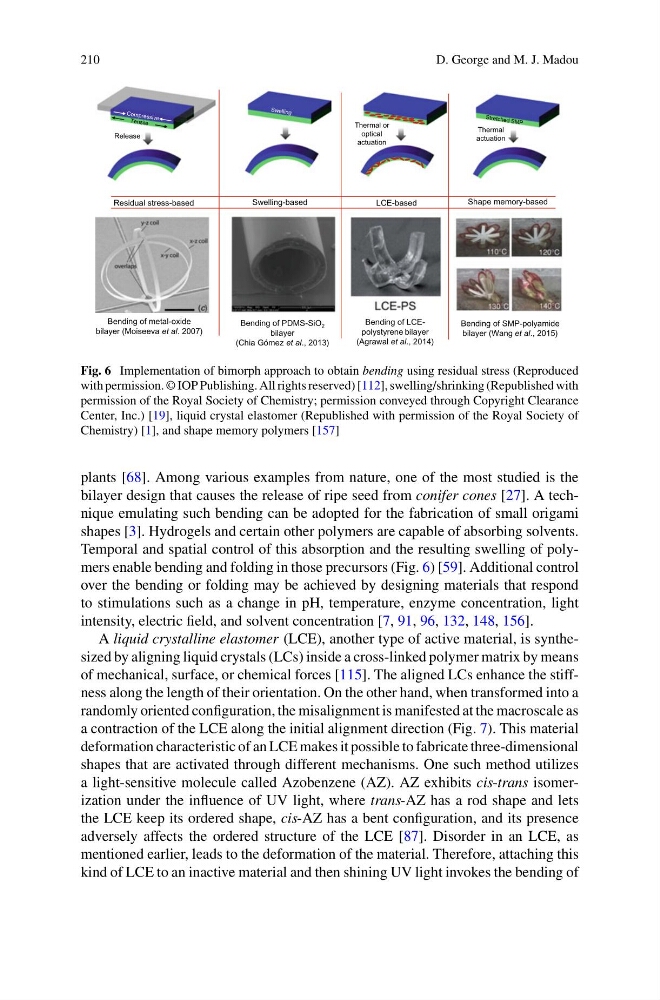
Fig. 6 Implementation of bimorph approach to obtain bending using residual stress (Reproduced
with permission. © IOP Publishing. All rights reserved) [112], swelling/shrinking (Republished with
permission of the Royal Society of Chemistry; permission conveyed through Copyright Clearance
Center, Inc.) [19], liquid crystal elastomer (Republished with permission of the Royal Society of
Chemistry) [1], and shape memory polymers [157]
plants [68]. Among various examples from nature, one of the most studied is the
bilayer design that causes the release of ripe seed from conifer cones [27]. A technique emulating such bending can be adopted for the fabrication of small origami
shapes [3]. Hydrogels and certain other polymers are capable of absorbing solvents.
Temporal and spatial control of this absorption and the resulting swelling of polymers enable bending and folding in those precursors (Fig. 6) [59]. Additional control
over the bending or folding may be achieved by designing materials that respond
to stimulations such as a change in pH, temperature, enzyme concentration, light
intensity, electric field, and solvent concentration [7, 91, 96, 132, 148, 156].
A liquid crystalline elastomer (LCE), another type of active material, is synthesized by aligning liquid crystals (LCs) inside a cross-linked polymer matrix by means
of mechanical, surface, or chemical forces [115]. The aligned LCs enhance the stiffness along the length of their orientation. On the other hand, when transformed into a
randomly oriented configuration, the misalignment is manifested at the macroscale as
a contraction of the LCE along the initial alignment direction (Fig. 7). This material
deformation characteristic of an LCE makes it possible to fabricate three-dimensional
shapes that are activated through different mechanisms. One such method utilizes
a light-sensitive molecule called Azobenzene (AZ). AZ exhibits cis-trans isomerization under the influence of UV light, where trans-AZ has a rod shape and lets
the LCE keep its ordered shape, cis-AZ has a bent configuration, and its presence
adversely affects the ordered structure of the LCE [87]. Disorder in an LCE, as
mentioned earlier, leads to the deformation of the material. Therefore, attaching this
kind of LCE to an inactive material and then shining UV light invokes the bending of
D. George and M. J. Madou
Release
Residual stress-based
Bending of metal-oxide
bilayer (Moiseeva et al. 2007)
Bending of PDMS-SiO 2
bilayer
et al., 2013)
Swelling-based
Bending of LCEpolystyrene bilayer
(Agrawal et al., 2014)
LCE-based
Thermal or
optical
actuation
Bending of SMP-polyamide
bilayer (Wang et al., 2015)
Thermal
actuation
Shape memory-based
(Chia Gómez
Fig. 6 Implementation of bimorph approach to obtain bending using residual stress (Reproduced
with permission. © IOP Publishing. All rights reserved) [112], swelling/shrinking (Republished with
permission of the Royal Society of Chemistry; permission conveyed through Copyright Clearance
Center, Inc.) [19], liquid crystal elastomer (Republished with permission of the Royal Society of
Chemistry) [1], and shape memory polymers [157]
plants [68]. Among various examples from nature, one of the most studied is the
bilayer design that causes the release of ripe seed from conifer cones [27]. A technique emulating such bending can be adopted for the fabrication of small origami
shapes [3]. Hydrogels and certain other polymers are capable of absorbing solvents.
Temporal and spatial control of this absorption and the resulting swelling of polymers enable bending and folding in those precursors (Fig. 6) [59]. Additional control
over the bending or folding may be achieved by designing materials that respond
to stimulations such as a change in pH, temperature, enzyme concentration, light
intensity, electric field, and solvent concentration [7, 91, 96, 132, 148, 156].
A liquid crystalline elastomer (LCE), another type of active material, is synthesized by aligning liquid crystals (LCs) inside a cross-linked polymer matrix by means
of mechanical, surface, or chemical forces [115]. The aligned LCs enhance the stiffness along the length of their orientation. On the other hand, when transformed into a
randomly oriented configuration, the misalignment is manifested at the macroscale as
a contraction of the LCE along the initial alignment direction (Fig. 7). This material
deformation characteristic of an LCE makes it possible to fabricate three-dimensional
shapes that are activated through different mechanisms. One such method utilizes
a light-sensitive molecule called Azobenzene (AZ). AZ exhibits cis-trans isomerization under the influence of UV light, where trans-AZ has a rod shape and lets
the LCE keep its ordered shape, cis-AZ has a bent configuration, and its presence
adversely affects the ordered structure of the LCE [87]. Disorder in an LCE, as
mentioned earlier, leads to the deformation of the material. Therefore, attaching this
kind of LCE to an inactive material and then shining UV light invokes the bending of