

188
V. Laxmi et al.
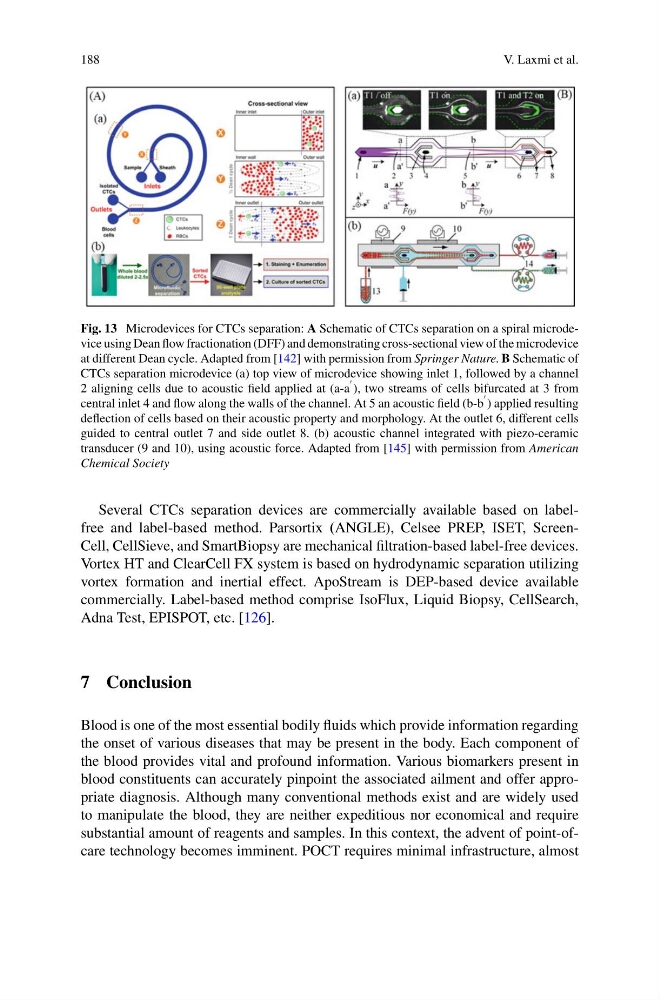
Fig. 13 Microdevices for CTCs separation: A Schematic of CTCs separation on a spiral microdevice using Dean flow fractionation (DFF) and demonstrating cross-sectional view of the microdevice
at different Dean cycle. Adapted from [142] with permission from Springer Nature. B Schematic of
CTCs separation microdevice (a) top view of microdevice showing inlet 1, followed by a channel
2 aligning cells due to acoustic field applied at (a-a
), two streams of cells bifurcated at 3 from
central inlet 4 and flow along the walls of the channel. At 5 an acoustic field (b-b
) applied resulting
deflection of cells based on their acoustic property and morphology. At the outlet 6, different cells
guided to central outlet 7 and side outlet 8. (b) acoustic channel integrated with piezo-ceramic
transducer (9 and 10), using acoustic force. Adapted from [145] with permission from American
Chemical Society
Several CTCs separation devices are commercially available based on labelfree and label-based method. Parsortix (ANGLE), Celsee PREP, ISET, ScreenCell, CellSieve, and SmartBiopsy are mechanical filtration-based label-free devices.
Vortex HT and ClearCell FX system is based on hydrodynamic separation utilizing
vortex formation and inertial effect. ApoStream is DEP-based device available
commercially. Label-based method comprise IsoFlux, Liquid Biopsy, CellSearch,
Adna Test, EPISPOT, etc. [126].
7 Conclusion
Blood is one of the most essential bodily fluids which provide information regarding
the onset of various diseases that may be present in the body. Each component of
the blood provides vital and profound information. Various biomarkers present in
blood constituents can accurately pinpoint the associated ailment and offer appropriate diagnosis. Although many conventional methods exist and are widely used
to manipulate the blood, they are neither expeditious nor economical and require
substantial amount of reagents and samples. In this context, the advent of point-ofcare technology becomes imminent. POCT requires minimal infrastructure, almost
V. Laxmi et al.
Fig. 13 Microdevices for CTCs separation: A Schematic of CTCs separation on a spiral microdevice using Dean flow fractionation (DFF) and demonstrating cross-sectional view of the microdevice
at different Dean cycle. Adapted from [142] with permission from Springer Nature. B Schematic of
CTCs separation microdevice (a) top view of microdevice showing inlet 1, followed by a channel
2 aligning cells due to acoustic field applied at (a-a
), two streams of cells bifurcated at 3 from
central inlet 4 and flow along the walls of the channel. At 5 an acoustic field (b-b
) applied resulting
deflection of cells based on their acoustic property and morphology. At the outlet 6, different cells
guided to central outlet 7 and side outlet 8. (b) acoustic channel integrated with piezo-ceramic
transducer (9 and 10), using acoustic force. Adapted from [145] with permission from American
Chemical Society
Several CTCs separation devices are commercially available based on labelfree and label-based method. Parsortix (ANGLE), Celsee PREP, ISET, ScreenCell, CellSieve, and SmartBiopsy are mechanical filtration-based label-free devices.
Vortex HT and ClearCell FX system is based on hydrodynamic separation utilizing
vortex formation and inertial effect. ApoStream is DEP-based device available
commercially. Label-based method comprise IsoFlux, Liquid Biopsy, CellSearch,
Adna Test, EPISPOT, etc. [126].
7 Conclusion
Blood is one of the most essential bodily fluids which provide information regarding
the onset of various diseases that may be present in the body. Each component of
the blood provides vital and profound information. Various biomarkers present in
blood constituents can accurately pinpoint the associated ailment and offer appropriate diagnosis. Although many conventional methods exist and are widely used
to manipulate the blood, they are neither expeditious nor economical and require
substantial amount of reagents and samples. In this context, the advent of point-ofcare technology becomes imminent. POCT requires minimal infrastructure, almost