

158
E. Fraccaroli and D. Quaglia
implementations. Because XMPP is an open protocol, implementations can be
developed using any software license and many servers, clients, and library implementations are distributed as free and open-source software. Numerous freeware
and commercial software implementations also exist.
3.4.8 OPC Unified Architecture (OPC-UA)
OPC Unified Architecture (OPC-UA) is a machine-to-machine Application Layer
communication protocol for industrial automation developed by the OPC Foundation [90]. The idea behind OPC-UA is providing a platform-independent communication standard with a service-oriented architecture, where devices communicate
using specific messages of request and response. OPC-UA addresses a wide range
of target applications, i.e., Supervisory Control and Data Acquisition (SCADA),
Human-Machine Interface (HMI) (or, more generally, Human-System Interface
(HSI)), distributed control systems, and management of programmable logic controllers. Sources or destinations of OPC-UA data belong to the so-called shop
floor of the smart factory, e.g., they may be milling machines, 3D printers, robots,
conveyor belts, etc.
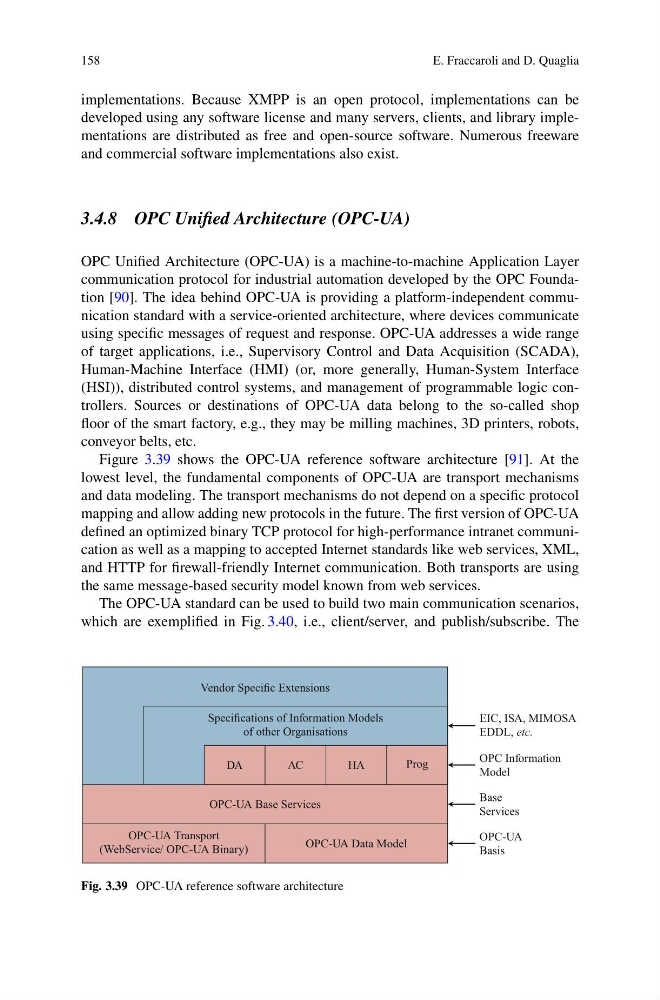
Figure 3.39 shows the OPC-UA reference software architecture [91]. At the
lowest level, the fundamental components of OPC-UA are transport mechanisms
and data modeling. The transport mechanisms do not depend on a specific protocol
mapping and allow adding new protocols in the future. The first version of OPC-UA
defined an optimized binary TCP protocol for high-performance intranet communication as well as a mapping to accepted Internet standards like web services, XML,
and HTTP for firewall-friendly Internet communication. Both transports are using
the same message-based security model known from web services.
The OPC-UA standard can be used to build two main communication scenarios,
which are exemplified in Fig. 3.40, i.e., client/server, and publish/subscribe. The
OPC-UA Transport
(WebService/ OPC-UA Binary)
OPC-UA Data Model
OPC-UA Base Services
DA
AC
HA
Prog
OPC-UA
Basis
Base
Services
OPC Information
Model
EIC, ISA, MIMOSA
EDDL, etc.
Vendor Specific Extensions
Specifications of Information Models
of other Organisations
Fig. 3.39 OPC-UA reference software architecture
E. Fraccaroli and D. Quaglia
implementations. Because XMPP is an open protocol, implementations can be
developed using any software license and many servers, clients, and library implementations are distributed as free and open-source software. Numerous freeware
and commercial software implementations also exist.
3.4.8 OPC Unified Architecture (OPC-UA)
OPC Unified Architecture (OPC-UA) is a machine-to-machine Application Layer
communication protocol for industrial automation developed by the OPC Foundation [90]. The idea behind OPC-UA is providing a platform-independent communication standard with a service-oriented architecture, where devices communicate
using specific messages of request and response. OPC-UA addresses a wide range
of target applications, i.e., Supervisory Control and Data Acquisition (SCADA),
Human-Machine Interface (HMI) (or, more generally, Human-System Interface
(HSI)), distributed control systems, and management of programmable logic controllers. Sources or destinations of OPC-UA data belong to the so-called shop
floor of the smart factory, e.g., they may be milling machines, 3D printers, robots,
conveyor belts, etc.
Figure 3.39 shows the OPC-UA reference software architecture [91]. At the
lowest level, the fundamental components of OPC-UA are transport mechanisms
and data modeling. The transport mechanisms do not depend on a specific protocol
mapping and allow adding new protocols in the future. The first version of OPC-UA
defined an optimized binary TCP protocol for high-performance intranet communication as well as a mapping to accepted Internet standards like web services, XML,
and HTTP for firewall-friendly Internet communication. Both transports are using
the same message-based security model known from web services.
The OPC-UA standard can be used to build two main communication scenarios,
which are exemplified in Fig. 3.40, i.e., client/server, and publish/subscribe. The
OPC-UA Transport
(WebService/ OPC-UA Binary)
OPC-UA Data Model
OPC-UA Base Services
DA
AC
HA
Prog
OPC-UA
Basis
Base
Services
OPC Information
Model
EIC, ISA, MIMOSA
EDDL, etc.
Vendor Specific Extensions
Specifications of Information Models
of other Organisations
Fig. 3.39 OPC-UA reference software architecture