

3 Engineering IoT Networks
159
OPC-UA Application
Address Space
A
B
C
OPC-UA
Server
OPC-UA
Client
A B
OPC-UA
Publisher
DataSetWriter
DataSet
OPC-UA
Publisher
Broker
(e.g., MQTT)
OPC-UA
Subscriber
OPC-UA
Subscriber
A B C
A
A C
UDP over
Multicast IP
OPC-UA
Subscriber
OPC-UA
Subscriber
A B
C
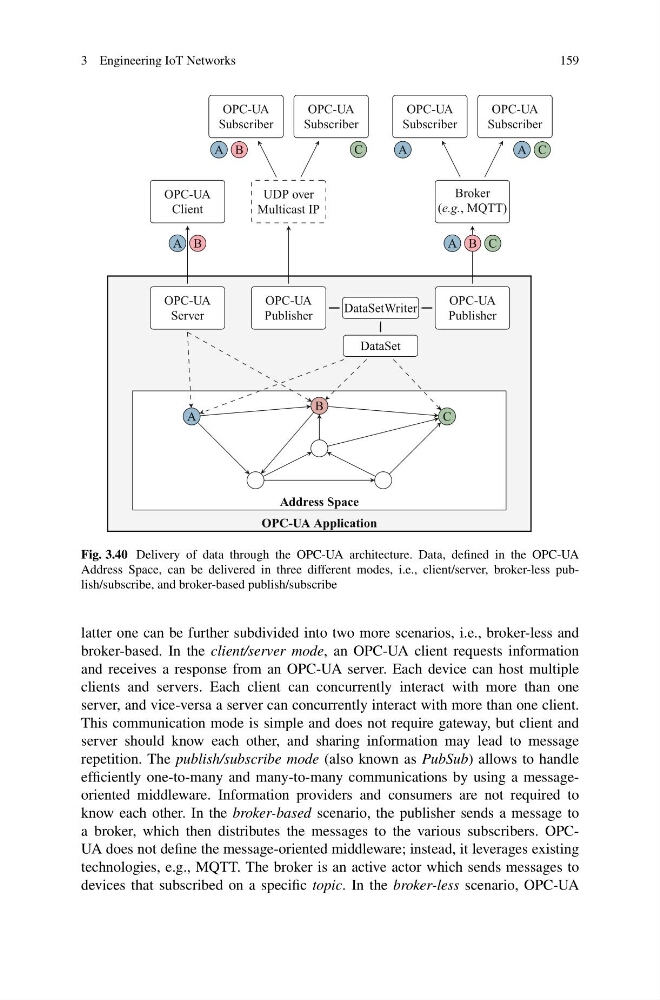
Fig. 3.40 Delivery of data through the OPC-UA architecture. Data, defined in the OPC-UA
Address Space, can be delivered in three different modes, i.e., client/server, broker-less publish/subscribe, and broker-based publish/subscribe
latter one can be further subdivided into two more scenarios, i.e., broker-less and
broker-based. In the client/server mode, an OPC-UA client requests information
and receives a response from an OPC-UA server. Each device can host multiple
clients and servers. Each client can concurrently interact with more than one
server, and vice-versa a server can concurrently interact with more than one client.
This communication mode is simple and does not require gateway, but client and
server should know each other, and sharing information may lead to message
repetition. The publish/subscribe mode (also known as PubSub) allows to handle
efficiently one-to-many and many-to-many communications by using a messageoriented middleware. Information providers and consumers are not required to
know each other. In the broker-based scenario, the publisher sends a message to
a broker, which then distributes the messages to the various subscribers. OPCUA does not define the message-oriented middleware; instead, it leverages existing
technologies, e.g., MQTT. The broker is an active actor which sends messages to
devices that subscribed on a specific topic. In the broker-less scenario, OPC-UA
159
OPC-UA Application
Address Space
A
B
C
OPC-UA
Server
OPC-UA
Client
A B
OPC-UA
Publisher
DataSetWriter
DataSet
OPC-UA
Publisher
Broker
(e.g., MQTT)
OPC-UA
Subscriber
OPC-UA
Subscriber
A B C
A
A C
UDP over
Multicast IP
OPC-UA
Subscriber
OPC-UA
Subscriber
A B
C
Fig. 3.40 Delivery of data through the OPC-UA architecture. Data, defined in the OPC-UA
Address Space, can be delivered in three different modes, i.e., client/server, broker-less publish/subscribe, and broker-based publish/subscribe
latter one can be further subdivided into two more scenarios, i.e., broker-less and
broker-based. In the client/server mode, an OPC-UA client requests information
and receives a response from an OPC-UA server. Each device can host multiple
clients and servers. Each client can concurrently interact with more than one
server, and vice-versa a server can concurrently interact with more than one client.
This communication mode is simple and does not require gateway, but client and
server should know each other, and sharing information may lead to message
repetition. The publish/subscribe mode (also known as PubSub) allows to handle
efficiently one-to-many and many-to-many communications by using a messageoriented middleware. Information providers and consumers are not required to
know each other. In the broker-based scenario, the publisher sends a message to
a broker, which then distributes the messages to the various subscribers. OPCUA does not define the message-oriented middleware; instead, it leverages existing
technologies, e.g., MQTT. The broker is an active actor which sends messages to
devices that subscribed on a specific topic. In the broker-less scenario, OPC-UA