

46
A. Hu et al.
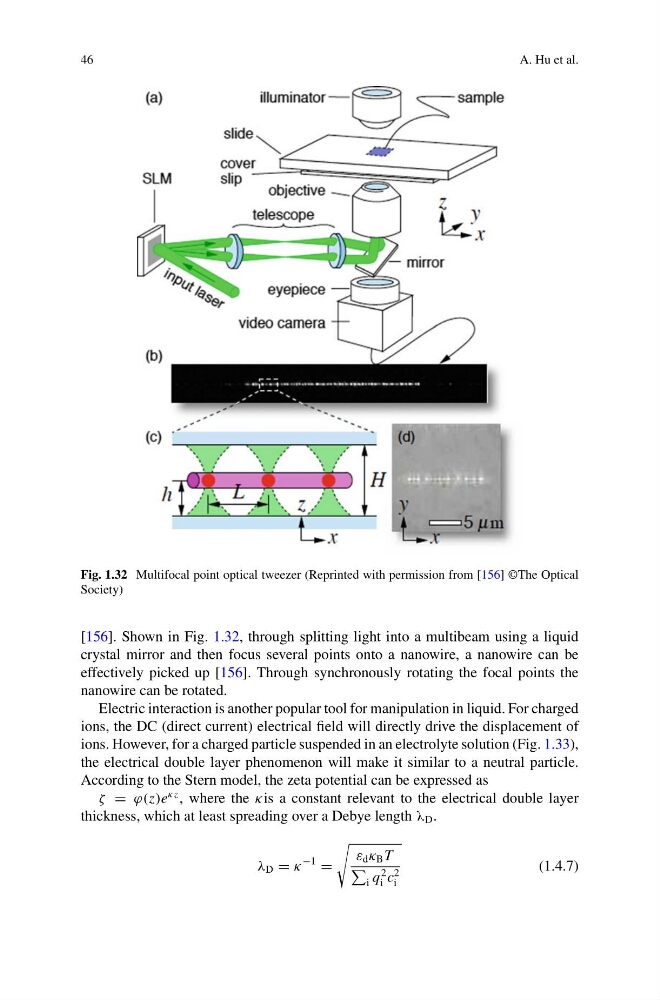
Fig. 1.32 Multifocal point optical tweezer (Reprinted with permission from [156] ©The Optical
Society)
[156]. Shown in Fig. 1.32, through splitting light into a multibeam using a liquid
crystal mirror and then focus several points onto a nanowire, a nanowire can be
effectively picked up [156]. Through synchronously rotating the focal points the
nanowire can be rotated.
Electric interaction is another popular tool for manipulation in liquid. For charged
ions, the DC (direct current) electrical field will directly drive the displacement of
ions. However, for a charged particle suspended in an electrolyte solution (Fig. 1.33),
the electrical double layer phenomenon will make it similar to a neutral particle.
According to the Stern model, the zeta potential can be expressed as
ζ = ϕ(z)e
κz , where the κis a constant relevant to the electrical double layer
thickness, which at least spreading over a Debye length λ D .
λ D = κ
−1
=
ε d κ B T
i q
2
i c
2
i
(1.4.7)
A. Hu et al.
Fig. 1.32 Multifocal point optical tweezer (Reprinted with permission from [156] ©The Optical
Society)
[156]. Shown in Fig. 1.32, through splitting light into a multibeam using a liquid
crystal mirror and then focus several points onto a nanowire, a nanowire can be
effectively picked up [156]. Through synchronously rotating the focal points the
nanowire can be rotated.
Electric interaction is another popular tool for manipulation in liquid. For charged
ions, the DC (direct current) electrical field will directly drive the displacement of
ions. However, for a charged particle suspended in an electrolyte solution (Fig. 1.33),
the electrical double layer phenomenon will make it similar to a neutral particle.
According to the Stern model, the zeta potential can be expressed as
ζ = ϕ(z)e
κz , where the κis a constant relevant to the electrical double layer
thickness, which at least spreading over a Debye length λ D .
λ D = κ
−1
=
ε d κ B T
i q
2
i c
2
i
(1.4.7)