

11 Lithium-Ion Battery—3D Micro-/Nano-Structuring, Modification …
341
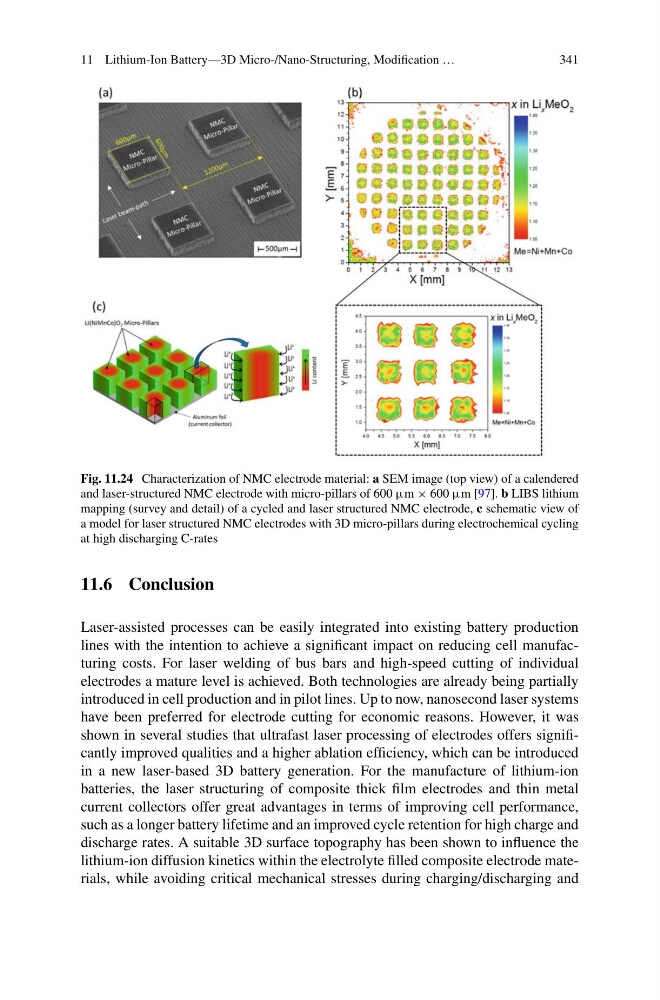
Fig. 11.24 Characterization of NMC electrode material: a SEM image (top view) of a calendered
and laser-structured NMC electrode with micro-pillars of 600 μm × 600 μm [97]. b LIBS lithium
mapping (survey and detail) of a cycled and laser structured NMC electrode, c schematic view of
a model for laser structured NMC electrodes with 3D micro-pillars during electrochemical cycling
at high discharging C-rates
11.6 Conclusion
Laser-assisted processes can be easily integrated into existing battery production
lines with the intention to achieve a significant impact on reducing cell manufacturing costs. For laser welding of bus bars and high-speed cutting of individual
electrodes a mature level is achieved. Both technologies are already being partially
introduced in cell production and in pilot lines. Up to now, nanosecond laser systems
have been preferred for electrode cutting for economic reasons. However, it was
shown in several studies that ultrafast laser processing of electrodes offers significantly improved qualities and a higher ablation efficiency, which can be introduced
in a new laser-based 3D battery generation. For the manufacture of lithium-ion
batteries, the laser structuring of composite thick film electrodes and thin metal
current collectors offer great advantages in terms of improving cell performance,
such as a longer battery lifetime and an improved cycle retention for high charge and
discharge rates. A suitable 3D surface topography has been shown to influence the
lithium-ion diffusion kinetics within the electrolyte filled composite electrode materials, while avoiding critical mechanical stresses during charging/discharging and
341
Fig. 11.24 Characterization of NMC electrode material: a SEM image (top view) of a calendered
and laser-structured NMC electrode with micro-pillars of 600 μm × 600 μm [97]. b LIBS lithium
mapping (survey and detail) of a cycled and laser structured NMC electrode, c schematic view of
a model for laser structured NMC electrodes with 3D micro-pillars during electrochemical cycling
at high discharging C-rates
11.6 Conclusion
Laser-assisted processes can be easily integrated into existing battery production
lines with the intention to achieve a significant impact on reducing cell manufacturing costs. For laser welding of bus bars and high-speed cutting of individual
electrodes a mature level is achieved. Both technologies are already being partially
introduced in cell production and in pilot lines. Up to now, nanosecond laser systems
have been preferred for electrode cutting for economic reasons. However, it was
shown in several studies that ultrafast laser processing of electrodes offers significantly improved qualities and a higher ablation efficiency, which can be introduced
in a new laser-based 3D battery generation. For the manufacture of lithium-ion
batteries, the laser structuring of composite thick film electrodes and thin metal
current collectors offer great advantages in terms of improving cell performance,
such as a longer battery lifetime and an improved cycle retention for high charge and
discharge rates. A suitable 3D surface topography has been shown to influence the
lithium-ion diffusion kinetics within the electrolyte filled composite electrode materials, while avoiding critical mechanical stresses during charging/discharging and