

216
G. Feng et al.
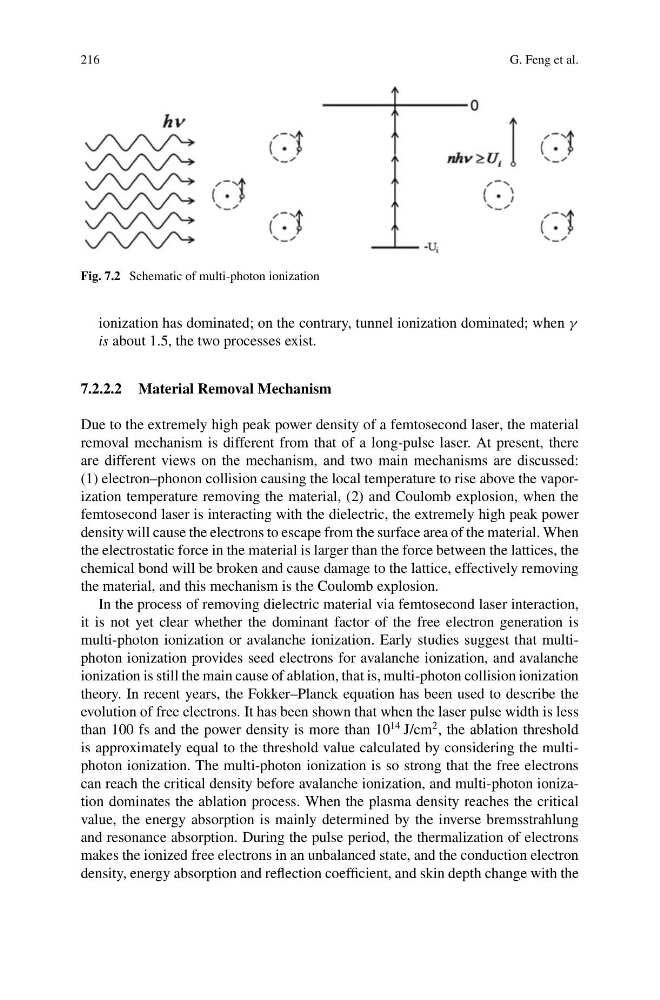
Fig. 7.2 Schematic of multi-photon ionization
ionization has dominated; on the contrary, tunnel ionization dominated; when γ
is about 1.5, the two processes exist.
7.2.2.2 Material Removal Mechanism
Due to the extremely high peak power density of a femtosecond laser, the material
removal mechanism is different from that of a long-pulse laser. At present, there
are different views on the mechanism, and two main mechanisms are discussed:
(1) electron–phonon collision causing the local temperature to rise above the vaporization temperature removing the material, (2) and Coulomb explosion, when the
femtosecond laser is interacting with the dielectric, the extremely high peak power
density will cause the electrons to escape from the surface area of the material. When
the electrostatic force in the material is larger than the force between the lattices, the
chemical bond will be broken and cause damage to the lattice, effectively removing
the material, and this mechanism is the Coulomb explosion.
In the process of removing dielectric material via femtosecond laser interaction,
it is not yet clear whether the dominant factor of the free electron generation is
multi-photon ionization or avalanche ionization. Early studies suggest that multiphoton ionization provides seed electrons for avalanche ionization, and avalanche
ionization is still the main cause of ablation, that is, multi-photon collision ionization
theory. In recent years, the Fokker–Planck equation has been used to describe the
evolution of free electrons. It has been shown that when the laser pulse width is less
than 100 fs and the power density is more than 10
14 J/cm
2 , the ablation threshold
is approximately equal to the threshold value calculated by considering the multiphoton ionization. The multi-photon ionization is so strong that the free electrons
can reach the critical density before avalanche ionization, and multi-photon ionization dominates the ablation process. When the plasma density reaches the critical
value, the energy absorption is mainly determined by the inverse bremsstrahlung
and resonance absorption. During the pulse period, the thermalization of electrons
makes the ionized free electrons in an unbalanced state, and the conduction electron
density, energy absorption and reflection coefficient, and skin depth change with the
G. Feng et al.
Fig. 7.2 Schematic of multi-photon ionization
ionization has dominated; on the contrary, tunnel ionization dominated; when γ
is about 1.5, the two processes exist.
7.2.2.2 Material Removal Mechanism
Due to the extremely high peak power density of a femtosecond laser, the material
removal mechanism is different from that of a long-pulse laser. At present, there
are different views on the mechanism, and two main mechanisms are discussed:
(1) electron–phonon collision causing the local temperature to rise above the vaporization temperature removing the material, (2) and Coulomb explosion, when the
femtosecond laser is interacting with the dielectric, the extremely high peak power
density will cause the electrons to escape from the surface area of the material. When
the electrostatic force in the material is larger than the force between the lattices, the
chemical bond will be broken and cause damage to the lattice, effectively removing
the material, and this mechanism is the Coulomb explosion.
In the process of removing dielectric material via femtosecond laser interaction,
it is not yet clear whether the dominant factor of the free electron generation is
multi-photon ionization or avalanche ionization. Early studies suggest that multiphoton ionization provides seed electrons for avalanche ionization, and avalanche
ionization is still the main cause of ablation, that is, multi-photon collision ionization
theory. In recent years, the Fokker–Planck equation has been used to describe the
evolution of free electrons. It has been shown that when the laser pulse width is less
than 100 fs and the power density is more than 10
14 J/cm
2 , the ablation threshold
is approximately equal to the threshold value calculated by considering the multiphoton ionization. The multi-photon ionization is so strong that the free electrons
can reach the critical density before avalanche ionization, and multi-photon ionization dominates the ablation process. When the plasma density reaches the critical
value, the energy absorption is mainly determined by the inverse bremsstrahlung
and resonance absorption. During the pulse period, the thermalization of electrons
makes the ionized free electrons in an unbalanced state, and the conduction electron
density, energy absorption and reflection coefficient, and skin depth change with the