

7 Micro-hole Arrays and Net-like Structure Fabrication …
215
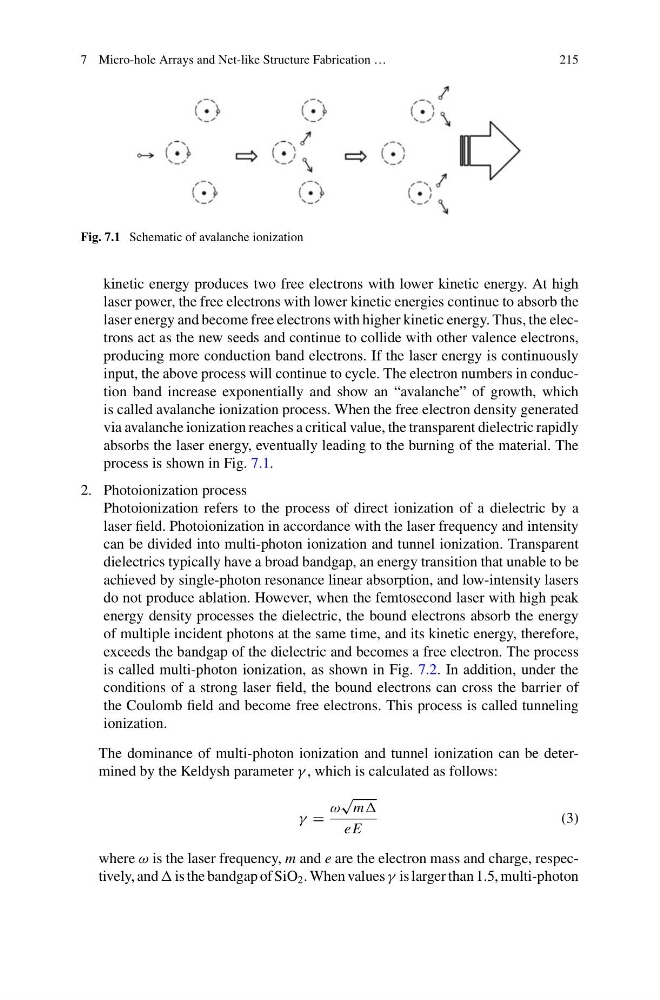
Fig. 7.1 Schematic of avalanche ionization
kinetic energy produces two free electrons with lower kinetic energy. At high
laser power, the free electrons with lower kinetic energies continue to absorb the
laser energy and become free electrons with higher kinetic energy. Thus, the electrons act as the new seeds and continue to collide with other valence electrons,
producing more conduction band electrons. If the laser energy is continuously
input, the above process will continue to cycle. The electron numbers in conduction band increase exponentially and show an “avalanche” of growth, which
is called avalanche ionization process. When the free electron density generated
via avalanche ionization reaches a critical value, the transparent dielectric rapidly
absorbs the laser energy, eventually leading to the burning of the material. The
process is shown in Fig. 7.1.
2. Photoionization process
Photoionization refers to the process of direct ionization of a dielectric by a
laser field. Photoionization in accordance with the laser frequency and intensity
can be divided into multi-photon ionization and tunnel ionization. Transparent
dielectrics typically have a broad bandgap, an energy transition that unable to be
achieved by single-photon resonance linear absorption, and low-intensity lasers
do not produce ablation. However, when the femtosecond laser with high peak
energy density processes the dielectric, the bound electrons absorb the energy
of multiple incident photons at the same time, and its kinetic energy, therefore,
exceeds the bandgap of the dielectric and becomes a free electron. The process
is called multi-photon ionization, as shown in Fig. 7.2. In addition, under the
conditions of a strong laser field, the bound electrons can cross the barrier of
the Coulomb field and become free electrons. This process is called tunneling
ionization.
The dominance of multi-photon ionization and tunnel ionization can be determined by the Keldysh parameter γ , which is calculated as follows:
γ =
ω
√
m
eE
(3)
where ω is the laser frequency, m and e are the electron mass and charge, respectively, and is the bandgap of SiO 2 . When values γ is larger than 1.5, multi-photon
215
Fig. 7.1 Schematic of avalanche ionization
kinetic energy produces two free electrons with lower kinetic energy. At high
laser power, the free electrons with lower kinetic energies continue to absorb the
laser energy and become free electrons with higher kinetic energy. Thus, the electrons act as the new seeds and continue to collide with other valence electrons,
producing more conduction band electrons. If the laser energy is continuously
input, the above process will continue to cycle. The electron numbers in conduction band increase exponentially and show an “avalanche” of growth, which
is called avalanche ionization process. When the free electron density generated
via avalanche ionization reaches a critical value, the transparent dielectric rapidly
absorbs the laser energy, eventually leading to the burning of the material. The
process is shown in Fig. 7.1.
2. Photoionization process
Photoionization refers to the process of direct ionization of a dielectric by a
laser field. Photoionization in accordance with the laser frequency and intensity
can be divided into multi-photon ionization and tunnel ionization. Transparent
dielectrics typically have a broad bandgap, an energy transition that unable to be
achieved by single-photon resonance linear absorption, and low-intensity lasers
do not produce ablation. However, when the femtosecond laser with high peak
energy density processes the dielectric, the bound electrons absorb the energy
of multiple incident photons at the same time, and its kinetic energy, therefore,
exceeds the bandgap of the dielectric and becomes a free electron. The process
is called multi-photon ionization, as shown in Fig. 7.2. In addition, under the
conditions of a strong laser field, the bound electrons can cross the barrier of
the Coulomb field and become free electrons. This process is called tunneling
ionization.
The dominance of multi-photon ionization and tunnel ionization can be determined by the Keldysh parameter γ , which is calculated as follows:
γ =
ω
√
m
eE
(3)
where ω is the laser frequency, m and e are the electron mass and charge, respectively, and is the bandgap of SiO 2 . When values γ is larger than 1.5, multi-photon