

20 Twenty-Five Years’ History, Mechanism, and Generality …
413
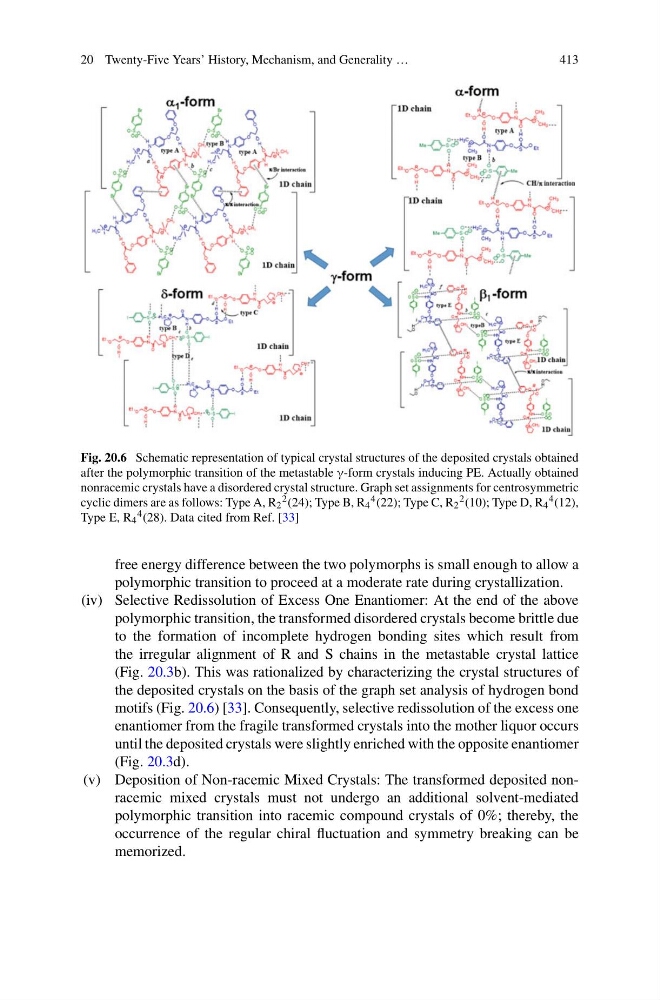
Fig. 20.6 Schematic representation of typical crystal structures of the deposited crystals obtained
after the polymorphic transition of the metastable γ-form crystals inducing PE. Actually obtained
nonracemic crystals have a disordered crystal structure. Graph set assignments for centrosymmetric
cyclic dimers are as follows: Type A, R 2
2 (24); Type B, R 4
4 (22); Type C, R 2
2 (10); Type D, R 4
4 (12),
Type E, R 4
4 (28). Data cited from Ref. [33]
free energy difference between the two polymorphs is small enough to allow a
polymorphic transition to proceed at a moderate rate during crystallization.
(iv) Selective Redissolution of Excess One Enantiomer: At the end of the above
polymorphic transition, the transformed disordered crystals become brittle due
to the formation of incomplete hydrogen bonding sites which result from
the irregular alignment of R and S chains in the metastable crystal lattice
(Fig. 20.3b). This was rationalized by characterizing the crystal structures of
the deposited crystals on the basis of the graph set analysis of hydrogen bond
motifs (Fig. 20.6) [33]. Consequently, selective redissolution of the excess one
enantiomer from the fragile transformed crystals into the mother liquor occurs
until the deposited crystals were slightly enriched with the opposite enantiomer
(Fig. 20.3d).
(v) Deposition of Non-racemic Mixed Crystals: The transformed deposited nonracemic mixed crystals must not undergo an additional solvent-mediated
polymorphic transition into racemic compound crystals of 0%; thereby, the
occurrence of the regular chiral fluctuation and symmetry breaking can be
memorized.
413
Fig. 20.6 Schematic representation of typical crystal structures of the deposited crystals obtained
after the polymorphic transition of the metastable γ-form crystals inducing PE. Actually obtained
nonracemic crystals have a disordered crystal structure. Graph set assignments for centrosymmetric
cyclic dimers are as follows: Type A, R 2
2 (24); Type B, R 4
4 (22); Type C, R 2
2 (10); Type D, R 4
4 (12),
Type E, R 4
4 (28). Data cited from Ref. [33]
free energy difference between the two polymorphs is small enough to allow a
polymorphic transition to proceed at a moderate rate during crystallization.
(iv) Selective Redissolution of Excess One Enantiomer: At the end of the above
polymorphic transition, the transformed disordered crystals become brittle due
to the formation of incomplete hydrogen bonding sites which result from
the irregular alignment of R and S chains in the metastable crystal lattice
(Fig. 20.3b). This was rationalized by characterizing the crystal structures of
the deposited crystals on the basis of the graph set analysis of hydrogen bond
motifs (Fig. 20.6) [33]. Consequently, selective redissolution of the excess one
enantiomer from the fragile transformed crystals into the mother liquor occurs
until the deposited crystals were slightly enriched with the opposite enantiomer
(Fig. 20.3d).
(v) Deposition of Non-racemic Mixed Crystals: The transformed deposited nonracemic mixed crystals must not undergo an additional solvent-mediated
polymorphic transition into racemic compound crystals of 0%; thereby, the
occurrence of the regular chiral fluctuation and symmetry breaking can be
memorized.