

19 Kryptoracemates
397
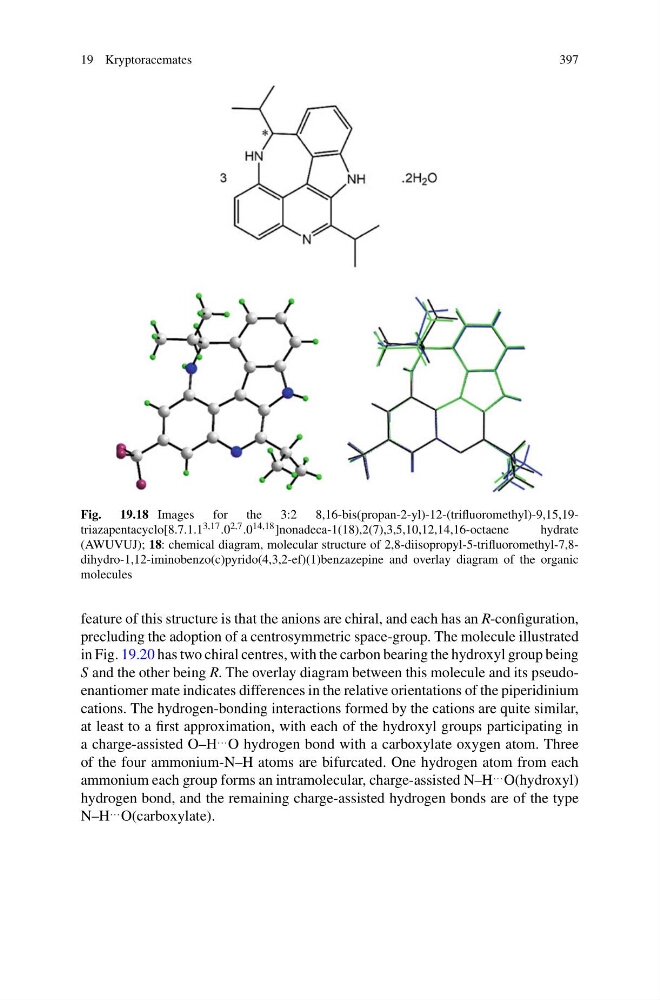
Fig. 19.18 Images for the 3:2 8,16-bis(propan-2-yl)-12-(trifluoromethyl)-9,15,19triazapentacyclo[8.7.1.1 3,17 .0 2,7 .0 14,18 ]nonadeca-1(18),2(7),3,5,10,12,14,16-octaene
hydrate
(AWUVUJ); 18: chemical diagram, molecular structure of 2,8-diisopropyl-5-trifluoromethyl-7,8dihydro-1,12-iminobenzo(c)pyrido(4,3,2-ef)(1)benzazepine and overlay diagram of the organic
molecules
feature of this structure is that the anions are chiral, and each has an R-configuration,
precluding the adoption of a centrosymmetric space-group. The molecule illustrated
in Fig. 19.20 has two chiral centres, with the carbon bearing the hydroxyl group being
S and the other being R. The overlay diagram between this molecule and its pseudoenantiomer mate indicates differences in the relative orientations of the piperidinium
cations. The hydrogen-bonding interactions formed by the cations are quite similar,
at least to a first approximation, with each of the hydroxyl groups participating in
a charge-assisted O–H
… O hydrogen bond with a carboxylate oxygen atom. Three
of the four ammonium-N–H atoms are bifurcated. One hydrogen atom from each
ammonium each group forms an intramolecular, charge-assisted N–H
… O(hydroxyl)
hydrogen bond, and the remaining charge-assisted hydrogen bonds are of the type
N–H
… O(carboxylate).
397
Fig. 19.18 Images for the 3:2 8,16-bis(propan-2-yl)-12-(trifluoromethyl)-9,15,19triazapentacyclo[8.7.1.1 3,17 .0 2,7 .0 14,18 ]nonadeca-1(18),2(7),3,5,10,12,14,16-octaene
hydrate
(AWUVUJ); 18: chemical diagram, molecular structure of 2,8-diisopropyl-5-trifluoromethyl-7,8dihydro-1,12-iminobenzo(c)pyrido(4,3,2-ef)(1)benzazepine and overlay diagram of the organic
molecules
feature of this structure is that the anions are chiral, and each has an R-configuration,
precluding the adoption of a centrosymmetric space-group. The molecule illustrated
in Fig. 19.20 has two chiral centres, with the carbon bearing the hydroxyl group being
S and the other being R. The overlay diagram between this molecule and its pseudoenantiomer mate indicates differences in the relative orientations of the piperidinium
cations. The hydrogen-bonding interactions formed by the cations are quite similar,
at least to a first approximation, with each of the hydroxyl groups participating in
a charge-assisted O–H
… O hydrogen bond with a carboxylate oxygen atom. Three
of the four ammonium-N–H atoms are bifurcated. One hydrogen atom from each
ammonium each group forms an intramolecular, charge-assisted N–H
… O(hydroxyl)
hydrogen bond, and the remaining charge-assisted hydrogen bonds are of the type
N–H
… O(carboxylate).