

388
E. R. T. Tiekink
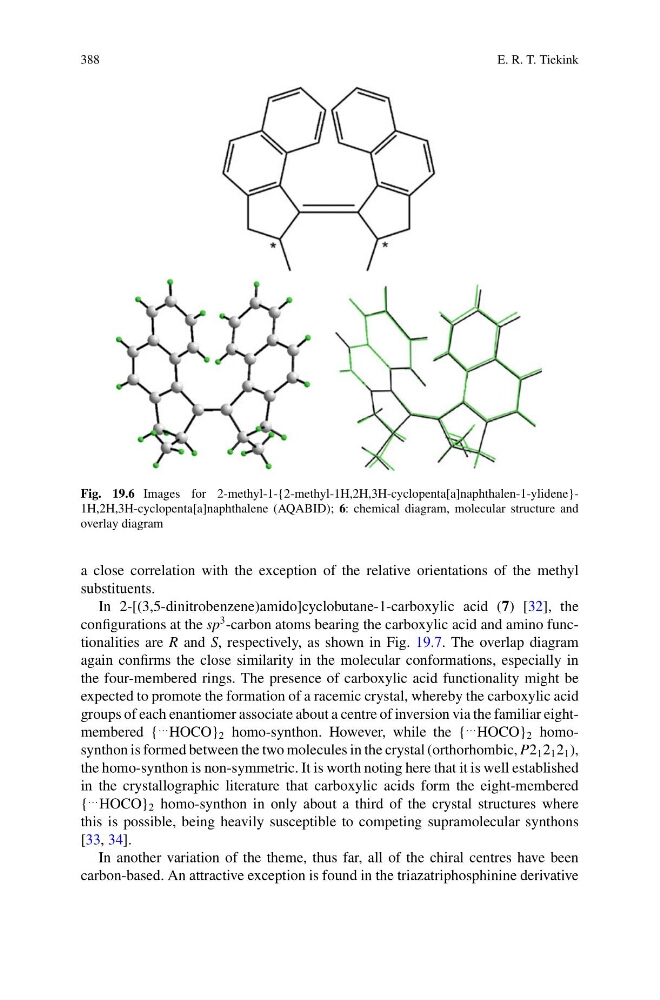
Fig. 19.6 Images for 2-methyl-1-{2-methyl-1H,2H,3H-cyclopenta[a]naphthalen-1-ylidene}1H,2H,3H-cyclopenta[a]naphthalene (AQABID); 6: chemical diagram, molecular structure and
overlay diagram
a close correlation with the exception of the relative orientations of the methyl
substituents.
In 2-[(3,5-dinitrobenzene)amido]cyclobutane-1-carboxylic acid (7) [32], the
configurations at the sp
3 -carbon atoms bearing the carboxylic acid and amino functionalities are R and S, respectively, as shown in Fig. 19.7. The overlap diagram
again confirms the close similarity in the molecular conformations, especially in
the four-membered rings. The presence of carboxylic acid functionality might be
expected to promote the formation of a racemic crystal, whereby the carboxylic acid
groups of each enantiomer associate about a centre of inversion via the familiar eightmembered {
… HOCO} 2 homo-synthon. However, while the {
… HOCO} 2 homosynthon is formed between the two molecules in the crystal (orthorhombic, P2 1 2 1 2 1 ),
the homo-synthon is non-symmetric. It is worth noting here that it is well established
in the crystallographic literature that carboxylic acids form the eight-membered
{
… HOCO} 2 homo-synthon in only about a third of the crystal structures where
this is possible, being heavily susceptible to competing supramolecular synthons
[33, 34].
In another variation of the theme, thus far, all of the chiral centres have been
carbon-based. An attractive exception is found in the triazatriphosphinine derivative
E. R. T. Tiekink
Fig. 19.6 Images for 2-methyl-1-{2-methyl-1H,2H,3H-cyclopenta[a]naphthalen-1-ylidene}1H,2H,3H-cyclopenta[a]naphthalene (AQABID); 6: chemical diagram, molecular structure and
overlay diagram
a close correlation with the exception of the relative orientations of the methyl
substituents.
In 2-[(3,5-dinitrobenzene)amido]cyclobutane-1-carboxylic acid (7) [32], the
configurations at the sp
3 -carbon atoms bearing the carboxylic acid and amino functionalities are R and S, respectively, as shown in Fig. 19.7. The overlap diagram
again confirms the close similarity in the molecular conformations, especially in
the four-membered rings. The presence of carboxylic acid functionality might be
expected to promote the formation of a racemic crystal, whereby the carboxylic acid
groups of each enantiomer associate about a centre of inversion via the familiar eightmembered {
… HOCO} 2 homo-synthon. However, while the {
… HOCO} 2 homosynthon is formed between the two molecules in the crystal (orthorhombic, P2 1 2 1 2 1 ),
the homo-synthon is non-symmetric. It is worth noting here that it is well established
in the crystallographic literature that carboxylic acids form the eight-membered
{
… HOCO} 2 homo-synthon in only about a third of the crystal structures where
this is possible, being heavily susceptible to competing supramolecular synthons
[33, 34].
In another variation of the theme, thus far, all of the chiral centres have been
carbon-based. An attractive exception is found in the triazatriphosphinine derivative