

19 Kryptoracemates
389
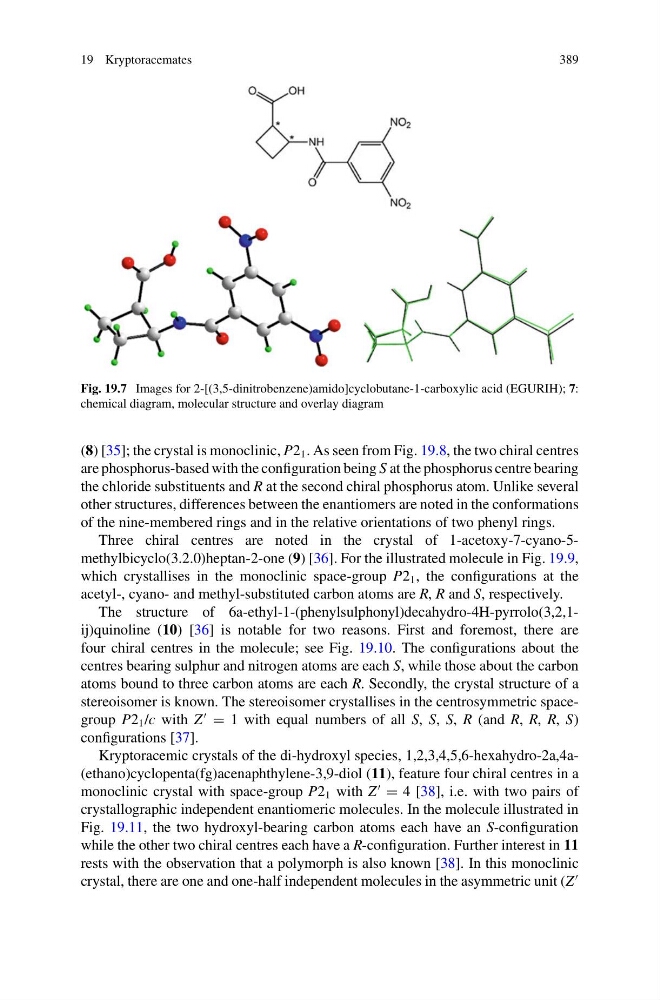
Fig. 19.7 Images for 2-[(3,5-dinitrobenzene)amido]cyclobutane-1-carboxylic acid (EGURIH); 7:
chemical diagram, molecular structure and overlay diagram
(8) [35]; the crystal is monoclinic, P2 1 . As seen from Fig. 19.8, the two chiral centres
are phosphorus-based with the configuration being S at the phosphorus centre bearing
the chloride substituents and R at the second chiral phosphorus atom. Unlike several
other structures, differences between the enantiomers are noted in the conformations
of the nine-membered rings and in the relative orientations of two phenyl rings.
Three chiral centres are noted in the crystal of 1-acetoxy-7-cyano-5methylbicyclo(3.2.0)heptan-2-one (9) [36]. For the illustrated molecule in Fig. 19.9,
which crystallises in the monoclinic space-group P2 1 , the configurations at the
acetyl-, cyano- and methyl-substituted carbon atoms are R, R and S, respectively.
The structure of 6a-ethyl-1-(phenylsulphonyl)decahydro-4H-pyrrolo(3,2,1ij)quinoline (10) [36] is notable for two reasons. First and foremost, there are
four chiral centres in the molecule; see Fig. 19.10. The configurations about the
centres bearing sulphur and nitrogen atoms are each S, while those about the carbon
atoms bound to three carbon atoms are each R. Secondly, the crystal structure of a
stereoisomer is known. The stereoisomer crystallises in the centrosymmetric spacegroup P2 1 /c with Z
= 1 with equal numbers of all S, S, S, R (and R, R, R, S)
configurations [37].
Kryptoracemic crystals of the di-hydroxyl species, 1,2,3,4,5,6-hexahydro-2a,4a(ethano)cyclopenta(fg)acenaphthylene-3,9-diol (11), feature four chiral centres in a
monoclinic crystal with space-group P2 1 with Z
= 4 [38], i.e. with two pairs of
crystallographic independent enantiomeric molecules. In the molecule illustrated in
Fig. 19.11, the two hydroxyl-bearing carbon atoms each have an S-configuration
while the other two chiral centres each have a R-configuration. Further interest in 11
rests with the observation that a polymorph is also known [38]. In this monoclinic
crystal, there are one and one-half independent molecules in the asymmetric unit (Z
389
Fig. 19.7 Images for 2-[(3,5-dinitrobenzene)amido]cyclobutane-1-carboxylic acid (EGURIH); 7:
chemical diagram, molecular structure and overlay diagram
(8) [35]; the crystal is monoclinic, P2 1 . As seen from Fig. 19.8, the two chiral centres
are phosphorus-based with the configuration being S at the phosphorus centre bearing
the chloride substituents and R at the second chiral phosphorus atom. Unlike several
other structures, differences between the enantiomers are noted in the conformations
of the nine-membered rings and in the relative orientations of two phenyl rings.
Three chiral centres are noted in the crystal of 1-acetoxy-7-cyano-5methylbicyclo(3.2.0)heptan-2-one (9) [36]. For the illustrated molecule in Fig. 19.9,
which crystallises in the monoclinic space-group P2 1 , the configurations at the
acetyl-, cyano- and methyl-substituted carbon atoms are R, R and S, respectively.
The structure of 6a-ethyl-1-(phenylsulphonyl)decahydro-4H-pyrrolo(3,2,1ij)quinoline (10) [36] is notable for two reasons. First and foremost, there are
four chiral centres in the molecule; see Fig. 19.10. The configurations about the
centres bearing sulphur and nitrogen atoms are each S, while those about the carbon
atoms bound to three carbon atoms are each R. Secondly, the crystal structure of a
stereoisomer is known. The stereoisomer crystallises in the centrosymmetric spacegroup P2 1 /c with Z
= 1 with equal numbers of all S, S, S, R (and R, R, R, S)
configurations [37].
Kryptoracemic crystals of the di-hydroxyl species, 1,2,3,4,5,6-hexahydro-2a,4a(ethano)cyclopenta(fg)acenaphthylene-3,9-diol (11), feature four chiral centres in a
monoclinic crystal with space-group P2 1 with Z
= 4 [38], i.e. with two pairs of
crystallographic independent enantiomeric molecules. In the molecule illustrated in
Fig. 19.11, the two hydroxyl-bearing carbon atoms each have an S-configuration
while the other two chiral centres each have a R-configuration. Further interest in 11
rests with the observation that a polymorph is also known [38]. In this monoclinic
crystal, there are one and one-half independent molecules in the asymmetric unit (Z