

19 Kryptoracemates
387
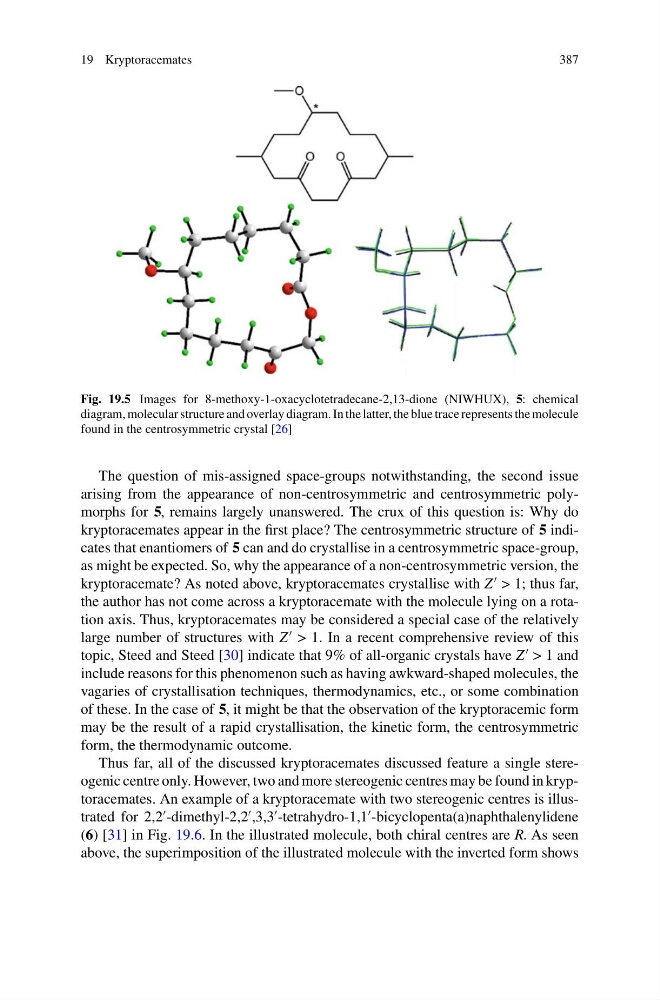
Fig. 19.5 Images for 8-methoxy-1-oxacyclotetradecane-2,13-dione (NIWHUX), 5: chemical
diagram, molecular structure and overlay diagram. In the latter, the blue trace represents the molecule
found in the centrosymmetric crystal [26]
The question of mis-assigned space-groups notwithstanding, the second issue
arising from the appearance of non-centrosymmetric and centrosymmetric polymorphs for 5, remains largely unanswered. The crux of this question is: Why do
kryptoracemates appear in the first place? The centrosymmetric structure of 5 indicates that enantiomers of 5 can and do crystallise in a centrosymmetric space-group,
as might be expected. So, why the appearance of a non-centrosymmetric version, the
kryptoracemate? As noted above, kryptoracemates crystallise with Z
> 1; thus far,
the author has not come across a kryptoracemate with the molecule lying on a rotation axis. Thus, kryptoracemates may be considered a special case of the relatively
large number of structures with Z
> 1. In a recent comprehensive review of this
topic, Steed and Steed [30] indicate that 9% of all-organic crystals have Z
> 1 and
include reasons for this phenomenon such as having awkward-shaped molecules, the
vagaries of crystallisation techniques, thermodynamics, etc., or some combination
of these. In the case of 5, it might be that the observation of the kryptoracemic form
may be the result of a rapid crystallisation, the kinetic form, the centrosymmetric
form, the thermodynamic outcome.
Thus far, all of the discussed kryptoracemates discussed feature a single stereogenic centre only. However, two and more stereogenic centres may be found in kryptoracemates. An example of a kryptoracemate with two stereogenic centres is illustrated for 2,2
-dimethyl-2,2
,3,3
-tetrahydro-1,1
-bicyclopenta(a)naphthalenylidene
(6) [31] in Fig. 19.6. In the illustrated molecule, both chiral centres are R. As seen
above, the superimposition of the illustrated molecule with the inverted form shows
387
Fig. 19.5 Images for 8-methoxy-1-oxacyclotetradecane-2,13-dione (NIWHUX), 5: chemical
diagram, molecular structure and overlay diagram. In the latter, the blue trace represents the molecule
found in the centrosymmetric crystal [26]
The question of mis-assigned space-groups notwithstanding, the second issue
arising from the appearance of non-centrosymmetric and centrosymmetric polymorphs for 5, remains largely unanswered. The crux of this question is: Why do
kryptoracemates appear in the first place? The centrosymmetric structure of 5 indicates that enantiomers of 5 can and do crystallise in a centrosymmetric space-group,
as might be expected. So, why the appearance of a non-centrosymmetric version, the
kryptoracemate? As noted above, kryptoracemates crystallise with Z
> 1; thus far,
the author has not come across a kryptoracemate with the molecule lying on a rotation axis. Thus, kryptoracemates may be considered a special case of the relatively
large number of structures with Z
> 1. In a recent comprehensive review of this
topic, Steed and Steed [30] indicate that 9% of all-organic crystals have Z
> 1 and
include reasons for this phenomenon such as having awkward-shaped molecules, the
vagaries of crystallisation techniques, thermodynamics, etc., or some combination
of these. In the case of 5, it might be that the observation of the kryptoracemic form
may be the result of a rapid crystallisation, the kinetic form, the centrosymmetric
form, the thermodynamic outcome.
Thus far, all of the discussed kryptoracemates discussed feature a single stereogenic centre only. However, two and more stereogenic centres may be found in kryptoracemates. An example of a kryptoracemate with two stereogenic centres is illustrated for 2,2
-dimethyl-2,2
,3,3
-tetrahydro-1,1
-bicyclopenta(a)naphthalenylidene
(6) [31] in Fig. 19.6. In the illustrated molecule, both chiral centres are R. As seen
above, the superimposition of the illustrated molecule with the inverted form shows