

290
T. Mutai
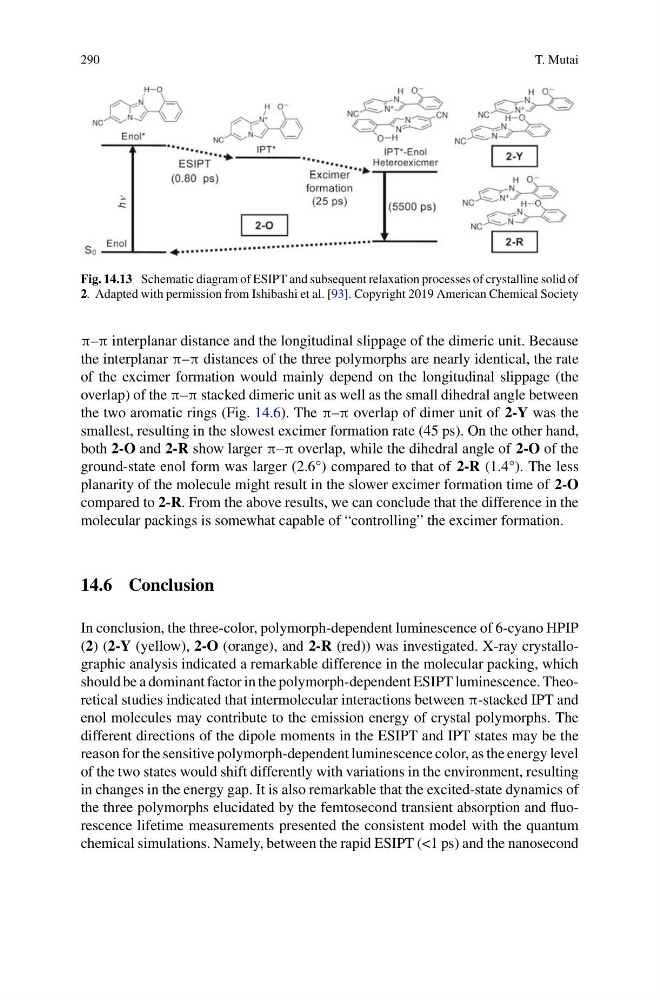
Fig. 14.13 Schematic diagram of ESIPT and subsequent relaxation processes of crystalline solid of
2. Adapted with permission from Ishibashi et al. [93]. Copyright 2019 American Chemical Society
π–π interplanar distance and the longitudinal slippage of the dimeric unit. Because
the interplanar π–π distances of the three polymorphs are nearly identical, the rate
of the excimer formation would mainly depend on the longitudinal slippage (the
overlap) of the π–π stacked dimeric unit as well as the small dihedral angle between
the two aromatic rings (Fig. 14.6). The π–π overlap of dimer unit of 2-Y was the
smallest, resulting in the slowest excimer formation rate (45 ps). On the other hand,
both 2-O and 2-R show larger π–π overlap, while the dihedral angle of 2-O of the
ground-state enol form was larger (2.6°) compared to that of 2-R (1.4°). The less
planarity of the molecule might result in the slower excimer formation time of 2-O
compared to 2-R. From the above results, we can conclude that the difference in the
molecular packings is somewhat capable of “controlling” the excimer formation.
14.6 Conclusion
In conclusion, the three-color, polymorph-dependent luminescence of 6-cyano HPIP
(2) (2-Y (yellow), 2-O (orange), and 2-R (red)) was investigated. X-ray crystallographic analysis indicated a remarkable difference in the molecular packing, which
should be a dominant factor in the polymorph-dependent ESIPT luminescence. Theoretical studies indicated that intermolecular interactions between π-stacked IPT and
enol molecules may contribute to the emission energy of crystal polymorphs. The
different directions of the dipole moments in the ESIPT and IPT states may be the
reason for the sensitive polymorph-dependent luminescence color, as the energy level
of the two states would shift differently with variations in the environment, resulting
in changes in the energy gap. It is also remarkable that the excited-state dynamics of
the three polymorphs elucidated by the femtosecond transient absorption and fluorescence lifetime measurements presented the consistent model with the quantum
chemical simulations. Namely, between the rapid ESIPT (<1 ps) and the nanosecond
T. Mutai
Fig. 14.13 Schematic diagram of ESIPT and subsequent relaxation processes of crystalline solid of
2. Adapted with permission from Ishibashi et al. [93]. Copyright 2019 American Chemical Society
π–π interplanar distance and the longitudinal slippage of the dimeric unit. Because
the interplanar π–π distances of the three polymorphs are nearly identical, the rate
of the excimer formation would mainly depend on the longitudinal slippage (the
overlap) of the π–π stacked dimeric unit as well as the small dihedral angle between
the two aromatic rings (Fig. 14.6). The π–π overlap of dimer unit of 2-Y was the
smallest, resulting in the slowest excimer formation rate (45 ps). On the other hand,
both 2-O and 2-R show larger π–π overlap, while the dihedral angle of 2-O of the
ground-state enol form was larger (2.6°) compared to that of 2-R (1.4°). The less
planarity of the molecule might result in the slower excimer formation time of 2-O
compared to 2-R. From the above results, we can conclude that the difference in the
molecular packings is somewhat capable of “controlling” the excimer formation.
14.6 Conclusion
In conclusion, the three-color, polymorph-dependent luminescence of 6-cyano HPIP
(2) (2-Y (yellow), 2-O (orange), and 2-R (red)) was investigated. X-ray crystallographic analysis indicated a remarkable difference in the molecular packing, which
should be a dominant factor in the polymorph-dependent ESIPT luminescence. Theoretical studies indicated that intermolecular interactions between π-stacked IPT and
enol molecules may contribute to the emission energy of crystal polymorphs. The
different directions of the dipole moments in the ESIPT and IPT states may be the
reason for the sensitive polymorph-dependent luminescence color, as the energy level
of the two states would shift differently with variations in the environment, resulting
in changes in the energy gap. It is also remarkable that the excited-state dynamics of
the three polymorphs elucidated by the femtosecond transient absorption and fluorescence lifetime measurements presented the consistent model with the quantum
chemical simulations. Namely, between the rapid ESIPT (<1 ps) and the nanosecond