

164
O. D. Putra and H. Uekusa
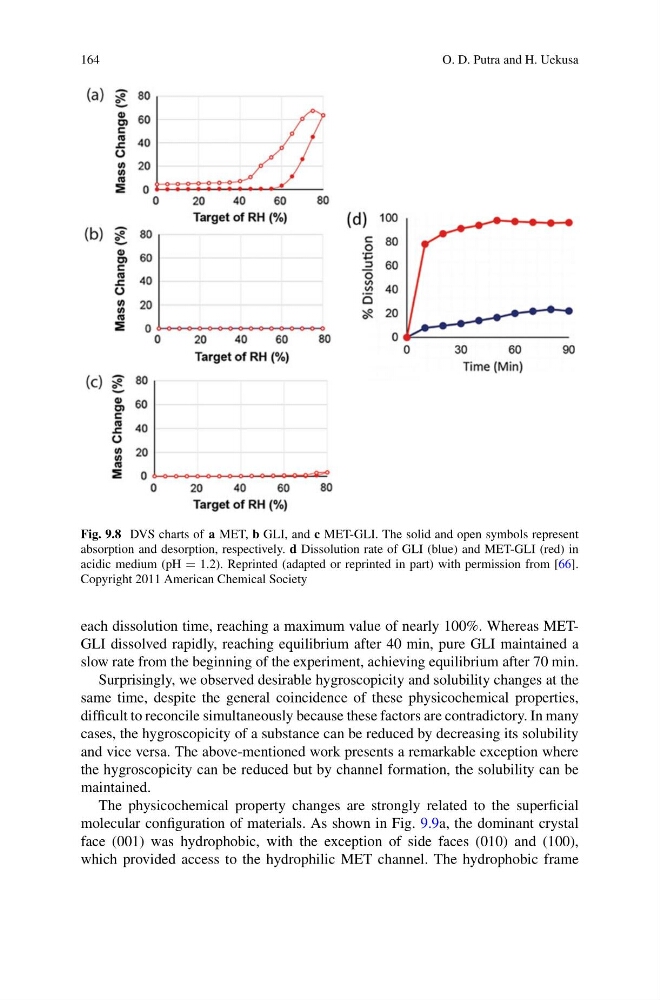
Fig. 9.8 DVS charts of a MET, b GLI, and c MET-GLI. The solid and open symbols represent
absorption and desorption, respectively. d Dissolution rate of GLI (blue) and MET-GLI (red) in
acidic medium (pH = 1.2). Reprinted (adapted or reprinted in part) with permission from [66].
Copyright 2011 American Chemical Society
each dissolution time, reaching a maximum value of nearly 100%. Whereas METGLI dissolved rapidly, reaching equilibrium after 40 min, pure GLI maintained a
slow rate from the beginning of the experiment, achieving equilibrium after 70 min.
Surprisingly, we observed desirable hygroscopicity and solubility changes at the
same time, despite the general coincidence of these physicochemical properties,
difficult to reconcile simultaneously because these factors are contradictory. In many
cases, the hygroscopicity of a substance can be reduced by decreasing its solubility
and vice versa. The above-mentioned work presents a remarkable exception where
the hygroscopicity can be reduced but by channel formation, the solubility can be
maintained.
The physicochemical property changes are strongly related to the superficial
molecular configuration of materials. As shown in Fig. 9.9a, the dominant crystal
face (001) was hydrophobic, with the exception of side faces (010) and (100),
which provided access to the hydrophilic MET channel. The hydrophobic frame
O. D. Putra and H. Uekusa
Fig. 9.8 DVS charts of a MET, b GLI, and c MET-GLI. The solid and open symbols represent
absorption and desorption, respectively. d Dissolution rate of GLI (blue) and MET-GLI (red) in
acidic medium (pH = 1.2). Reprinted (adapted or reprinted in part) with permission from [66].
Copyright 2011 American Chemical Society
each dissolution time, reaching a maximum value of nearly 100%. Whereas METGLI dissolved rapidly, reaching equilibrium after 40 min, pure GLI maintained a
slow rate from the beginning of the experiment, achieving equilibrium after 70 min.
Surprisingly, we observed desirable hygroscopicity and solubility changes at the
same time, despite the general coincidence of these physicochemical properties,
difficult to reconcile simultaneously because these factors are contradictory. In many
cases, the hygroscopicity of a substance can be reduced by decreasing its solubility
and vice versa. The above-mentioned work presents a remarkable exception where
the hygroscopicity can be reduced but by channel formation, the solubility can be
maintained.
The physicochemical property changes are strongly related to the superficial
molecular configuration of materials. As shown in Fig. 9.9a, the dominant crystal
face (001) was hydrophobic, with the exception of side faces (010) and (100),
which provided access to the hydrophilic MET channel. The hydrophobic frame